early goldenrod Care (Solidago juncea)

early goldenrod

About early goldenrod

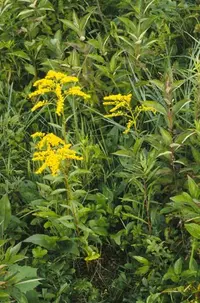
Early goldenrod (Solidago juncea) is a hardy, herbaceous perennial native to eastern and central North America. It belongs to the aster family and forms clumps of upright, leafy stems.

Plants produce narrow leaves and tall, airy sprays of small yellow flower clusters that appear in late summer and fall, attracting bees, butterflies, and other pollinators. It often grows in meadows, open woods, prairies, and along roadsides where conditions are sunny and well-drained.

This species adapts to a range of soils, including poorer, dry ground, which makes it relatively easy to establish in low-maintenance plantings. Understanding how to care for early goldenrod mainly involves providing full sun, moderate moisture, and space for its spreading habit.

Main Plant Requirements

Care Difficulty

Easy Care

Light Preference

Full Sun

Water Requirements

Moderate Water

Temperature Preference

Cold Hardy

Hardiness Zone

3–9

Soil Texture

Sandy, Loamy, Rocky

Soil pH

Acidic (5.5–6.5), Slightly acidic (6.5–7.0)

Soil Drainage

Well-drained

Fertilization

Minimal (feed rarely)

Get Personalized Care Plan

Scan your plant to receive care tips personalized for your specific plant

Available on iOS and Android

How to Care for the early goldenrod

Solidago juncea thrives in open, bright sites with strong sun exposure.

  • Provide 6–8 hours of direct sun daily; full sun promotes sturdy stems and abundant flowering in early goldenrod.
  • Tolerates light partial shade, especially with 3–4 hours of morning sun, but too much shade leads to taller, weaker growth and fewer blooms.
  • In hot climates, mild afternoon shade reduces leaf scorch, while plants in dense shade may lean, flop, and produce sparse flower spikes.

Solidago juncea prefers moderately dry, well-drained soil once established.

  • Allow the top 5–7 cm of soil to dry between rain events or irrigation; established plants usually need supplemental water only during prolonged drought.
  • Watch foliage for cues: wilting, dull leaves, and slow flower development suggest underwatering, while yellowing lower leaves and soft stems suggest overwatering.
  • Plant in freely draining soil or raised beds to prevent standing water, which increases root rot risk, especially in heavy clay and cool, wet seasons.

This species is a cold-hardy perennial adapted to temperate outdoor conditions.

  • Optimal growing temperatures are about 65–80°F (18–27°C) in spring and summer, supporting strong vegetative growth and bud formation.
  • Plants tolerate winter lows near -20°F (-29°C) in the ground once established, dying back above soil level and resprouting in spring.
  • During hot spells above 90°F (32°C), flowering usually continues if soil does not dry completely, but prolonged extreme heat can shorten bloom duration.

This species tolerates a wide humidity range and usually needs no special humidity management outdoors.

This plant prefers lean, well-drained mineral soils rather than rich, heavy substrates.

  • Use sandy or sandy-loam soil with at most 20–30% compost to avoid excessive fertility and moisture retention.
  • Ensure drainage is rapid; mix in coarse sand or small grit where native soil is compacted or slow to dry.
  • Aim for slightly acidic to neutral pH around 6.0–7.0, which suits most Solidago juncea plant care situations.
  • Avoid dense clay, peat-heavy mixes, or spots that remain wet for more than 24 hours after rain, which promote root problems.

This species can be grown in containers, but long-term culture is somewhat limiting due to its spreading, deep-rooting habit.

  • Choose a tall, heavy container to accommodate deep roots and to keep the upright stems from tipping in wind.
  • Fill the pot with a gritty, low-organic mix so the root zone dries between waterings and does not encourage floppy growth.
  • Position the container where strong sun and wind will not dry it faster than the plant’s roots can access moisture, especially in midsummer.

This native perennial generally needs minimal feeding in average garden soil, but moderate fertilization can support stronger flowering.

  • Apply a light top-dressing of compost in early spring to boost soil organic matter and nutrients.
  • In poorer soils, use a balanced slow-release fertilizer (around 10-10-10) once in spring at label rate, avoiding overapplication.
  • If using liquid feed, dilute to 50% strength and apply only 1–2 times during peak growing season.
  • Stop feeding early goldenrod by late summer so growth can harden off before winter dormancy.

Pruning helps Solidago juncea maintain an upright shape, control spread, and optimize flowering display.

  • Cut back dead or broken stems in early spring using clean, sharp hand pruners to reduce disease risk.
  • Shear or deadhead spent flower stalks after bloom to limit self-seeding and encourage a tidier clump.
  • Thin out crowded stems at the base to improve air circulation and reduce mildew pressure.
  • In late fall or very early spring, cut stems close to ground level to reset growth for the new season.

This species is usually grown in the ground, so care focuses on dividing and transplanting mature clumps rather than repotting.

  • Transplant or divide in early spring or early fall when temperatures are mild and soil is moist.
  • Look for dense, woody centers, reduced flowering, or crowded shoots as signs a clump needs lifting and division every 3–5 years.
  • Dig widely around the root mass, lift carefully, then split clumps with a sharp spade or knife into healthy sections with several buds.
  • Replant divisions at the original depth, water thoroughly, and keep soil evenly moist for 2–3 weeks to limit transplant shock.

Propagation of Solidago juncea is commonly done by division or seed to renew plantings and manage spread.

  • Divide established clumps in early spring or early fall, replanting vigorous outer sections in prepared soil.
  • Sow ripe seeds outdoors in fall or in trays that experience winter chilling, since natural cold stratification improves germination.
  • Provide full sun and well-drained, moderately moist soil for young plants to establish strong root systems.
  • For controlled sowing, press seeds onto the surface of a sterile mix, keep lightly moist, and avoid covering deeply as they need light to germinate.

This cold-hardy perennial needs very little winter attention in most temperate climates.

  • Established in-ground plants tolerate typical winter frost and freezing without extra covering.
  • Allow stems to stand over winter for wildlife value, then cut back to ground level in late winter or early spring.
  • Apply a light 5–8 cm mulch after ground freezes in colder regions to stabilize soil temperature around the roots.
  • Container-grown plants in very cold areas benefit from moving to a sheltered, unheated but frost-free space or heavy pot insulation.

Care Tips

Cut Back After Bloom

Shear stems down to 10–15 cm after flowering to reduce self-seeding, keep clumps compact, and encourage stronger regrowth the following season.

Divide Aging Clumps

Every 3–4 years, lift and divide dense or thinning clumps in early spring, replanting vigorous outer sections to maintain flowering quality and reduce disease buildup in crowded centers.

Targeted Self-Seeding Control

Remove only the most aggressive seed heads while leaving a few on sturdy plants at the back of the border so the stand can slowly renew itself without overwhelming nearby perennials.

Support In Windy Sites

In exposed gardens, install low, unobtrusive ring supports or short stakes in late spring before stems reach full height, which keeps plants upright without needing tight tying later.

Monitor For Rust

Check foliage regularly in mid to late summer for orange or brown rust spots, remove and discard badly affected leaves, and space plants so air can move between them to limit spread when caring for early goldenrod.

Everything About early goldenrod

Common Pests and Diseases

Goldenrod bunch gall

This disease is caused by a small fly whose larvae trigger tight clusters of short, bunched stems at the shoot tip. Symptoms include a swollen, spherical or irregular gall with multiple crowded side shoots that distort the plant’s shape.

Solution

Prune out and dispose of galled stems before adult flies emerge in late spring, cutting 5–10 cm below the gall. Avoid composting heavily infested material and encourage natural predators by maintaining plant diversity nearby.

Goldenrod ball gall

This pest is the larva of a gall fly that forms a single, round marble-like swelling on the stem, usually mid-height. Symptoms include a firm, smooth gall that may slightly weaken the stem but rarely kills the plant.

Solution

Cut and destroy stems with galls during fall or very early spring to remove overwintering larvae. Leave a few untouched if supporting wildlife is a goal, as many birds feed on the larvae, but remove more if stems are becoming structurally weak.

Rust

This disease appears as orange to rust-brown powdery pustules on the undersides of leaves and sometimes on stems. Symptoms include yellowing leaves, premature leaf drop, and reduced vigor in humid, crowded plantings.

Solution

Remove and discard infected leaves as soon as symptoms appear and thin plant clumps to improve air circulation and reduce leaf wetness duration. In areas with repeated issues, avoid overhead watering and consider rotating plant locations or using more resistant goldenrod species nearby.

Powdery mildew

This disease causes a white to gray, powdery coating on the upper leaf surface, often late in the season. Symptoms include dull, discolored foliage and reduced photosynthesis, but plants usually survive if otherwise healthy.

Solution

Increase spacing and airflow around plants, and water at the base rather than over the foliage. Remove and discard heavily infected leaves or stems, and avoid high-nitrogen fertilization that drives soft, mildew-prone growth.

Leaf beetles

These insects chew small to moderate holes in leaves and can skeletonize foliage on young or stressed plants. This pest is often seen on native goldenrods where it feeds primarily on leaves rather than stems or flowers.

Solution

Handpick beetles and larvae into soapy water on smaller plantings and encourage birds and predatory insects that feed on them. If damage is heavy, protect key clumps with floating row covers during peak feeding or apply a targeted insecticidal soap to the beetles while avoiding flowers visited by pollinators.

Interesting Facts

Early-flowering goldenrod

This species is one of the first goldenrods to bloom in late summer, often starting several weeks before more common tall goldenrod species, which makes it an important early nectar source for late-season pollinators.

Preference for dry soils

Solidago juncea naturally favors dry, open habitats such as upland fields, prairies, and rocky slopes, and it tolerates low-nutrient, sandy, or gravelly soils better than many other goldenrod species.

Clumping growth habit

Unlike some aggressively spreading goldenrods, it typically forms loose clumps from short rhizomes, creating scattered colonies rather than dense monocultures in meadows and open woods.

Botan icon

Did you know?

Solidago juncea plays a notable role in supporting specialist insects, including certain gall-forming flies and wasps that use its stems and flower clusters as highly specific feeding or breeding sites, contributing to complex insect communities in North American grasslands.

FAQs about early goldenrod

This species spreads by both seed and short rhizomes, forming clumps that can gradually enlarge. In open, disturbed soil it may self-seed freely. Division, deadheading, and clear bed edges help keep it within bounds.

Grow Healthy Plants with Botan Care

Keep your plants happy and healthy with plant identification, disease detection, and easy care guidance.

Botan plant care app — identify plants on mobile

Explore More Plants