ovate goatgrass Care (Aegilops geniculata)

ovate goatgrass

About ovate goatgrass

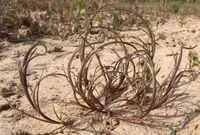
Ovate goatgrass, Aegilops geniculata, is a cool-season annual grass related to wheat. It forms clumps of narrow leaves and upright stems topped with distinctive, egg-shaped spikelets. Plants often develop a somewhat tangled or bending habit as they mature. It typically grows in dry grasslands, roadsides, and disturbed soils around the Mediterranean and in similar climates where it has naturalized. This species tolerates drought, poor soils, and full sun, which makes it easy to establish but also potentially invasive. Those conditions also shape how to care for ovate goatgrass in managed landscapes or restoration projects.

Main Plant Requirements

Care Difficulty

Easy Care

Light Preference

Full Sun

Water Requirements

Low Water

Temperature Preference

Cool Climate

Hardiness Zone

6–9

Soil Texture

Sandy, Loamy, Rocky

Soil pH

Slightly acidic (6.5–7.0), Slightly alkaline (7.0–7.5)

Soil Drainage

Well-drained

Fertilization

Minimal (feed rarely)

Get Personalized Care Plan

Scan your plant to receive care tips personalized for your specific plant

Available on iOS and Android

How to Care for the ovate goatgrass

Aegilops geniculata prefers open, bright conditions typical of dry grasslands.

  • Provide 6–8 hours of direct sun daily; full sun is best for dense, upright growth of ovate goatgrass in the field or meadow setting.
  • Plant where it receives morning to mid-afternoon sun; light afternoon shade is acceptable in hotter regions to reduce heat stress and leaf scorching.
  • Avoid deep shade, which leads to weak, floppy stems and poor seed set; choose unshaded sites, especially during late winter to late spring when growth is most active.

This species is adapted to dry, well-drained habitats and is sensitive to prolonged soil saturation.

  • Use sharply drained soil; water only when the top 3–5 cm feels completely dry, then apply enough to moisten the root zone without leaving puddles.
  • Reduce or stop supplemental water once plants are established and seasonal rains are sufficient; resume light watering during extended droughts if foliage shows persistent wilting or crisping.
  • Watch for yellowing, soft bases and algae or moss on soil as signs of overwatering, and for rolling, dry leaf tips and very loose soil as signs of underwatering in Aegilops geniculata stands.

This grass favors mild, Mediterranean-type climates with cool, moist winters and warm, dry summers.

  • Optimal active growth occurs around 50–70°F (10–21°C), especially in late winter and spring when soil moisture is available.
  • Plants tolerate light frost down to about 20–25°F (-6 to -4°C); brief colder snaps may burn foliage but established clumps often recover from surviving crowns.
  • Tolerates summer heat up to about 90–95°F (32–35°C) if soil is not waterlogged; prolonged extreme heat with drought can cause early dormancy and seed shedding.

Humidity is not a significant factor for Aegilops geniculata in typical outdoor conditions.

Aegilops geniculata prefers dry, well-drained, mineral soils that do not stay wet after rainfall.

  • Use a sandy or gritty loam with low organic matter to mimic its native dry grassland conditions.
  • Ensure very rapid drainage by incorporating coarse sand or fine gravel at 30–50% of the mix volume.
  • Target a slightly alkaline to neutral pH of about 7.0–8.0, avoiding strongly acidic substrates.
  • Avoid compacted, water-retentive clay or peat-heavy mixes that hold moisture around the crown and roots.

This species can be grown in containers if the setup mimics dry, free-draining ground.

  • Choose a wide, shallow pot to accommodate its fibrous root system while allowing the upper mix layer to dry quickly.
  • Use an unglazed terracotta container so moisture evaporates through the pot walls, preventing prolonged wetness after irrigation.
  • Elevate the pot on feet or bricks outdoors so drainage holes stay clear and runoff leaves the container area quickly.

Aegilops geniculata is adapted to low-nutrient sites and usually needs minimal fertilization in garden or restoration settings.

Aegilops geniculata needs almost no structural pruning, since it is a short-lived tufted grass managed mainly by seasonal cutting or removal.

  • Cut back spent flowering stems at the end of the growing season to reduce self-seeding where spread is not desired.
  • Remove dead or damaged clumps using hand shears or a sharp knife, cutting at or just above soil level.
  • Use clean, disinfected tools to limit disease transmission between grasses in mixed plantings.

This grass is rarely kept long-term in containers, so management focuses on field transplanting rather than routine repotting.

  • Transplant in early to mid-spring, when soil is workable and cool, to reduce water stress and establish roots before summer heat.
  • Move plants only when root systems are moderately developed; avoid dense root circling typical of long-held container stock.
  • Lift clumps with a spade, keeping a firm soil ball around roots, and replant at the same depth into well-drained soil.
  • Water gently after transplanting and maintain light, even moisture for 1–2 weeks until new growth indicates recovery.

Aegilops geniculata is most commonly propagated by seed, which suits its annual or short-lived life cycle.

  • Collect seeds from mature, dry seed heads and store them cool and dry until sowing.
  • Sow in fall or very early spring outdoors, allowing natural cold exposure to support germination.
  • Broadcast seeds onto prepared, weed-reduced soil, then rake lightly so seeds sit just below the surface.
  • Keep soil slightly moist but not waterlogged until seedlings establish a basic root system.

This Mediterranean grass is generally cold tolerant in mild to moderate winter climates and usually needs little targeted winter care.

  • In regions with wet winters, ensure soil drains freely to reduce root and crown rot risk.
  • Container-grown plants in colder zones can be moved under cover to avoid saturated, freezing soil conditions.
  • Do not overwater dormant plants; allow the top layer of soil to dry between light waterings.

Care Tips

Early stand assessment

Check germination and seedling density 10–14 days after emergence, and lightly overseed bare patches immediately so the stand closes before weeds establish.

Targeted weed timing

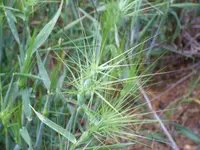
Schedule any hand weeding or allowed mechanical control just before ovate goatgrass tillering, when seedlings are easiest to remove and the crop is least likely to be damaged.

Lodging risk reduction

In exposed or windy sites, keep plants in slightly shorter, firmer growth by avoiding excessive nitrogen and, if needed, providing low windbreaks so stems are less likely to bend or snap.

Seed-head monitoring

Start inspecting seed heads as they form and bag a few representative spikes with breathable paper bags to track ripening and reduce seed loss from shattering before harvest.

Clean harvest practice

Harvest on a dry day and clean tools, shoes, and equipment afterward so seeds do not spread unintentionally, which is an important part of responsible caring for ovate goatgrass in mixed-use landscapes.

Common Pests and Diseases

Leaf rust

This disease causes small orange to brown pustules on leaves and stems, often leading to premature yellowing and reduced vigor.

Solution

Remove and destroy heavily infected foliage and crop residues, avoid overhead watering to keep foliage dry, and increase spacing or airflow to reduce humidity; in field settings, rotate away from other susceptible grasses and consider resistant seed sources where available.

Powdery mildew

This disease forms white, powdery patches on leaves and stems, which can coalesce and cause leaf distortion and reduced growth.

Solution

Improve air circulation by reducing crowding, avoid excessive nitrogen fertilization that encourages soft, susceptible growth, and remove affected leaves; in outdoor stands, selecting sunnier, drier sites helps limit spread.

Aphids

These insects cluster on young shoots and undersides of leaves, sucking sap and sometimes transmitting viral diseases while leaving sticky honeydew.

Solution

Dislodge colonies with a firm stream of water, encourage or introduce natural predators such as lady beetles, and, if needed, apply insecticidal soap or a light horticultural oil, making sure to cover leaf undersides.

Grasshoppers

These insects chew irregular holes and may strip foliage, especially on young plants or in dry, open sites.

Solution

Hand-pick and remove individuals where practical, reduce nearby tall weeds that shelter nymphs, and in larger infestations use physical barriers such as fine mesh netting around vulnerable stands during peak feeding periods.

Barley yellow dwarf virus

This disease causes yellowing or reddening of leaf tips, stunted growth, and reduced tillering, and is spread mainly by aphids feeding on the plants.

Solution

Remove and destroy badly affected plants, reduce aphid populations through monitoring and targeted control, and in field contexts avoid planting near infected cereal or grass stands and maintain a weed-free buffer to limit virus reservoirs; for long-term management, use clean seed and resistant or tolerant lines where available.

Interesting Facts

Wild wheat relative

This grass is a wild relative of domesticated wheat and has been used in genetic studies to understand disease resistance and stress tolerance in cereal crops.

Knee-joint stems

The plant has characteristically geniculate, or sharply bent, stem nodes that give it a jointed, kinked appearance, which inspired its species epithet geniculata.

Mediterranean native range

It is native to the Mediterranean Basin and adjacent regions, where it typically grows in dry, open habitats such as disturbed fields, roadside margins, and rocky slopes.

Botan icon

Did you know?

Genes from this species have been introgressed, or deliberately transferred, into cultivated wheat in breeding programs to improve resistance to serious fungal diseases such as leaf rust and powdery mildew.

FAQs about ovate goatgrass

This grass establishes fairly quickly in suitable conditions, especially in disturbed or open sites with full sun and well-drained soil. Growth slows in nutrient-poor or compacted ground, but it still competes effectively with many other low-growing species.

Grow Healthy Plants with Botan Care

Keep your plants happy and healthy with plant identification, disease detection, and easy care guidance.

Botan plant care app — identify plants on mobile

Explore More Plants