orange balsam Care (Impatiens capensis)

Also known as: jewelweed, common jewelweed, spotted jewelweed, spotted touch-me-not, kicking-colt, orange jewelweed, orange touch-me-not
orange balsam

About orange balsam

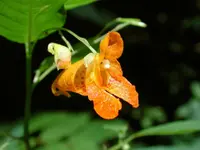
Orange balsam (Impatiens capensis), also called jewelweed, is a fast-growing annual wildflower known for its bright orange, spotted, pouch-shaped flowers. Plants often form loose colonies with juicy, translucent stems and soft, shallowly toothed leaves.

This species is native to moist, partially shaded habitats across much of North America, especially along streams, ditches, and woodland edges. It reseeds easily, so once established it often returns each year without much effort.

For gardeners, Impatiens capensis is generally easy if soil stays consistently moist and rich in organic matter. Light to medium shade and damp conditions are usually enough to successfully care for orange balsam.

Main Plant Requirements

Care Difficulty

Easy Care

Light Preference

Partial Shade

Water Requirements

Keep Soil Moist

Temperature Preference

Cool Climate

Hardiness Zone

2–9

Soil Texture

Loamy, Silty, Organic-rich

Soil pH

Acidic (5.5–6.5), Slightly acidic (6.5–7.0)

Soil Drainage

Moist but well-drained

Fertilization

Minimal (feed rarely)

Get Personalized Care Plan

Scan your plant to receive care tips personalized for your specific plant

Available on iOS and Android

How to Care for the orange balsam

Impatiens capensis grows best in bright but softened light that mimics a woodland edge.

  • Aim for 3–5 hours of morning sun with light shade or dappled light the rest of the day to reduce leaf scorch.
  • Provide partial shade (filtered light under trees or on the east/north side of buildings); strong afternoon sun can burn leaves and dry soil quickly.
  • In summer, shift orange balsam to slightly shadier spots if leaves bleach or curl; in cooler months, allow a bit more direct morning sun.

Impatiens capensis prefers consistently moist, cool soil without becoming waterlogged.

  • Water when the top 2–3 cm of soil feels damp but not saturated; soil should never dry out completely during active growth.
  • Use soil rich in organic matter that drains well; pooling water or a sour smell signals poor drainage and possible root rot.
  • In hot, dry weather, increase checks for drooping foliage and dry soil; in cool, rainy periods, reduce watering and rely more on natural rainfall.

This species thrives in mild, temperate conditions similar to cool summer woodland edges.

  • Optimal growth occurs around 65–80°F (18–27°C), with steady moisture helping the plant handle the warmer end of this range.
  • Plants tolerate down to about 32°F (0°C) but are damaged or killed by hard frost, so expect them to die back after the first few frosty nights.
  • Short heat waves up to about 86°F (30°C) are tolerated if soil stays moist and roots shaded; prolonged high heat with dry soil leads to wilting and leaf drop.

This species prefers moist air but usually copes with typical outdoor humidity in its native range.

  • Aim for 50–70% humidity, especially in warm weather or exposed, sunny spots.
  • In very dry air, leaves may curl, tips may brown, and plants may wilt faster between waterings.
  • Increase humidity by grouping plants near water features or damp mulched soil rather than misting foliage, which can encourage disease.

This plant thrives in consistently moist, organic-rich soil that mimics stream banks and wet meadows.

  • Use a loamy mix with high organic matter, such as garden loam blended with 40–50% compost or leaf mold, to retain moisture.
  • Ensure slow but steady drainage; soil should stay damp without standing water for more than a few hours to prevent root decline.
  • Maintain slightly acidic to neutral pH (6.0–7.0), adding peat-free compost or pine fines if native soil is very alkaline.
  • For Impatiens capensis in drier gardens, deepen the organic layer and apply 5–8 cm of mulch to stabilize moisture and improve aeration.

This species can be grown in containers if moisture needs are met carefully.

  • Choose a deep, wide pot to support its tall, branching growth and allow a broad, fibrous root system to spread.
  • Select heavier materials like ceramic or thick plastic to reduce tipping risk and slow evaporation in hot, windy sites.
  • Place the container inside a shallow, water-filled tray with stones so drainage remains free while the immediate air and rim soil stay more humid for growing orange balsam.

This self-seeding native usually needs little feeding, but light fertilization can support denser growth when growing orange balsam in poor soils.

  • Use a balanced, water-soluble fertilizer (for example 10-10-10 or 15-15-15) diluted to 1/4–1/2 strength for container-grown plants.
  • Apply every 4–6 weeks during the active growing season if soil is low in organic matter.
  • In the ground, prioritize compost or leaf mold as a thin top-dressing once in spring.
  • Stop feeding in late summer to early fall, and avoid fertilizing dormant or frost-killed plants.

Pruning Impatiens capensis is mainly light maintenance to keep plants tidy and encourage branching.

  • Pinch or trim soft shoot tips in late spring to early summer to promote bushier growth and more flowering stems.
  • Remove dead, diseased, or storm-damaged shoots promptly with clean, sharp scissors or hand pruners.
  • Thin out overcrowded stems at the base to improve airflow and reduce foliar disease risk.
  • At season’s end, cut back or pull spent annual plants after frost once seeds have dropped if self-sowing is desired.

This annual is more often transplanted outdoors than maintained long term in containers.

  • Transplant seedlings after frost danger has passed, once plants have 2–3 true leaves and roots have lightly filled starter cells or small pots.
  • If grown in a pot, consider moving to a slightly larger container only when roots circle the drainage holes or growth stalls.
  • Handle roots gently, keep the root ball intact, and plant at the same soil level to reduce transplant shock.
  • Water thoroughly after transplanting, then keep soil evenly moist and shaded for several days while plants re-establish.

New Impatiens capensis plants are most commonly raised from seed, with self-sowing doing much of the work in suitable sites.

  • Collect mature seed pods carefully in late summer to early fall before they burst, then dry and store seeds cool and dry.
  • Sow seeds outdoors in fall or very early spring; natural cold exposure improves germination.
  • For controlled starts, surface-sow seeds in moist, fine seed mix, press lightly, and maintain cool temperatures and consistent moisture.
  • Thin dense seedlings to avoid crowding, leaving 15–30 cm between plants for better airflow and growth.

This species behaves as a frost-tender annual above ground but often reappears from seed rather than overwintering as a plant.

  • Expect top growth to die after hard frost; no stem or foliage protection is usually needed.
  • In cold climates, rely on self-sown seed for next year and avoid heavy fall clean-up that removes all leaf litter and seed.
  • Container-grown plants can be discarded after frost and replaced from seed or nursery starts the following season.

Care Tips

Self-seeding management

Leave a patch of mature seed pods on the plants to drop naturally in late summer, then lightly rake or press the seeds into the top 0.5–1 cm of soil to ensure a dense stand the following year without extra sowing.

Streambank stabilization

On sloped or streambank sites, plant in a staggered, triangular pattern at 20–30 cm spacing so the fibrous roots knit the soil and reduce erosion while still allowing water flow.

Patch edge control

Mow or string-trim a narrow 30–45 cm border around the colony just before flowering to contain spread and keep plants from encroaching into paths or neighboring beds.

Companion moisture cues

Grow plants alongside other moisture-loving natives like skunk cabbage or sensitive fern and use their wilting or yellowing as an early visual cue to check soil conditions for the entire planting when caring for orange balsam.

Wildlife access planning

When planting near water, leave small unplanted gaps or stepping-stone areas so people and pets can still access the bank without trampling the densest stems and flowers.

Common Pests and Diseases

Downy mildew

This disease causes pale, yellowish leaf spots that later turn brown, with grayish to purplish fuzzy growth on the undersides in humid weather. Symptoms include rapid leaf drop and thinning of the plant canopy.

Solution

Remove and destroy affected leaves and heavily infected plants to reduce spread, and avoid overhead watering so foliage dries quickly. Increase spacing and airflow, and if growing orange balsam in a garden bed with repeated issues, rotate it to a different area and clean up all plant debris at season’s end.

Powdery mildew

This disease produces white, powdery patches on leaves and stems that can lead to distortion and premature leaf drop. Symptoms include a dull, gray cast to foliage and reduced vigor, especially in crowded or shaded sites with poor air movement.

Solution

Prune to thin dense patches and improve air circulation, and water at soil level rather than on the foliage. Remove badly affected leaves to lower spore numbers and avoid overhead irrigation in late afternoon or evening so leaves do not remain damp overnight.

Leaf spot fungi

This disease group causes small, circular to irregular brown or tan spots that may have darker borders and sometimes merge into larger dead areas. Symptoms include scattered spotting, yellowing, and eventual shedding of older leaves, especially in warm, wet periods.

Solution

Collect and discard fallen leaves and remove the most affected foliage to reduce fungal spores around the plant. Limit leaf wetness by watering early in the day and directing water to the soil, and avoid crowding plants so rain and dew can dry quickly.

Aphids

These insects are small, soft-bodied sap feeders that cluster on young stems and the undersides of leaves, causing curling or distortion. This pest often produces sticky honeydew that can lead to sooty mold on nearby surfaces.

Solution

Spray plants with a strong stream of water to knock aphids off stems and leaves, repeating every few days as needed. For persistent colonies, treat with insecticidal soap or a light horticultural oil, ensuring full coverage of the undersides of leaves and new growth.

Spider mites

These pests are tiny sap-feeding arachnids that cause fine stippling, bronzing, and a dull appearance on leaves, sometimes accompanied by very fine webbing. Symptoms include leaf dryness and premature drop during hot, dry periods or in sheltered, low-humidity spots.

Solution

Rinse foliage thoroughly with water, focusing on the undersides of leaves, and repeat regularly to disrupt mites. Increase humidity around plants if possible and, in severe cases, use insecticidal soap or horticultural oil, applied in cooler parts of the day to avoid leaf burn.

Interesting Facts

Spring-loaded seed pods

The plant uses explosive dehiscence, where ripe seed capsules build tension in their walls and suddenly coil when touched, flinging seeds away from the parent plant for wider dispersal.

Hummingbird pollination link

Its bright orange, spotted, tubular flowers are shaped to match the beaks of hummingbirds, which are among its primary pollinators in much of its North American range.

Moist habitat specialist

This species naturally favors seasonally wet soils along streams, ditches, and forest edges, where its shallow roots can quickly exploit moist, nutrient-rich substrates.

Botan icon

Did you know?

This species often forms dense, single-species stands in wet habitats that help stabilize soil and reduce erosion along stream banks, influencing both water quality and local plant community structure.

FAQs about orange balsam

This species self-seeds heavily and can spread quickly in moist, disturbed soil. Seed pods eject seeds several feet. Regular thinning, deadheading spent flowers, and mulching bare soil help keep patches contained and manageable.

Grow Healthy Plants with Botan Care

Keep your plants happy and healthy with plant identification, disease detection, and easy care guidance.

Botan plant care app — identify plants on mobile

Explore More Plants