spotted dead-nettle Care (Lamium maculatum)

Also known as: spotted henbit
spotted dead-nettle

About spotted dead-nettle

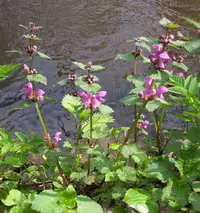
Spotted dead-nettle (Lamium maculatum) is a low-growing perennial groundcover, valued for its variegated foliage and small, tubular flowers. It tends to form soft, spreading mats that fill in shady or partially shaded areas. The leaves are usually silvery or mottled with green edges, while the flowers can be pink, purple, or white, adding subtle color over a long season. This species is native to parts of Europe and Western Asia but is widely grown in temperate gardens. It is generally easy to grow, adapting to a range of soils as long as they are not waterlogged. Understanding how to care for spotted dead-nettle helps keep it dense and healthy without becoming invasive in favorable conditions.

Main Plant Requirements

Care Difficulty

Easy Care

Light Preference

Partial Shade

Water Requirements

Moderate Water

Temperature Preference

Cold Hardy

Hardiness Zone

3–8

Soil Texture

Loamy, Sandy, Organic-rich

Soil pH

Acidic (5.5–6.5), Slightly acidic (6.5–7.0)

Soil Drainage

Moist but well-drained

Fertilization

Minimal (feed rarely)

Get Personalized Care Plan

Scan your plant to receive care tips personalized for your specific plant

Available on iOS and Android

How to Care for the spotted dead-nettle

This shade-tolerant groundcover prefers cool, filtered light rather than strong direct sun.

  • Provide partial shade with 2–4 hours of gentle morning sun or bright dappled shade under trees for best foliage color and flowering.
  • Avoid harsh afternoon sun, especially in summer, which can scorch leaves, fade markings, and dry the soil too quickly for spotted dead-nettle.
  • In hotter climates, increase shade during late spring–summer; in cooler regions, a bit more morning sun helps maintain compact, dense growth.

This plant prefers lightly moist, well-drained soil and reacts quickly to extremes of drought or saturation.

  • Water when the top 2–3 cm of soil feel dry, then soak thoroughly so moisture reaches the root zone without leaving standing water.
  • During hot, dry periods, check soil every 2–3 days; in cool or rainy seasons, reduce watering to avoid soggy conditions around Lamium maculatum.
  • Wilting, crisp leaves, and shrinking mats indicate underwatering, while yellowing, mushy stems and a sour soil smell point to overwatering or poor drainage.

This hardy perennial tolerates a wide temperature range but performs best in moderate conditions.

  • Optimal active growth occurs around 55–75°F (13–24°C), with strong foliage color and steady spreading in these temperatures.
  • Established plants usually survive down to about -20°F (-29°C) in the ground, though foliage may die back and re-sprout from the crown in spring.
  • Heat tolerance is moderate; above 85°F (29°C), combine extra shade and consistent soil moisture to limit stress and leaf scorch.

This species grows well in typical indoor humidity but benefits from slightly moist air.

  • Aim for 40–60% humidity, which is adequate for spotted dead-nettle in most homes.
  • Dry air can cause crisp leaf edges and slower growth, especially near heating vents or strong sun.
  • Increase humidity by grouping plants, placing the pot on a pebble tray with water, or locating it away from drying drafts.

This plant prefers loose, humus-rich soil that stays evenly moist yet drains freely.

  • Use a mix of 50–60% compost or peat-free potting mix with 20–30% leaf mold and 20% perlite or coarse sand for Lamium maculatum.
  • Ensure the soil is well-drained but not sandy dry; it should feel springy and crumbly, not compacted or sticky.
  • Aim for slightly acidic to neutral pH, around 6.0–7.0, which supports nutrient uptake and root activity.
  • Avoid heavy clay, waterlogged spots, or pure sand; improve drainage and aeration by incorporating coarse particles throughout the planting depth.

This species is well-suited to container growing on patios, balconies, or shaded beds.

  • Choose a wide, shallow container to accommodate its spreading habit and allow stems to trail over the edges.
  • Select a slightly heavier pot material, such as ceramic, to keep the container stable as the plant spreads unevenly.
  • Ensure several drainage holes so excess water exits quickly, preventing the shallow roots from sitting in saturated mix.

Lamium maculatum is a light feeder that benefits from modest nutrition in poor or depleted soils.

  • Apply a balanced, dilute liquid fertilizer (for example 10-10-10 at 1/2 strength) every 4–6 weeks in spring and early summer.
  • Alternatively, use a thin topdressing of compost around the root zone once each spring.
  • In containers, a slow-release balanced fertilizer at label rates supports steady growth.
  • Stop feeding spotted dead-nettle in late summer and avoid fertilizing during winter dormancy.

Lamium maculatum responds well to light pruning that keeps the groundcover dense and flowering.

  • In late spring or after main flowering, shear back leggy or sprawling stems with clean hand shears to encourage bushier regrowth.
  • Remove dead, damaged, or diseased shoots whenever noticed to maintain plant health and airflow.
  • Thin crowded patches by cutting out entire stems at the base to prevent matting and reduce humidity-related issues.
  • Lightly deadhead or trim spent flower spikes to tidy appearance; this may extend the blooming period.

This groundcover is more often transplanted in beds than repotted, as Lamium maculatum spreads by creeping stems.

  • Transplant clumps in early spring or early fall when temperatures are mild and soil is evenly moist.
  • Look for signs such as mats invading nearby plants, bare centers, or slow vigor as cues to lift and reset sections every 3–4 years.
  • Lift clumps with a fork, gently tease roots apart, trim any circling or damaged roots, and replant at the same depth.
  • Water thoroughly after transplanting, then keep soil slightly moist for 1–2 weeks to limit transplant shock and support new root growth.

Lamium maculatum is commonly propagated to expand groundcover patches or refresh older plantings.

  • Divide established clumps in early spring or early fall, replanting healthy sections with several shoots and roots attached.
  • Use short stem cuttings with 2–3 nodes in late spring; root them in moist, well-drained mix under bright, indirect light.
  • Pinned-down stems often root where they touch soil; detach and replant these layered pieces once roots are well formed.
  • Seeds can be sown in fall or early spring outdoors; provide cool, moist conditions and thin seedlings to avoid overcrowding.

Lamium maculatum is generally cold hardy and needs minimal winter care in most temperate gardens.

  • In USDA zones roughly 3–8, top growth may die back in severe cold but roots usually survive and resprout in spring.
  • Apply a 3–5 cm layer of shredded leaf or bark mulch around, not on top of, crowns to buffer freeze–thaw cycles.
  • In containers, move pots to a sheltered, unheated but frost-moderated spot and water sparingly so the root ball never dries out completely.

Care Tips

Use as living mulch

Plant in a wide band under shrubs or along shady paths so the dense mat suppresses weeds and moderates soil temperature around other plants.

Edge control trimming

Once or twice a season, slice along bed edges with a sharp spade or half-moon edger to remove wandering stems and keep the groundcover from invading lawns or nearby plantings.

Lift and thin mats

Every 2–3 years, lift older sections with a fork, discard woody or congested centers, and replant only the vigorous outer pieces to keep the carpet low, full, and disease-resistant.

Improve airflow under foliage

In very dense patches, lightly thin or shorten outer stems so air can move through the mat, which reduces the risk of foliar disease in humid or wet climates.

Use as living spillover

In containers or at the front of raised beds, position plants near edges so stems can trail over the side, which keeps foliage drier on top of the soil and makes caring for spotted dead-nettle easier in tight spaces.

Common Pests and Diseases

Powdery mildew

This disease often appears in humid, shaded sites with poor air movement. Symptoms include white, powdery patches on leaves that can cause yellowing and premature leaf drop.

Solution

Remove and discard the most affected leaves, then thin or space plants to improve airflow and avoid overhead watering. If needed, apply a sulfur or potassium bicarbonate fungicide labeled for ornamental groundcovers, following label directions and treating both upper and lower leaf surfaces.

Leaf spot

This disease causes small brown, tan, or purplish spots on leaves that may coalesce into larger dead patches, making the foliage look tattered. Symptoms include faster decline in dense or overly wet plantings.

Solution

Prune and dispose of infected foliage, then reduce leaf wetness by watering at soil level and avoiding evening irrigation. Improve air circulation and, in severe cases, use a copper-based or chlorothalonil fungicide suitable for ornamentals, rotating products if repeat treatments are needed.

Aphids

These insects cluster on young stems and leaf undersides, sucking sap and causing curling or distortion of new growth. This pest also excretes sticky honeydew that can attract ants or lead to sooty mold on leaves.

Solution

Rinse colonies off with a firm stream of water, repeating every few days until numbers drop. For persistent infestations, use insecticidal soap or a light horticultural oil, ensuring thorough coverage of new shoots and leaf undersides while treating in cooler parts of the day to reduce leaf stress.

Slugs and snails

This pest is common in the cool, moist, shaded conditions favored by spotted dead-nettle. Symptoms include irregular holes in leaves and silvery slime trails on foliage or nearby surfaces.

Solution

Hand-pick slugs and snails in the evening, use iron phosphate slug baits placed around but not on the foliage, and reduce hiding spots by removing debris and dense mulch at the crown. Drip irrigation or morning watering also helps keep the soil surface drier during the night when they feed.

Spider mites

These insects can appear in hot, dry periods and are more common when plants grow in too much sun. Symptoms include fine stippling on leaves, dull or grayish foliage, and very fine webbing between stems and leaves.

Solution

Spray foliage with a strong stream of water to dislodge mites and increase humidity around the plants, then move them to slightly more shade if possible. For ongoing problems, apply insecticidal soap or a miticide labeled for ornamentals, repeating treatments according to the label while focusing on the undersides of leaves to support Lamium maculatum care.

Interesting Facts

Two-tone leaf pattern

The characteristic silver or pale central markings on the leaves result from air spaces in the leaf tissue that reflect light, which helps reduce overheating and light stress on the forest floor where the plant naturally grows.

Nectar adapted flowers

Its pink to purple tubular flowers are shaped to favor long-tongued bees, such as bumblebees, which can easily reach the nectar while also picking up and transferring pollen efficiently.

Spring woodland specialist

In its native European range, it often flowers from spring into early summer under deciduous trees, taking advantage of bright light before the tree canopy fully closes and shade intensifies.

Botan icon

Did you know?

Despite its common name as a dead-nettle, this species lacks the stinging hairs found in true nettles (Urtica species), so its leaves can be handled without the irritation associated with stinging nettles.

FAQs about spotted dead-nettle

This species spreads by creeping stems that root at the nodes, forming a dense mat over time. It is usually manageable in gardens, but edging, dividing clumps, and removing unwanted runners help control growth when growing spotted dead-nettle.

Grow Healthy Plants with Botan Care

Keep your plants happy and healthy with plant identification, disease detection, and easy care guidance.

Botan plant care app — identify plants on mobile

Explore More Plants