Deep root establishment
During the first 2–3 years, apply water slowly over a wide radius around the trunk to encourage deep, drought-resilient roots rather than frequent light sprinkling near the stem.

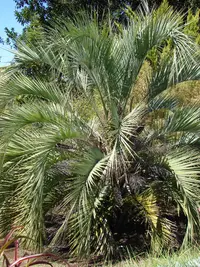
Yatay palm (Butia yatay) is a slow-growing, feather-leaved palm tree valued for its graceful, arching blue‑green fronds and sturdy trunk. It is typically grown as a specimen tree in warm, frost-prone regions. Native to grasslands and open woodlands of Argentina, Uruguay, and southern Brazil, it tolerates wind, brief cold, and seasonal drought better than many tropical palms. These traits make it relatively resilient once established, though growth remains slow. It prefers full sun, well-drained soil, and moderate moisture. Understanding how to care for Yatay palm helps gardeners decide if its long-term, architectural presence suits their space and climate.

Care Difficulty
Moderate Care

Light Preference
Full Sun

Water Requirements
Low Water

Temperature Preference
Warm Climate

Hardiness Zone
9–11

Soil Texture
Sandy, Loamy, Rocky

Soil pH
Slightly acidic (6.5–7.0), Neutral (7.0)

Soil Drainage
Well-drained

Fertilization
Minimal (feed rarely)
Scan your plant to receive care tips personalized for your specific plant
Available on iOS and Android
This species thrives in bright, open sites with strong sun exposure for most of the day.
Watering should support deep root development while preventing standing water around the crown.
This palm is relatively cold-hardy for a feather palm but still has clear temperature limits.
This species is adaptable to typical indoor humidity and rarely needs special adjustment.
This palm prefers sharply drained, sandy to loamy soil that does not stay wet after watering.
This species can be grown in containers, especially while young or in cooler climates.
Moderate, balanced feeding supports steady growth and leaf color in Yatay palm grown in poor or sandy soils.
Selective pruning keeps Butia yatay safe, tidy, and structurally sound without stressing the palm.
Transplanting is more relevant than repotting, as this palm is usually grown outdoors in the ground.
Propagation of Butia yatay is almost always done from seed and is slow and technically demanding for home growers.
This palm is relatively cold hardy but benefits from some winter care in climates with freezing temperatures.

Plant Health Check
Not sure what's wrong with your plant? Check your plant's health inside the app.
This palm is naturally restricted to the warm temperate grasslands and open woodlands of northeastern Argentina, southern Brazil, and Uruguay, making it one of the few pinnate palms adapted to the South American pampas biome rather than tropical rainforest.
Mature plants can survive short dips below freezing, which is uncommon for many feather-leaf palms and reflects adaptation to occasional cold snaps in its native range.
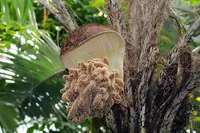
The plant produces fleshy yellow-orange drupes that are eaten by birds and mammals in its habitat, helping disperse the seeds across open landscapes.

In parts of its native range, dense stands of this species have been recognized as distinctive palm savanna formations, where its tall, slender trunks and open crowns structure entire landscapes and create habitat mosaics for grassland and woodland species.
Brown tips usually come from low humidity, dry or hot winds, salt buildup in the soil, or irregular deep watering. Flush the soil occasionally, water more evenly, and protect the foliage from harsh, drying conditions.
Keep your plants happy and healthy with plant identification, disease detection, and easy care guidance.