Root containment strategy
In the ground or in large outdoor containers, install a deep root barrier or choose a very heavy, wide pot to limit lateral root spread and prevent the tree from destabilizing nearby structures over time.

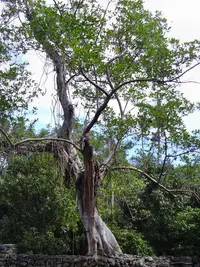
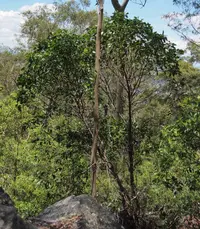
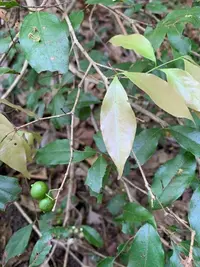
The Florida strangler fig, Ficus aurea, is a woody fig species native to Florida, the Caribbean, and parts of Central America. It often begins life on another tree, then sends roots downward and gradually forms a thick trunk. Mature plants develop dense, glossy green foliage and a broad crown that provides deep shade in warm, humid climates. In nature it can reach impressive sizes and support many birds and insects by offering figs as food. In cultivation, it grows fast and is vigorous, so it needs space and some control. Understanding how to care for Florida strangler fig starts with knowing it prefers bright light, warmth, and evenly moist but well-drained soil.

Care Difficulty
Moderate Care

Light Preference
Full Sun

Water Requirements
Moderate Water

Temperature Preference
Tropical / Frost Sensitive

Hardiness Zone
10–11

Soil Texture
Sandy, Loamy, Organic-rich

Soil pH
Acidic (5.5–6.5), Slightly acidic (6.5–7.0)

Soil Drainage
Well-drained

Fertilization
Minimal (feed rarely)
Scan your plant to receive care tips personalized for your specific plant
Available on iOS and Android
This species prefers bright, indirect light but adapts to a range of outdoor sun exposures in warm climates.
Ficus aurea prefers evenly moist, well-drained soil once established in the landscape.
This fig species favors warm, frost-free conditions typical of subtropical and tropical climates.
This species prefers moderately humid air but adapts to typical indoor levels if not extremely dry.
Ficus aurea prefers a well-aerated, fast-draining yet moisture-retentive substrate.
This fig can be grown in containers, but its vigorous root system needs careful management of space and stability.
Ficus aurea benefits from moderate feeding when grown in containers or managed landscapes.
Pruning helps control size and structure of Ficus aurea, especially in small spaces or landscapes.
Repotting or transplanting is mainly relevant for young or container-grown Ficus aurea.
Ficus aurea is most often propagated from cuttings or seeds for restoration or collection purposes.
In frost-free or very mild climates, Ficus aurea needs minimal winter care outdoors.

Plant Health Check
Not sure what's wrong with your plant? Check your plant's health inside the app.
Ficus aurea has an almost exclusive pollination relationship with a tiny wasp, Pegoscapus mexicanus, which must enter the enclosed fig inflorescence (syconium) to lay eggs and transfer pollen, meaning both species depend on each other to reproduce.
This species often starts life as an epiphyte high in another tree’s canopy, sending roots down to the ground that eventually thicken, fuse, and can envelop or outcompete the host tree, a growth habit that inspired the name Florida strangler fig.
In south Florida and parts of the Caribbean, its fruiting can occur at times when few other trees bear fruit, providing an important food source for birds, bats, and other wildlife and contributing to its role as a local keystone species.

In its native range, this species contributes to the formation of so‑called banyan-like groves, where multiple trunks created by fused aerial roots can spread laterally over time and form complex, multi-stemmed structures that function almost like a small forest generated by a single original tree.
This species performs best outdoors in warm, frost-free climates where it can develop a full canopy and natural root system. Indoors it quickly outgrows typical spaces and is usually unsuitable except as a very short-term juvenile specimen.
Keep your plants happy and healthy with plant identification, disease detection, and easy care guidance.