prairie crab apple Care (Malus ioensis)

Also known as: Wild crab-apple, Iowa Crab
prairie crab apple

About prairie crab apple

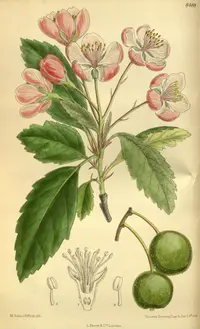
Prairie crab apple, Malus ioensis, is a small, hardy deciduous tree native to central North American prairies and open woodlands. It usually forms a broad, rounded crown with dense branching.

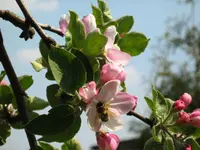
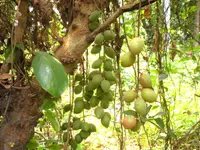
In spring it carries showy pink to white blossoms, followed by small, firm fruits that attract wildlife. The foliage turns attractive shades of yellow to reddish in fall.

This species adapts to a range of soils, provided drainage is good, and prefers full sun with moderate moisture. Its natural toughness and disease resistance make it relatively straightforward to care for prairie crab apple in typical garden settings.

Main Plant Requirements

Care Difficulty

Moderate Care

Light Preference

Full Sun

Water Requirements

Moderate Water

Temperature Preference

Cold Hardy

Hardiness Zone

4–7

Soil Texture

Loamy, Clay, Silty

Soil pH

Acidic (5.5–6.5), Slightly acidic (6.5–7.0)

Soil Drainage

Moist but well-drained

Fertilization

Minimal (feed rarely)

Get Personalized Care Plan

Scan your plant to receive care tips personalized for your specific plant

Available on iOS and Android

How to Care for the prairie crab apple

Malus ioensis thrives in open, bright conditions typical of temperate climates.

  • Provide full sun for 6–8 hours/day to ensure strong flowering and fruiting on prairie crab apple.
  • Plant in a site with morning sun and some light afternoon shade in hotter regions to reduce leaf scorch risk.
  • Avoid deep shade; trees grown with less than 4 hours of direct sun develop sparse canopies, fewer blossoms, and are more prone to disease.

Malus ioensis prefers evenly moist, well-drained soil once established outdoors.

  • Water deeply when the top 5–8 cm of soil feels dry, focusing on the root zone rather than light surface sprinkling.
  • During the first 2–3 years, increase watering during hot, dry spells and reduce it in cool or rainy periods to prevent waterlogging.
  • Watch foliage: wilting, curling, or dull leaves suggest underwatering, while yellowing leaves and soft, dark roots indicate overwatering or poor drainage.

This cold-hardy crab apple tolerates a wide range of outdoor temperatures in temperate regions.

  • Optimal growth occurs around 60–80°F (16–27°C) in spring and early summer, supporting strong shoot and flower development.
  • Trees require winter chill and tolerate lows to about -20°F (-29°C), with dormant wood handling typical frosts without protection.
  • In heat above 90°F (32°C), provide soil moisture and mulch to limit stress, as prolonged extreme heat can reduce flowering and increase leaf drop.

Humidity is rarely a limiting factor for Malus ioensis grown outdoors in its usual climate range.

Malus ioensis grows best in moderately fertile, well-structured mineral soil with reliable drainage.

  • Use a loamy soil with a balanced mix of sand, silt, and clay to support deep rooting and stable moisture.
  • Aim for slightly acidic to neutral pH around 6.0–7.0; add garden lime only if a soil test shows strong acidity.
  • Incorporate 20–30% well-rotted compost into the planting area to improve structure and moisture retention without causing waterlogging.
  • Avoid compacted, heavy clay or spots where water stands after rain, and loosen the top 20–30 cm to increase aeration and drainage.

This species can be grown in containers for a limited time, mainly as a young patio specimen or training plant.

  • Choose a deep, heavy container that resists tipping as the canopy becomes larger and wind load increases.
  • Use a coarse, mineral-based mix in a tall pot to give the long taproot more vertical space and reduce compaction.
  • Raise the container on feet or bricks so drainage holes stay clear and excess water can escape quickly after rain or irrigation.

This native tree grows well in average soils, so prairie crab apple needs only modest fertilization in most gardens.

  • Apply a light layer of compost or well-rotted manure around the drip line once in early spring.
  • Where growth is weak, use a balanced slow-release fertilizer (around 10-10-10) at label rate in spring only.
  • Avoid summer and fall feeding to prevent soft growth that is vulnerable to winter damage.
  • Do not fertilize during winter dormancy; overfeeding can reduce flowering and increase pest issues.

Thoughtful pruning helps maintain Malus ioensis structure, health, and flowering display.

  • Time main pruning for late winter to very early spring, before bud break, when branch structure is visible.
  • Remove dead, diseased, crossing, or inward-growing branches using clean, sharp bypass pruners or a pruning saw.
  • Thin crowded interior shoots to improve light and air flow, which supports better flowering and reduces disease.
  • Limit pruning cuts to smaller branches to preserve the natural shape and prevent excessive water sprout growth.

This species is usually grown in the ground, so care focuses on transplanting young trees rather than frequent repotting.

  • Transplant in early spring or fall when the tree is dormant to limit transplant shock.
  • Look for slow growth, circling roots, or a pot that dries out very quickly as signs a container plant needs a larger space.
  • Move up 1–2 pot sizes or plant into the ground, keeping the root flare at soil level and backfilling with native soil.
  • Water deeply after planting, mulch 5–8 cm away from the trunk, and keep soil evenly moist while new roots establish.

Malus ioensis is most often propagated by seed for conservation work or rootstock, with grafting used for specific selections.

  • Collect ripe fruits in fall, clean seeds, and cold stratify them at 34–41°F for 60–90 days in moist medium.
  • Sow stratified seeds in spring in a free-draining mix, keeping it evenly moist and in bright, cool conditions.
  • For clonal plants, use winter bench grafting or spring whip-and-tongue grafts onto compatible crab apple rootstocks.
  • Label seedlings and grafts clearly, then grow on in a nursery bed or containers until roots and stems are well established.

This cold-hardy crab apple tolerates typical winters in USDA zones where it is recommended and needs little special attention.

  • Apply 5–8 cm of organic mulch over the root zone in late fall, keeping it clear of the trunk bark.
  • Young or newly transplanted trees benefit from trunk wraps or guards to limit sunscald and rodent damage.
  • Container-grown plants should be moved to a sheltered, unheated but frost-moderated location to protect roots.

Care Tips

Early form training

In the first 3–5 years, select a single strong leader and 3–5 well-spaced scaffold branches, removing competing upright shoots in late winter to build a stable, storm-resistant framework.

Sucker management

Inspect the base and root zone 2–3 times per season and promptly cut off root suckers and trunk sprouts flush with their point of origin to maintain tree vigor and a clean, single-stem form.

Fire blight vigilance

From spring bloom through midsummer, check regularly for blackened, shepherd’s-crook shoots and remove infected twigs 20–30 cm back into healthy wood during dry weather, disinfecting tools between cuts.

Fruit load thinning

When fruits reach pea size, thin clusters so only 1–2 fruits remain every 10–15 cm along the branch to reduce limb breakage and improve flower and fruit display the following year when growing prairie crab apple.

Mulch ring management

Maintain a 60–90 cm grass-free mulch ring around the tree, keeping mulch 5–8 cm deep and pulled back 5–8 cm from the trunk to limit mower damage, conserve soil moisture, and reduce weed competition.

Common Pests and Diseases

Apple scab

This disease causes olive-green to black, velvety spots on leaves and fruits, leading to leaf drop and disfigured crab apples.

Solution

Remove and destroy fallen leaves and mummified fruits in autumn, choose or maintain open, well‑aired canopy structure by pruning, and apply a labeled preventive fungicide at bud break and after petal fall in regions where apple scab is common.

Cedar-apple rust

This disease produces bright yellow to orange leaf spots and can cause early defoliation, especially when prairie crab apple grows near junipers or red cedars.

Solution

Prune nearby juniper or red cedar hosts to remove visible galls, rake and discard infected fallen leaves, and use a protective fungicide program from pink bud through several weeks after bloom when disease pressure is historically high.

Fire blight

This disease causes sudden blackening and wilting of blossoms and shoot tips, giving a scorched appearance, with dark, sunken cankers forming on twigs and branches.

Solution

Prune out infected shoots 20–30 cm below visible damage during dry weather, sterilizing tools between cuts, avoid high-nitrogen fertilization that stimulates tender growth, and in areas with severe history, use a labeled blossom spray (such as a biological or copper product) during bloom according to local recommendations for Malus ioensis care.

Apple maggot

This pest tunnels through developing fruits, causing brown, winding trails and premature fruit drop, making crab apples unattractive to wildlife and unusable for jelly or preserves.

Solution

Collect and discard infested or fallen fruits promptly, use sticky red sphere traps to monitor and reduce adult populations, and where infestations are persistent, apply targeted insecticide sprays timed to adult fly activity as shown by trap catches.

Codling moth

These insects bore directly into fruits from the calyx end, leaving small entry holes, frass, and internal tunneling that leads to internal breakdown of the apple flesh.

Solution

Remove and destroy dropped fruits regularly, wrap trunk with corrugated cardboard bands in summer then remove and discard them to trap larvae, and in higher-pressure sites, use pheromone traps to monitor flight and time any necessary insecticide or biological sprays precisely.

Interesting Facts

Prairie-savanna specialist

This species is native to midwestern North American prairies and savannas, where it often grows on dry, open sites and rocky slopes rather than in closed forests, making it more drought-tolerant than many other crabapples.

Showy, fragrant bloom

It produces large, pale pink to deep rose flowers in dense clusters in spring, with a strong fragrance that attracts a wide range of native bees and other pollinators.

Wildlife food resource

The small, hard fruits persist into winter and are eaten by birds and small mammals, providing an important late-season food source in its native range.

Botan icon

Did you know?

Genetic and morphological studies indicate that Malus ioensis has distinct regional variants, including the form traditionally called Malus ioensis var. texana in Texas, showing how this prairie species has locally adapted to different parts of its North American range.

FAQs about prairie crab apple

Lack of flowers is usually linked to insufficient sunlight, heavy pruning of 1–2-year-old wood, or nutrient imbalance. Late frosts can also kill flower buds. Check pruning practices and site exposure before considering more detailed Malus ioensis care.

Grow Healthy Plants with Botan Care

Keep your plants happy and healthy with plant identification, disease detection, and easy care guidance.

Botan plant care app — identify plants on mobile

Explore More Plants