Heldreich's maple Care (Acer heldreichii)

Also known as: Greek maple, Balkan maple
Heldreich's maple

About Heldreich's maple

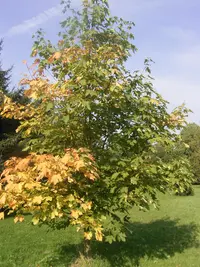
Heldreich's maple, Acer heldreichii, is a deciduous tree valued for its dense, rounded crown and attractive lobed leaves that develop warm autumn colors. It typically forms a medium to large tree with a strong central trunk and well-branched canopy, giving reliable shade in landscapes.

This species is native to mountainous regions of the Balkans, where it grows on rocky slopes and cool upland sites. It is generally hardy and wind tolerant but prefers moderately fertile, well-drained soil and steady moisture when establishing.

Gardeners who care for Heldreich's maple appreciate its durability once rooted in place, though it dislikes waterlogged ground and very hot, dry sites. With suitable climate and soil, it can be a long-lived feature tree.


Main Plant Requirements

Care Difficulty

Moderate Care

Light Preference

Full Sun

Water Requirements

Moderate Water

Temperature Preference

Cold Hardy

Hardiness Zone

5–7

Soil Texture

Loamy, Silty, Organic-rich

Soil pH

Acidic (5.5–6.5), Slightly acidic (6.5–7.0)

Soil Drainage

Moist but well-drained

Fertilization

Minimal (feed rarely)

Get Personalized Care Plan

Scan your plant to receive care tips personalized for your specific plant

Available on iOS and Android

How to Care for the Heldreich's maple

This mountain maple prefers bright outdoor conditions with protection from harsh extremes.

  • Provide 4–6 hours of direct morning sun with light afternoon shade, or bright dappled light all day in hotter regions to reduce leaf scorch risk.
  • In cooler climates, Heldreich's maple tolerates full sun, but monitor young trees for leaf burn during dry, windy periods.
  • Avoid deep shade, which leads to sparse growth and dull foliage; ensure at least 3–4 hours of strong light, especially from spring to early autumn.

This species prefers consistently moist yet well-drained soil rather than strict watering schedules.

  • Water when the top 3–5 cm of soil feels dry, then soak the root zone deeply so moisture reaches 20–30 cm, encouraging a robust root system.
  • Use soil rich in organic matter with good drainage; standing water or heavy clay increases risk of root rot and pale, yellowing leaves.
  • Reduce watering frequency in autumn and winter, but never let soil stay bone-dry for long; wilting, crisp leaf edges indicate drought stress in Acer heldreichii.

This hardy maple thrives in cool to moderate climates with distinct seasons.

  • Active growth is strongest at 55–75°F (13–24°C); extended periods above 85°F (29°C) increase heat stress and may require extra shade and soil moisture.
  • Mature trees tolerate winter lows around -10°F to -20°F (-23°C to -29°C), but young plants benefit from mulch to protect surface roots from freeze–thaw cycles.
  • Sudden late frosts after budbreak can damage new leaves; in exposed sites, choose slightly sheltered positions to reduce cold wind impact.

This species handles a wide humidity range and rarely needs special humidity management outdoors.

  • Target 40–60% humidity when grown in sheltered or courtyard sites, similar to most temperate outdoor conditions.
  • Dry air combined with heat and wind can cause marginal leaf scorch, crisp tips, and premature leaf drop.
  • Increase local humidity by using windbreaks, mulching the root zone, and avoiding highly reflective hardscape directly beneath Heldreich's maple.

This maple prefers cool, moderately moist, well-structured mineral soil with steady drainage.

  • Use a deep, loamy soil rich in organic matter that holds moisture yet drains freely, ideal for Acer heldreichii in temperate gardens.
  • Aim for slightly acidic to neutral pH, about 6.0–7.0, where nutrients like iron and manganese remain available.
  • Incorporate 20–30% compost plus coarse sand or fine gravel to improve structure, drainage, and root aeration in heavier ground.
  • Avoid compacted clay, standing water, or extremely alkaline substrates, which promote root decline, chlorosis, and poor growth.

Acer heldreichii can be grown in containers for many years, but only with careful attention to root space and stability.

  • Choose a wide, heavy container to counterbalance the tree’s canopy and reduce tipping in strong winds.
  • Select thick-walled clay or concrete pots to moderate root temperature swings and slow moisture loss in hot weather.
  • Elevate the container slightly on feet or spacers so drainage holes clear quickly after rain or deep watering, preventing waterlogging at the base.

This mountain maple benefits from light, targeted feeding rather than heavy fertilization.

  • Apply a balanced slow-release fertilizer (around 10-10-10) once in early spring as new growth begins.
  • Use compost or well-rotted leaf mold as a thin mulch layer to improve soil structure and slow nutrient release.
  • Avoid feeding during summer drought or peak heat to reduce salt stress on roots.
  • Stop fertilizing Heldreich's maple by late summer so new growth hardens before winter.

Pruning Acer heldreichii focuses on structure, safety, and plant health rather than heavy shaping.

  • Carry out main pruning in late winter to very early spring before bud break.
  • Remove dead, diseased, crossing, or storm-damaged branches with clean bypass pruners or a sharp saw.
  • Thin crowded interior branches to improve airflow and light penetration, maintaining a natural outline.
  • Limit large cuts; instead, make smaller, well-placed cuts just outside the branch collar to reduce decay risk.

This maple is usually grown in the ground, so focus on careful transplanting rather than frequent repotting.

  • Transplant young trees in late fall or very early spring when dormant and soil is workable.
  • Look for signs such as roots circling the pot, dense root mass, or stalled shoot growth in container plants.
  • Move to a hole or container only slightly wider than the root ball, using well-drained, moisture-retentive soil.
  • Water deeply after planting, then keep evenly moist while avoiding waterlogging to limit transplant shock.

Propagation of Acer heldreichii is possible but somewhat specialized for home growers.

  • Sow seeds in fall outdoors or after 2–3 months of cold stratification at 34–41°F to break dormancy.
  • Use a well-drained, gritty seed mix and keep it evenly moist but not saturated during germination.
  • Take semi-ripe cuttings in midsummer, use rooting hormone, and place in high humidity with bright shade.
  • Layering low branches in spring can provide a slow but reliable method for clonal plants.

This cold-hardy maple tolerates typical temperate winters, but young or potted plants benefit from some protection.

  • Mulch a 5–8 cm layer around the root zone in late fall, keeping it away from the trunk to prevent rot.
  • Shelter containers in an unheated garage, cold frame, or against a protected wall to buffer roots from freeze-thaw cycles.
  • Avoid late-season nitrogen feeding so shoots mature and become more frost resistant before hard freezes.

Care Tips

Wind exposure management

Site the tree where strong prevailing winds are broken by taller vegetation or structures, or install a windbreak fence for young specimens, since persistent wind desiccates foliage and increases branch breakage risk in snow and ice.

Deep root establishment

During the first 3–4 years, encourage a deep root system by watering less often but for longer sessions and keeping mulch 5–8 cm thick in a wide ring, rather than watering lightly and frequently near the trunk.

Structural branch training

In late winter, select a single strong central leader and remove or shorten steep, competing uprights with clean cuts just outside the branch collar to build a stable, storm-resistant crown.

Snow load protection

In regions with heavy, wet snow, gently shake or brush accumulated snow from branches on young trees during thaws to prevent splitting and tearing at narrow crotch angles.

Trunk and bark care

On exposed sites, use a breathable tree wrap or light-colored trunk guard from late fall to early spring to reduce sunscald and frost cracking, and avoid string trimmers near the base to protect the thin bark when caring for Heldreich's maple.

Common Pests and Diseases

Verticillium wilt

This disease blocks the water-conducting tissue, causing one-sided branch dieback, yellowing, and wilting that often starts on individual limbs. Symptoms include dull, off-color foliage and brown streaks in the sapwood when branches are cut.

Solution

Prune out affected branches well below discolored wood and destroy the material, disinfecting tools between cuts. Avoid overwatering and mechanical root damage, keep the tree well mulched and unstressed, and if decline is severe, remove the tree and replant with a non-susceptible species in the same spot rather than trying to grow Acer heldreichii there again.

Leaf scorch

This disorder appears as browning and drying of leaf edges and tips, often on the sunniest or windiest side of the tree, while veins may stay green at first. Symptoms include premature leaf drop during hot, dry, or windy periods, especially on shallow or compacted soils.

Solution

Improve soil moisture balance with regular deep watering in dry weather and a 5–8 cm organic mulch layer kept away from the trunk. Reduce additional stress by avoiding heavy pruning in midsummer, preventing root disturbance, and if possible providing some shelter from hot, drying winds.

Tar spot

This disease causes yellow spots that develop into raised, black, tar-like patches on the upper leaf surface, mostly late in the season. Symptoms include cosmetic spotting and early leaf drop but rarely serious long-term damage to the tree.

Solution

Rake and remove fallen leaves in autumn to reduce the source of infection for the next year. For specimen trees with repeated heavy infection, encourage good air movement around the canopy and consider applying a labeled preventive fungicide in spring just as leaves unfold if cultural measures are not sufficient.

Horse chestnut scale

This pest appears as flat, oval, off-white to brown scales on trunks and larger branches, producing honeydew that can lead to sooty mold on bark and nearby surfaces. This pest typically causes patchy bark discoloration, reduced vigor, and can predispose branches to other problems when infestations are heavy.

Solution

Gently scrub small infestations off smooth bark with a soft brush and water, taking care not to damage the bark. For larger trees, encourage natural predators by avoiding broad-spectrum insecticides, and if needed, use a targeted horticultural oil spray during the crawler stage, applied according to local product labels and timing.

Two-spotted spider mite

These insects feed on the undersides of leaves, causing fine stippling, dulling of foliage color, and in severe cases bronzing and early leaf drop, especially during hot, dry weather. This pest may produce fine webbing between leaf veins and along petioles when populations are high.

Solution

Increase humidity around the canopy where feasible and hose down leaf undersides with a firm stream of water to dislodge mites. For persistent problems, apply horticultural oil or insecticidal soap thoroughly to leaf undersides, repeating as directed, and reduce plant stress through proper watering and mulch to support overall Acer heldreichii care.

Interesting Facts

Balkan high‑mountain maple

This species is native to high-altitude regions of the Balkans, especially in Montenegro, Albania, and northern Greece, where it often forms subalpine forests near the tree line on limestone slopes.

Leaf traits and autumn color

Its leaves are relatively small, thick, and deeply lobed, an adaptation to windy mountain conditions, and they can develop intense yellow to orange-red autumn color, which helps distinguish it from some closely related Balkan maples.

Karst and limestone specialist

Acer heldreichii is strongly associated with calcareous, rocky soils and karst landscapes, showing good tolerance to shallow, stony substrates that many other broadleaf trees struggle to colonize.

Botan icon

Did you know?

This maple is considered an important glacial relict in parts of the Balkans, meaning its present-day populations are remnants of a wider distribution during cooler periods of the late Quaternary, which gives it significance for studying post-glacial forest history in southeastern Europe.

FAQs about Heldreich's maple

This species grows at a moderate rate once established, typically adding 20–40 cm of height per year in suitable conditions. Growth is slower in exposed, dry, or compacted sites, and faster in deep, cool, well-aerated soil.

Grow Healthy Plants with Botan Care

Keep your plants happy and healthy with plant identification, disease detection, and easy care guidance.

Botan plant care app — identify plants on mobile

Explore More Plants