Wind-hardening young plants
Expose young shrubs to increasing wind over several weeks and avoid staking too tightly so stems can flex and develop strong, self-supporting wood in exposed sites.

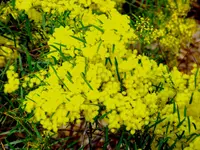
Fringed wattle (Acacia fimbriata) is an evergreen shrub or small tree from eastern Australia, valued for its fine, feathery foliage and soft yellow flower clusters. It usually forms a dense, rounded shape that works well as a screen, hedge, or small feature tree in mild climates.
In nature, it grows on slopes and along watercourses in open forests and woodland margins. This background makes it generally adaptable, fast-growing, and relatively easy to establish in gardens.
It prefers sunny positions, well-drained soil, and moderate moisture, and usually tolerates light pruning. Understanding these traits is the basis of how to care for fringed wattle in home landscapes.

Care Difficulty
Easy Care

Light Preference
Full Sun

Water Requirements
Low Water

Temperature Preference
Warm Climate

Hardiness Zone
9–11

Soil Texture
Sandy, Loamy, Clay

Soil pH
Acidic (5.5–6.5), Slightly acidic (6.5–7.0)

Soil Drainage
Well-drained

Fertilization
Minimal (feed rarely)
Scan your plant to receive care tips personalized for your specific plant
Available on iOS and Android
This shrub prefers bright, direct sun for strong growth and dense flowering.
This species prefers evenly moist, free-draining soil while establishing, then copes well with drier conditions.
This plant suits mild to warm climates and tolerates short heat waves once established.
This species tolerates a wide humidity range and rarely needs special humidity management.
This plant prefers freely draining, moderately fertile soil that does not stay waterlogged.
This species can be grown in containers when provided with stable, deep pots that manage its vigorous root system.
This Australian native needs only light feeding, so focus on supporting growth without overloading nutrients when caring for fringed wattle.
Thoughtful pruning keeps Acacia fimbriata healthy, manageable in size, and flowering well.
This species is usually grown in the ground, so focus on correct site planting rather than frequent repotting.
Acacia fimbriata is most often raised from seed, which benefits from pretreatment to improve germination.
This wattle is mildly frost tolerant but benefits from simple winter precautions in colder regions.

Plant Health Check
Not sure what's wrong with your plant? Check your plant's health inside the app.
This species naturally forms a dense, narrow habit with many slender branchlets, which makes it a favored choice in Australia for hedging and privacy screens in small urban gardens.
Its common name, fringed wattle, refers to the tiny, fine hairs along the leaf-like phyllodes (flattened leaf stalks), which give the foliage a subtly fringed appearance under close inspection.
Like many wattles, it forms root nodules with nitrogen-fixing bacteria, allowing it to grow vigorously in low-fertility, sandy or degraded soils and gradually improve soil nitrogen levels over time.

In eastern Australia, this species is often used in native revegetation projects along waterways and on disturbed sites because it establishes quickly, stabilizes soil, and provides early shelter and nectar for birds and insects while slower-growing trees mature.
Yes, this species adapts well to large containers with good drainage. Use a sturdy pot, prune lightly to manage height, and repot every few years as roots fill the container. Avoid letting the pot dry out completely.
Keep your plants happy and healthy with plant identification, disease detection, and easy care guidance.