Wind acclimation
In the first 1–2 seasons after planting, gradually expose the tree to more wind by using temporary windbreaks (such as mesh fencing) that can be removed in stages so the branches strengthen without snapping in sudden gusts.

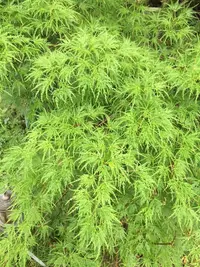
Acer palmatum 'Seiryu', commonly called cutleaf Japanese maple, is a small deciduous tree valued for its finely divided foliage and upright, graceful form. Unlike many laceleaf types that mound or cascade, this cultivar develops a more vertical, vase-shaped structure.
It originates from selections of Japanese maple associated with Japan and neighboring East Asian regions, but is now widely grown in temperate gardens. Its delicate, lacy leaves shift through bright spring tones, rich summer green, and strong autumn color, which makes it a focal point in small landscapes.
The plant prefers a sheltered position with moderate light, evenly moist but well-drained soil, and protection from harsh drying winds. These traits make it moderately easy to grow if you understand how to care for Cutleaf Japanese Maple.

Care Difficulty
Moderate Care

Light Preference
Partial Shade

Water Requirements
Moderate Water

Temperature Preference
Cold Hardy

Hardiness Zone
5–8

Soil Texture
Loamy, Sandy, Organic-rich

Soil pH
Acidic (5.5–6.5), Slightly acidic (6.5–7.0)

Soil Drainage
Moist but well-drained

Fertilization
Minimal (feed rarely)
Scan your plant to receive care tips personalized for your specific plant
Available on iOS and Android
Acer palmatum 'Seiryu' prefers bright conditions with gentle sun that protects its finely cut foliage from scorch.
Acer palmatum 'Seiryu' needs evenly moist, well‑drained soil and careful watering to protect its fine roots.
This maple prefers cool to mild conditions and tolerates cold winters once established.
This maple prefers moderately humid outdoor air but usually adapts to typical garden conditions.
This maple performs best in loose, moisture-retentive yet free-draining soil with moderate organic content.
This maple is suitable for container growing when provided with a stable, well-drained pot setup.
Acer palmatum 'Seiryu' benefits from modest, well-timed feeding but dislikes heavy fertilizer applications.
Acer palmatum 'Seiryu' needs light, selective pruning to maintain structure and health rather than heavy reshaping.
Container-grown or young landscape Acer palmatum 'Seiryu' may occasionally need transplanting when rootbound or declining in vigor.
Acer palmatum 'Seiryu' is usually propagated by grafting onto seedling rootstocks, which makes home propagation more challenging.
This cultivar is fairly cold hardy but still benefits from thoughtful winter care, especially in containers or exposed sites.

Plant Health Check
Not sure what's wrong with your plant? Check your plant's health inside the app.
Unlike most dissectum Japanese maples with weeping canopies, this cultivar has finely divided laceleaf foliage on a naturally upright, vase-shaped framework, giving it a distinct architectural profile in the landscape.
Its foliage typically emerges bright green in spring, holds a clear to slightly yellow-green tone in summer, then turns vivid gold, orange, and often red in autumn, creating a strong three-season color display even in mild climates.
Although it produces viable seeds, this cultivar does not come true from seed; its offspring show wide variation in leaf shape, vigor, and color, so it is maintained in cultivation almost exclusively through grafting when gardeners want consistent Acer palmatum 'Seiryu' plant care results.

This cultivar is one of very few dissectum-type Japanese maples with a reliably upright habit, which has led to its frequent use in breeding programs aimed at combining finely cut foliage with a more tree-like form.
Growth is moderate. In good conditions, it typically adds 20–30 cm per year, sometimes up to 40 cm when young. Growth slows as it matures, focusing more energy on branch structure and fine leaf development.
Keep your plants happy and healthy with plant identification, disease detection, and easy care guidance.