Plan for Size
Before planting, stake out the mature canopy spread with flags or paint to keep the tree at least 20–30 ft from buildings, drains, and overhead lines, since roots and branches expand aggressively over time.

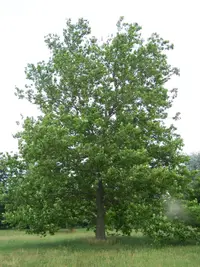
The American sycamore, Platanus occidentalis, is a large, fast-growing deciduous tree best known for its mottled, peeling bark and broad, maple-like leaves. It often develops a massive trunk and a wide, spreading crown, making it a classic shade tree in parks and large landscapes.
This species is native to eastern and central North America, where it typically grows along rivers, streams, and lowland floodplains. It is generally tough and adaptable but needs ample space, consistent moisture, and prefers deep, fertile soils. Understanding how to care for American sycamore starts with recognizing its size, moisture needs, and preference for full sun sites.

Care Difficulty
Easy Care

Light Preference
Full Sun

Water Requirements
Regular Water

Temperature Preference
Cold Hardy

Hardiness Zone
4–9

Soil Texture
Loamy, Clay, Silty

Soil pH
Acidic (5.5–6.5), Slightly acidic (6.5–7.0)

Soil Drainage
Moist but well-drained

Fertilization
Minimal (feed rarely)
Scan your plant to receive care tips personalized for your specific plant
Available on iOS and Android
Platanus occidentalis thrives as a full-sun, outdoor tree with high light demand throughout the growing season.
This species prefers consistently moist but not waterlogged soil, especially during establishment.
This hardy deciduous tree is adapted to wide outdoor temperature swings in temperate climates.
This species is highly tolerant of a wide humidity range and rarely needs special humidity management outdoors.
This species favors deep, moist, alluvial soils but adapts to many mineral soils if structure and drainage are suitable.
This large tree is generally unsuitable for long-term container culture, though short-term containment of young plants is possible for training or temporary placement.
Mature Platanus occidentalis trees in the ground usually need little or no fertilizer when grown in reasonable soil.
Pruning Platanus occidentalis focuses on safety, structure, and removal of poor-quality wood rather than constant shaping.
American sycamore is rarely kept long-term in containers and is usually transplanted as a young field-grown or nursery tree.
Propagation of Platanus occidentalis for landscape use is typically done from seed rather than vegetative methods.
This species is a cold-hardy deciduous tree that typically needs minimal winter care once established in the landscape.

Plant Health Check
Not sure what's wrong with your plant? Check your plant's health inside the app.
The patchy white, green, and brown bark forms because the outer layers cannot stretch as the trunk expands, so they shed irregularly and reveal pale inner bark that helps trees stand out in winter floodplains for field identification.
Mature American sycamores often develop very large, hollow trunks created by heartwood decay, and historical records describe people using these trunk cavities as livestock shelters or temporary dwellings along early American travel routes.
This species is strongly associated with riverbanks and floodplains in eastern North America, where its deep roots and tolerance of periodic flooding help stabilize streambanks and provide shade that cools aquatic habitats.

Some individual American sycamore trees are estimated, based on historical records and growth patterns, to be more than 300 years old, making them living landmarks that predate the founding of the United States in many of the regions where they grow.
This species is considered fast-growing, often adding 60–90 cm or more in height per year in suitable conditions. Growth is quickest in deep, moist soils, with full access to light and adequate root space.
Keep your plants happy and healthy with plant identification, disease detection, and easy care guidance.