


Rotate for symmetry
Turn the pot 90° every 2–3 weeks so light reaches all sides evenly, which keeps the variegated canopy balanced and reduces bare patches on the shaded side when growing Weeping Fig.

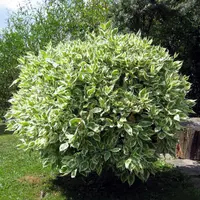
Ficus benjamina 'Variegata' is a woody evergreen tree often grown indoors as a decorative foliage plant. It is a cultivated form of the weeping fig with creamy white and green leaves. In nature, this species occurs in tropical Asia and parts of Australia, where it can grow into a tall landscape tree. Indoors, it usually stays much smaller but can still become a substantial, tree-like specimen with gracefully arching branches. The plant is moderately demanding because it dislikes sudden changes in light, temperature, or placement and may drop leaves when stressed. Stable bright, indirect light and evenly moist, well-drained soil make it easier to care for Weeping Fig.

Care Difficulty
Moderate Care

Light Preference
Bright Indirect Light

Water Requirements
Moderate Water

Temperature Preference
Tropical / Frost Sensitive

Hardiness Zone
10–12

Soil Texture
Loamy, Sandy, Organic-rich

Soil pH
Acidic (5.5–6.5), Slightly acidic (6.5–7.0)

Soil Drainage
Moist but well-drained

Fertilization
Light (every 4–6 weeks)
Scan your plant to receive care tips personalized for your specific plant
Available on iOS and Android
Ficus benjamina 'Variegata' needs bright, indirect light to keep its variegation strong and growth compact.
Ficus benjamina 'Variegata' prefers evenly moist but not saturated soil with brief drying between waterings.
This plant grows best in stable, warm conditions without sudden temperature swings or cold drafts.
This plant prefers moderately humid air and reacts quickly to very dry rooms.
This species needs a free-draining, airy mix that holds moisture but does not stay wet.
This species adapts well to container growing when the pot supports its tall, sometimes top-heavy form.
This variegated Weeping Fig benefits from moderate feeding during active growth in containers.
Pruning Ficus benjamina 'Variegata' helps maintain size, shape, and healthy structure indoors.
Container-grown Ficus benjamina 'Variegata' dislikes frequent disturbance, so repot only when necessary.
Ficus benjamina 'Variegata' is most commonly propagated from semi-hardwood stem cuttings.
This tropical species is frost-sensitive and needs indoor or heated protection in winter in most climates.

Plant Health Check
Not sure what's wrong with your plant? Check your plant's health inside the app.
The creamy-white and green patterning is usually caused by a genetic chimera, where tissues with different genetic makeup grow side by side, so some branches can revert to solid green if those cells outcompete the variegated ones.
Its pale leaf sectors lack chlorophyll, so the plant depends heavily on the remaining green tissue for photosynthesis and therefore demands brighter light than solid-green Ficus benjamina to maintain stable growth and clear variegation.
Experimental studies on variegated Ficus benjamina cultivars have shown that they can absorb certain volatile organic compounds from indoor air, although this effect is modest and should not be considered a primary air-cleaning solution.

Ficus benjamina cultivars, including variegated forms, are among the most frequently used species in controlled studies on ethylene sensitivity, because they drop leaves readily in response to this plant hormone and therefore help researchers understand leaf abscission processes.
Yellowing foliage usually results from sudden environmental change, overwatering with poor drainage, or low light over time. Check root health, reduce watering frequency, improve drainage, and maintain stable light and temperature to prevent further leaf loss.
Keep your plants happy and healthy with plant identification, disease detection, and easy care guidance.
