Bromeliad Care (Aechmea blanchetiana)

Bromeliad

About Bromeliad

Aechmea blanchetiana is a large terrestrial bromeliad grown mainly for its bold, colorful rosette of stiff, arching leaves. The foliage often turns bright orange to red in strong light, creating a striking landscape accent.

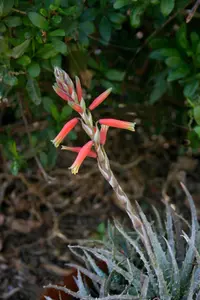
This species is native to eastern Brazil, where it grows in warm, humid coastal areas and open, sunny spots. It forms clumps over time, sending up tall flower stalks with long-lasting bracts.

The plant tolerates heat, sun, and short dry periods, which makes it relatively forgiving for home gardeners who care for Bromeliad in outdoor beds or bright patios. It prefers bright light, free-draining substrate, and moderate moisture without constant waterlogging.

Main Plant Requirements

Care Difficulty

Moderate Care

Light Preference

Full Sun

Water Requirements

Moderate Water

Temperature Preference

Tropical / Frost Sensitive

Hardiness Zone

10–11

Soil Texture

Sandy, Loamy, Organic-rich

Soil pH

Acidic (5.5–6.5), Slightly acidic (6.5–7.0)

Soil Drainage

Well-drained

Fertilization

Light (every 4–6 weeks)

Get Personalized Care Plan

Scan your plant to receive care tips personalized for your specific plant

Available on iOS and Android

How to Care for the Bromeliad

Aechmea blanchetiana develops strongest color and form with ample sun while avoiding extreme afternoon scorch.

  • Provide 4–6 hours of direct morning sun plus bright light for the rest of the day; light shade after 2–3 pm in hot climates reduces leaf burn.
  • Tolerates bright partial shade, but foliage stays greener and flowering may decrease if light drops below roughly 3–4 hours of sun.
  • Watch foliage: dull green, lanky growth indicates too little light, while large bleached or crispy patches signal excessive, especially midday, sun exposure.

Aechmea blanchetiana prefers a consistently moist but fast-draining environment and a filled central cup.

  • Let the top 2–4 cm of soil dry before watering, then soak thoroughly so excess drains away; avoid dense, waterlogged ground.
  • Keep the central tank 1/2–3/4 full of fresh water, flushing it every 1–2 weeks to prevent stagnation and mosquito larvae.
  • In cooler months or below 60°F (16°C), reduce watering so soil dries a bit deeper; yellow, mushy bases suggest overwatering, while curling, crispy tips indicate underwatering.

This species thrives in warm, frost-free conditions with only brief tolerance of cooler spells.

  • Aim for 70–85°F (21–29°C) for active growth; plants tolerate short spikes to 90–95°F (32–35°C) if shaded and not allowed to dry out completely.
  • Protect from cold below 45°F (7°C); tissue damage often appears near 40°F (4°C), and frost can quickly destroy exposed rosettes.
  • In regions with cool winters, grow Aechmea blanchetiana in the warmest microclimate, such as near a south-facing wall, and avoid windy, exposed sites that intensify cold stress.

This species adapts well to typical home humidity if extremes are avoided.

  • Target 40–60% humidity, as this suits most Bromeliad species while still fitting average indoor conditions.
  • It tolerates short dry spells, but very dry air combined with heat can brown leaf tips and edges.
  • Increase humidity by grouping plants, placing the pot on a pebble tray with water below the pot base, or running a nearby humidifier in very dry rooms.

Aechmea blanchetiana prefers a light, fast-draining, airy mix that mimics epiphytic or sandy habitats.

  • Use a blend of roughly 40% pine bark or orchid mix, 30% peat or coco coir, and 30% perlite or coarse sand for structure and drainage.
  • Keep texture loose and chunky so water drains within seconds yet leaves roots slightly moist, not waterlogged.
  • Aim for slightly acidic to neutral pH around 5.5–7.0, which supports nutrient uptake and root health.
  • Avoid heavy clay or compacted mixes, and correct sluggish drainage by increasing bark and perlite rather than adding more fine peat.

This species is well suited to container growing, especially on patios or bright outdoor spots.

  • Choose a wide, low, weighted pot to counterbalance the tall rosette, which becomes top-heavy in wind or rain.
  • Select thicker-walled terracotta or heavy ceramic if grown outdoors in exposed spots to improve stability and moderate moisture swings.
  • Lift the pot slightly on feet or bricks so drainage holes stay clear and excess water runs off quickly after heavy irrigation or storms.

This sun-loving bromeliad benefits from light, consistent feeding rather than heavy fertilization.

  • Use a balanced liquid fertilizer (around 10-10-10 or similar) at 1/4–1/2 strength, applied to the soil, not the central cup.
  • Feed every 4–6 weeks during spring–summer while growth is active.
  • Reduce feeding to 1 light application in fall and stop during winter dormancy.
  • In beds, a low-dose slow-release fertilizer or thin compost layer in spring is usually sufficient.

Pruning Aechmea blanchetiana focuses on hygiene and maintaining a tidy, open clump.

  • Best timing is late winter to early spring, before new growth accelerates.
  • Remove dead or damaged leaves at the base with clean, sharp pruning shears.
  • Cut spent flower stalks down to the rosette base once they fade to redirect energy to pups.
  • Thin out crowded, declining rosettes to improve air flow and maintain the plant’s shape.

Container-grown or landscape Aechmea blanchetiana is transplanted infrequently, mainly to manage size and offsets.

  • Check for roots circling the pot, slow growth, or rosettes pushing over the container as signs it needs more space.
  • Plan repotting or garden transplanting in late spring–early summer, once nights stay consistently above 60°F.
  • For containers, move into a pot only 2–5 cm wider, using airy, fast-draining mix to limit root stress.
  • Water lightly after transplanting, keep shaded for 5–7 days, and avoid heavy feeding until new growth resumes.

Propagation of Aechmea blanchetiana is most reliable through offsets, called pups, produced after flowering.

  • Separate pups in late spring–summer when they reach about 1/3–1/2 the size of the mother rosette.
  • Use a clean, sharp knife or pruning saw to detach pups with a small portion of stem and roots attached.
  • Plant pups in a coarse, well-drained mix, keeping them slightly deeper than before for stability.
  • Provide bright, indirect light, warm temperatures around 70–80°F, and lightly moist soil until new growth shows.

This tropical species is frost-sensitive and needs protection in regions with cold winters.

  • Avoid exposure below about 40°F; brief light frost can scar foliage and severe frost can kill rosettes.
  • In-ground plants in mild climates benefit from a 5–8 cm mulch layer around the root zone, kept away from the central cup.
  • Move container plants indoors or to a bright, frost-free greenhouse before first frost dates.
  • Indoors, provide bright light, reduce watering, and keep the central cup only lightly filled to prevent rot in cool conditions.

Care Tips

Tank water management

Keep the central cup filled with clean, non-salty water and flush it out completely every 2–4 weeks to remove mosquito larvae, algae, and mineral buildup.

Sun-hardening routine

When moving a nursery plant into stronger outdoor sun, increase light exposure by about 1–2 hours every few days to prevent scorch and encourage firm, upright growth.

Stable clump spacing

Allow offsets to form a tight clump but thin out or relocate pups that crowd the center so each rosette has at least 20–30 cm of space for good airflow.

Wind anchoring practice

In windy sites, set the plant slightly deeper than pot level and use 2–3 discreet stones or pins around the base to stabilize the rosette until the roots anchor firmly.

Landscape color planning

For more intense orange and red foliage when growing Bromeliad outdoors, place plants in the brightest safe location and avoid shading them with fast-growing shrubs or trees.

Common Pests and Diseases

Scale insects

This pest often colonizes the leaf bases and undersides of the stiff leaves, feeding on sap and causing yellowing and sticky honeydew. Symptoms include slow growth, leaf discoloration, and sooty mold developing on the honeydew deposits.

Solution

Remove light infestations by gently scraping insects off with a cotton swab or soft brush dipped in isopropyl alcohol, then rinse the foliage and tank with water. For heavier infestations, apply a horticultural oil or insecticidal soap labeled for bromeliads, making sure to cover leaf bases and repeating every 7–14 days until no new scale appears.

Mealybugs

These insects hide in leaf axils and at the base of the rosette, appearing as white, cottony clusters that suck sap and weaken the plant. Symptoms include distorted new growth, sticky residue, and gradual decline of the central rosette.

Solution

Flush the rosette and leaf bases with a strong but controlled stream of water, then spot treat visible clusters with a cotton swab dipped in isopropyl alcohol. Follow with insecticidal soap or a systemic insecticide suited to ornamental bromeliads if the plant is grown outdoors in the landscape, and inspect regularly for reinfestation.

Bromeliad tank rot

This disease develops in the central cup when water is stagnant, contaminated, or combined with heavy fertilizer, leading to soft, foul-smelling tissue at the plant center. Symptoms include collapse of inner leaves, browning at the base of the rosette, and a rotten odor from the tank water.

Solution

Immediately empty the central cup, trim out mushy or rotting tissue with sterile tools, and allow the plant to dry with excellent airflow before refilling the tank with clean, non‑chlorinated water. Avoid overfertilizing into the cup, refresh tank water regularly, and in outdoor plantings space plants to keep the rosettes drying quickly after rain.

Leaf spot

This disease produces small, water‑soaked or tan lesions on the stiff leaves that can expand and coalesce, especially in warm, humid conditions with poor air movement. Symptoms include irregular brown spots often starting along the leaf edges or near water‑holding areas where moisture lingers.

Solution

Remove and discard heavily spotted leaves to reduce inoculum, and improve air circulation by spacing plants and avoiding prolonged overhead watering. Keep water out of the leaf cups during cool periods, and if the problem persists, use a copper‑based fungicide labeled for ornamentals, applied according to label directions and kept off the central tank where possible.

Neonatal mosquito larvae

These insects use the water‑filled tank as a breeding site, and while they do not directly damage the plant, they create a nuisance and can affect outdoor enjoyment of plantings. Symptoms include visible wriggling larvae in the cup water and increased mosquito presence around large clumps.

Solution

Flush out the tank water thoroughly every 5–7 days to interrupt the breeding cycle, tipping the plant to drain and refilling with fresh water. In outdoor landscapes with many plants, use Bacillus thuringiensis israelensis (Bti) mosquito dunks or granules in the tanks according to label directions, as this biological control targets larvae without harming the bromeliad.

Interesting Facts

Striking color shift

The foliage often emerges green and then turns bright orange to red in high light, a response linked to increased production of protective pigments called anthocyanins that help shield the leaves from intense sun.

Tank-forming habitat

Its rosette-shaped leaves form a central water reservoir that can hold rain and leaf litter, creating a small habitat for insects and other small organisms in its native Atlantic coastal regions of Brazil.

Long-lasting inflorescences

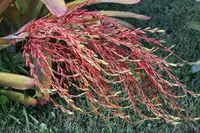
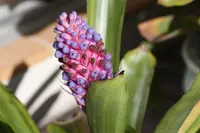
The tall flower spikes with orange to red bracts and bluish flowers can remain showy for several months, because the colorful bracts outlast the short-lived individual flowers and continue to attract pollinators.

Botan icon

Did you know?

In Brazilian landscape design this species is frequently used in large, dramatic mass plantings along roadsides and public spaces, where its height, rigid form, and intense color variations create strong visual structure even under full tropical sun.

FAQs about Bromeliad

This species usually needs to be mature, receive stable warmth, and experience bright light to flower. Crowded roots help, but excess nitrogen fertilizer can delay buds. Once it finally blooms, the rosette flowers only once in its lifetime.

Grow Healthy Plants with Botan Care

Keep your plants happy and healthy with plant identification, disease detection, and easy care guidance.

Botan plant care app — identify plants on mobile

Explore More Plants