Hedgehog aloe Care (Aloe humilis)

Also known as: Dwarf Hedgehog Aloe
Hedgehog aloe

About Hedgehog aloe

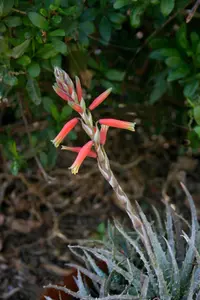
Hedgehog aloe (Aloe humilis) is a small, compact succulent from arid regions of South Africa. It forms dense clusters of short, spiky rosettes with bluish-green leaves. Leaf surfaces often have small white bumps and soft teeth, giving the plant a textured, architectural look. Mature plants may send up slender flower stalks with tubular orange to red blooms. This species grows slowly and stays relatively low, which makes it suitable for containers and indoor windowsills. It adapts well to bright, dry conditions and does not need frequent watering, so it suits beginners who want to learn how to care for Hedgehog aloe.

Main Plant Requirements

Care Difficulty

Easy Care

Light Preference

Partial Sun

Water Requirements

Low Water

Temperature Preference

Warm Climate

Hardiness Zone

9–11

Soil Texture

Sandy, Loamy, Rocky

Soil pH

Acidic (5.5–6.5), Slightly acidic (6.5–7.0)

Soil Drainage

Well-drained

Fertilization

Minimal (feed rarely)

Get Personalized Care Plan

Scan your plant to receive care tips personalized for your specific plant

Available on iOS and Android

How to Care for the Hedgehog aloe

This compact aloe thrives in bright, direct light but needs protection from harsh midday sun.

  • Provide 4–6 hours of direct morning sun or late-afternoon sun, with bright indirect light for the rest of the day.
  • Hedgehog aloe tolerates light partial shade, but growth becomes looser and paler if kept below about 3–4 hours of strong light.
  • In very hot summers, give light shade from intense midday sun to prevent leaf scorch and bleaching, especially in reflected-heat spots.

This drought-tolerant succulent needs infrequent, deep watering and fast-draining soil.

  • Water only when the top 3–5 cm of soil are completely dry; in warm active growth this may mean every 1–3 weeks depending on climate.
  • Use sharply draining, gritty soil so water runs through quickly and no water sits around the roots of Aloe humilis.
  • Reduce watering to light, occasional drinks in cooler months and watch for overwatering signs like soft, yellowing, or translucent leaves.

This species prefers warm, dry conditions and is sensitive to prolonged cold and frost.

  • Aim for 65–80°F (18–27°C) for best growth, with slightly cooler nights improving color and compact form.
  • Protect from temperatures below 40°F (4°C); brief dips to 32°F (0°C) may be tolerated if completely dry but can still scar tissues.
  • In hot regions above 95°F (35°C), provide light shade and good airflow to limit heat stress and leaf shriveling.

This species prefers dry indoor air and does not need added humidity.

  • Aim for 30–50% humidity; typical heated or air-conditioned rooms suit Hedgehog aloe well.
  • Leaf tips turning mushy or translucent usually indicate excess humidity combined with poor air circulation.
  • If air is extremely dry and leaves wrinkle, place the pot near, but not directly over, a tray of water and pebbles.

This plant requires fast-draining, mineral-rich soil to prevent root rot.

  • Use a gritty mix such as 50–70% inorganic material (pumice, coarse perlite, or poultry grit) blended with cactus potting mix.
  • Choose a sandy or loamy structure that feels loose and crumbly, never compacted or sticky when watered.
  • Keep pH slightly acidic to neutral, around 6.0–7.0, which suits Aloe humilis root function and nutrient uptake.
  • Avoid peat-heavy, water-retentive mixes and any soil that stays wet longer than 2–3 days after a thorough watering.

This species is well suited to container growing.

  • Select a pot just 2–4 cm wider than the rosette to limit excess wet substrate around the roots.
  • Use a low, broad container shape to keep the shallow root system stable as offsets develop at the sides.
  • Choose unglazed terracotta to allow evaporation through the pot walls, which lowers the risk of prolonged soil moisture.

Aloe humilis benefits from light, controlled feeding during the active growing season but dislikes heavy fertilization.

  • Use a balanced liquid succulent fertilizer (such as 10-10-10) at 1/4–1/2 strength in spring and summer only.
  • Apply every 4–6 weeks when growth is active; do not exceed the manufacturer’s lowest suggested rate.
  • Avoid compost-heavy mixes that stay wet; nutrients should come mainly from diluted liquid or slow-release granules.
  • Stop feeding Hedgehog aloe in fall and winter when growth slows, to prevent weak, etiolated tissue.

Aloe humilis needs minimal pruning, focused on hygiene and maintaining a tidy rosette.

  • Best time is late spring or early summer when the plant is actively growing and recovers faster.
  • Remove dead, dry, or damaged leaves at the base with clean, sharp scissors or pruning snips.
  • Thin out crowded, inward-growing leaves only if they trap debris or reduce airflow around the rosette.
  • Cut spent flower stalks back to the base once they dry, which keeps the plant compact and reduces disease risk.

Compact root systems mean Aloe humilis does not need frequent repotting, but timely moves prevent crowding and poor drainage.

  • Repot every 2–3 years or when roots circle the pot, drainage slows, or growth becomes noticeably stunted.
  • Choose late spring as the preferred time so the plant can re-establish in warm, bright conditions.
  • Use a shallow, slightly larger pot with a gritty cactus mix and a drainage hole to limit waterlogging stress.
  • Gently loosen circling roots, remove old soggy soil, let any damaged roots dry for a day, then water lightly after 3–5 days.

Aloe humilis is most commonly propagated from offsets, which form naturally around the base of mature plants.

  • Separate offsets in late spring or early summer when they have several leaves and a small root system.
  • Unpot the mother plant, gently tease off pups, and trim any damaged roots with sterile scissors.
  • Allow cut or broken surfaces to callus for 1–2 days in a dry, shaded spot before planting.
  • Set pups in dry, gritty cactus mix, provide bright indirect light, and water lightly only after initial root anchoring.

This succulent is frost sensitive and needs specific winter care in cold climates, especially in containers.

  • Keep temperatures above 40°F; prolonged exposure below freezing can damage foliage and roots.
  • Move potted Aloe humilis indoors to a bright windowsill before the first hard frost in USDA zones colder than 9.
  • Water sparingly in winter, allowing soil to dry almost completely to prevent root rot in cool conditions.
  • In mild climates, use a light gravel mulch around outdoor plants to insulate the crown and improve drainage.

Care Tips

Offset division timing

Separate and replant offsets only when they have at least 3–4 leaves and a visible root system, which reduces stress and loss during propagation when growing Hedgehog aloe.

Use top dressing

Apply a thin decorative gravel or coarse sand layer on top of the soil to keep leaves dry at the base, reduce fungal issues, and stabilize the shallow root zone.

Rotate for symmetry

Turn the pot 90° every 2–3 weeks so the rosettes receive light from all sides, which keeps the plant compact and prevents leaning toward the light source.

Elevate for airflow

Place the pot on a wire stand or feet so air can move under the container, helping the mix dry evenly and lowering the risk of root or crown rot.

Winter light boost

In darker months, place the plant closer to a bright window or supplement with a small grow light set on a 10–12 hour timer to prevent etiolation and leaf thinning.

Common Pests and Diseases

Aloe mite

This pest causes distorted, bumpy, or cauliflower-like growths on leaves and around the crown. Symptoms include thickened tissues, clustered deformities, and sometimes reddish or corky patches.

Solution

Remove and discard all visibly deformed tissue with sterile tools, cutting well into healthy tissue to reduce the mite population. Isolate the plant, avoid overhead misting, and if new galls appear, treat regularly with a sulfur-based miticide or other product specifically labeled for eriophyid mites, following label directions carefully.

Aloe rust

This disease shows as small yellow spots on leaves that turn into sunken, dark brown to black pustules, often with a yellow halo. Symptoms include weakened, unsightly foliage that may dry out prematurely.

Solution

Remove and discard affected leaves to reduce spore load, and keep foliage dry by watering at the soil level only. Improve air circulation, avoid crowding, and where rust persists, use a copper-based fungicide labeled for ornamental succulents according to the instructions.

Aphids

These insects cluster on young leaf bases and flower stalks, sucking sap and causing distorted new growth. This pest also excretes sticky honeydew that can attract sooty mold and ants.

Solution

Rinse colonies off with a strong but controlled stream of water, especially from the leaf bases. For persistent infestations, apply insecticidal soap or a neem oil spray to all plant surfaces, repeating every 5–7 days until no new aphids appear, and reduce excess nitrogen fertilization that encourages soft, aphid-prone growth.

Mealybugs

These insects appear as white, cottony clumps tucked between the tight leaf rosettes and at the base of the plant. This pest weakens the plant by feeding on sap and can lead to yellowing, stunted growth, and sticky honeydew.

Solution

Dislodge visible mealybugs with a cotton swab dipped in isopropyl alcohol, focusing on crevices between leaves. Follow up with thorough applications of insecticidal soap or neem oil into the rosette and repeat weekly until no new insects are visible, and consider temporarily isolating the plant to prevent spread to other succulents.

Interesting Facts

Compact cliff specialist

This species naturally grows in dense clusters on rocky slopes and cliffs in South Africa’s Eastern and Western Cape, forming low mats that help stabilize shallow, stony soils.

Blue wax coating

Its leaves have a bluish to blue‑green color due to a waxy surface bloom (epicuticular wax) that reduces water loss and reflects intense sunlight in its semi‑arid native habitat.

Flowering in dry seasons

In habitat it typically sends up orange to coral tubular flowers on slender stalks toward the end of the dry season, providing nectar for sunbirds and insects when few other resources are available.

Botan icon

Did you know?

Aloe humilis has been used in breeding compact ornamental hybrids, contributing its dwarf size, clustering habit, and blue, spined leaf texture to many modern miniature aloe cultivars popular in succulent collections.

FAQs about Hedgehog aloe

Lack of flowers usually comes from insufficient light, a pot that is too small, or no cool, dry rest in winter. Mature rosettes bloom more reliably when slightly root-bound, well-fed, and kept bright with good airflow.

Grow Healthy Plants with Botan Care

Keep your plants happy and healthy with plant identification, disease detection, and easy care guidance.

Botan plant care app — identify plants on mobile

Explore More Plants