


Mineral mulch topdressing
Apply a 0.5–1 in layer of coarse grit, pumice, or small lava rock on the soil surface to keep the neck of the plant dry, reduce rot risk, and encourage compact spine and tubercle development.

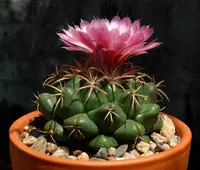
Elephant's tooth, Coryphantha elephantidens, is a small, globular cactus native to arid regions of central and eastern Mexico. It typically forms a single rounded stem covered in large, tooth-like tubercles that give the plant its common name.
The plant produces showy funnel-shaped flowers near the crown, often in pink to magenta tones, creating a strong contrast with the blue-green body. Spines are usually stout but not excessively long, so the plant looks sculptural rather than heavily armed.
This species grows slowly and suits containers, rock gardens, and windowsills with strong light. It prefers gritty, fast-draining soil and careful watering, which makes it rewarding but slightly challenging for beginners learning how to care for Elephant's Tooth.

Care Difficulty
Easy Care

Light Preference
Full Sun

Water Requirements
Low Water

Temperature Preference
Tropical / Frost Sensitive

Hardiness Zone
10–11

Soil Texture
Sandy, Loamy, Rocky

Soil pH
Slightly acidic (6.5–7.0), Neutral (7.0)

Soil Drainage
Well-drained

Fertilization
Minimal (feed rarely)
Scan your plant to receive care tips personalized for your specific plant
Available on iOS and Android
This small desert cactus needs strong light but benefits from some protection from intense afternoon sun.
This cactus stores water in its stem and prefers thorough but infrequent watering in fast-draining soil.
This species prefers warm, dry conditions and does poorly in prolonged cold or damp.
This cactus prefers dry indoor air and usually does best at 30–50% humidity.
Coryphantha elephantidens needs a very fast-draining, mineral-based substrate to prevent root rot.
This species is well suited to container cultivation when drainage and pot proportions are managed carefully.
Coryphantha elephantidens needs only light feeding to support compact growth and flowering.
Coryphantha elephantidens requires minimal pruning, focused on hygiene rather than shaping.
This cactus grows slowly and prefers infrequent repotting with minimal root disturbance.
Coryphantha elephantidens is usually propagated from seed under controlled, warm conditions.
This cactus is moderately cold tolerant when kept dry but is not suited to prolonged hard freezes.

Plant Health Check
Not sure what's wrong with your plant? Check your plant's health inside the app.
This species develops large, rounded, nipple-like tubercles on the stem that resemble tiny elephant teeth, which inspired both its scientific name elephantidens and the common name elephant’s tooth cactus.
It produces relatively large, pale pink to magenta funnel-shaped flowers that open near the stem apex, often forming a striking ring of blooms around the top in late spring to early summer under strong light.
New growth at the apex forms a dense tuft of whitish wool and short spines that protect developing tissue from intense sun and water loss, gradually exposing smoother tubercles as the tissue matures.

In its native Mexican habitats, this cactus often grows partly sunken in rocky limestone soils, with only the upper portion of the stem exposed, an adaptation that stabilizes the plant and helps buffer root temperatures in an environment with intense sun and pronounced dry seasons.
Lack of flowers usually comes from insufficient light, a pot that is too large, or fertilizer with too much nitrogen. Provide strong light, a cool, dry rest in winter, and use a low-nitrogen cactus fertilizer to support bud formation.
Keep your plants happy and healthy with plant identification, disease detection, and easy care guidance.

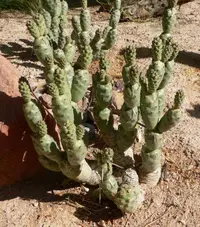
Pine Cone Cactus
Tephrocactus articulatus

Acanthocereus fosterianus
Acanthocereus fosterianus
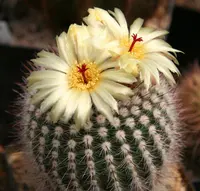
Cactus
Parodia scopa
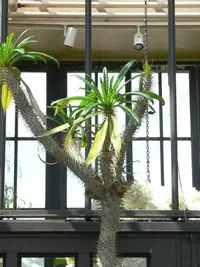
ghost-men
Pachypodium geayi
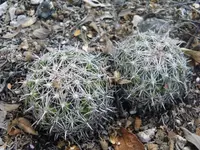
Coryphantha delicata
Coryphantha delicata

Barbados gooseberry
Pereskia aculeata

Acanthocalycium leucanthum
Acanthocalycium leucanthum
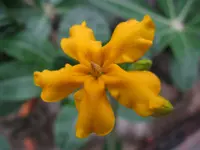
Pachypodium densiflorum
Pachypodium densiflorum