ghost-men Care (Pachypodium geayi)

ghost-men

About ghost-men

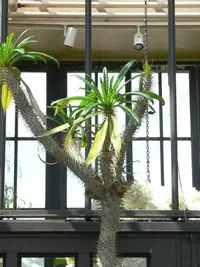
Pachypodium geayi is a spiny succulent shrub or small tree with a thick, gray, bottle-shaped trunk and a cluster of narrow leaves at the top. It comes from dry, open habitats in Madagascar, where it is adapted to intense sun and long dry periods.

In cultivation it grows slowly and forms an architectural, almost palm-like silhouette, often used as a statement container plant. It suits growers who like succulents but are comfortable handling a plant with sharp spines.

This species prefers strong light, very well-drained soil, and careful watering, which makes how to care for Pachypodium geayi slightly more demanding for complete beginners than for experienced plant owners.

Main Plant Requirements

Care Difficulty

Moderate Care

Light Preference

Full Sun

Water Requirements

Low Water

Temperature Preference

Tropical / Frost Sensitive

Hardiness Zone

10–11

Soil Texture

Sandy, Loamy, Rocky

Soil pH

Slightly acidic (6.5–7.0), Neutral (7.0)

Soil Drainage

Well-drained

Fertilization

Minimal (feed rarely)

Get Personalized Care Plan

Scan your plant to receive care tips personalized for your specific plant

Available on iOS and Android

How to Care for the ghost-men

This sun-loving succulent needs strong light to grow dense foliage and a sturdy trunk.

  • Provide 6–8 hours of direct sun daily; full morning sun with light afternoon shade suits most climates, especially in hot summers.
  • In very intense sun, especially above 95°F (35°C), use light shade cloth or plant near bright, filtered light to reduce leaf scorch on Pachypodium geayi.
  • If stems elongate, lean, or lose lower leaves, light is too low; move to a brighter position over 1–2 weeks to prevent sunburn.

This drought-adapted plant stores water in its trunk and prefers dry soil between waterings.

  • During active growth in warm months, water only when the top 3–5 cm of soil are completely dry, then drench and let excess drain away quickly.
  • Use a very fast-draining, gritty mix; prolonged wet soil around the roots leads to soft stems, yellowing leaves, and root rot in Pachypodium geayi.
  • In cooler months or when leaves drop, reduce watering sharply, sometimes to once every 4–6 weeks, watching for slight wrinkling of the trunk as a sign to water.

This species thrives in warm, dry conditions and is sensitive to cold and frost.

  • Aim for 70–90°F (21–32°C) during the growing season; growth slows noticeably below about 65°F (18°C).
  • Protect from temperatures below 50°F (10°C); brief drops toward 40°F (4°C) can damage tissues, and frost can kill exposed tips and young plants.
  • In hot regions above 95°F (35°C), provide airflow and light afternoon shade to prevent heat stress, especially for plants in dark containers or near walls.

This species prefers dry, bright conditions and usually does not need special humidity control indoors.

  • Aim for 30–50% relative humidity, similar to typical heated or air-conditioned homes.
  • Dry air is tolerated well; avoid placing the plant in frequently misted plant groupings that stay damp for long periods.
  • Watch for soft, blackening stem tissue or lingering surface moisture, which often indicates excess humidity combined with poor airflow.

Use a very fast-draining, mineral-rich mix to prevent root and caudex rot in Pachypodium geayi.

  • Choose a gritty, sandy mix that mimics desert soil, with coarse particles that leave plenty of air spaces around roots.
  • Combine roughly 50–70% inorganic material (pumice, coarse perlite, grit, or small lava rock) with 30–50% low-organic cactus potting mix.
  • Keep pH slightly acidic to neutral (pH 6.0–7.2), which supports nutrient availability without increasing salt problems.
  • Avoid peat-heavy, compacted, or moisture-retentive mixes that stay wet for more than 2–3 days after a thorough watering.

This species is very suitable for container growing due to its slow, upright, caudiciform growth.

  • Select a heavy, wide-based pot to counterbalance the tall, spiny stem and reduce tipping risk in wind or when bumped.
  • Choose unglazed clay if extra evaporation is needed, as its porous walls help the root zone dry faster between waterings.
  • Use a pot slightly deeper than the caudex to anchor the taproot while still leaving space for a thick mineral top-dressing that stabilizes the plant.

This drought-adapted succulent benefits from modest feeding during active growth but reacts poorly to excess salts.

  • Use a balanced liquid fertilizer (for example 10-10-10 or 20-20-20) diluted to 25–50% strength for Pachypodium geayi.
  • Apply every 4–6 weeks in spring and summer only, onto already-moist soil, never bone-dry mix.
  • Avoid compost-heavy or high-organic blends that stay wet and can rot the caudex roots.
  • Stop feeding in fall and winter when growth slows or leaves drop, to prevent weak, etiolated growth.

Pruning needs are minimal and focus mainly on safety and health maintenance.

  • In late winter or early spring, remove dead, damaged, or diseased branches using sharp, sanitized pruning shears.
  • Limit cuts on the main trunk, as heavy pruning can scar and distort the plant’s characteristic palm-like form.
  • Trim only small side branches that cross or crowd to slightly refine shape, wearing sturdy gloves to avoid spines.
  • Avoid tip-cutting healthy growing points since this can slow vertical growth and reduce overall vigor in Pachypodium geayi.

Container-grown plants prefer infrequent repotting with careful handling of the thick, brittle root system.

  • Plan to repot every 3–5 years in late spring when growth resumes, or when roots circle the pot and drainage slows.
  • Select a pot only 2–5 cm wider, with large drainage holes and a very gritty, cactus-style mix to prevent waterlogging.
  • Gently loosen the root ball, remove rotten roots, and keep as much healthy soil intact as possible to limit stress on Pachypodium geayi.
  • After repotting, keep in bright shade for 5–7 days, water lightly once, then resume normal light and irrigation as new growth appears.

Propagation is usually done from seed and is considered slow and somewhat advanced for home growers.

  • Sow fresh seeds in late spring to early summer in a sterile, very well-drained cactus mix or 50% perlite blend.
  • Maintain bottom heat around 75–85°F, bright indirect light, and consistently barely moist substrate until germination.
  • Provide gentle air movement and excellent light after sprouting to prevent damping-off, a fungal seedling disease.
  • Stem cuttings are unreliable; most Pachypodium geayi plant care guides recommend relying on seeds for long-term success.

This species is very frost-sensitive and needs careful management in regions with cold winters.

  • Keep plants above 50°F; brief exposure near 40°F may cause leaf drop and tissue damage.
  • Move containers indoors or into a heated greenhouse before night temperatures drop in fall.
  • Provide the brightest possible indoor light and keep soil almost dry while the plant is dormant.
  • In mild climates, grow in the ground only in very warm, frost-free microclimates with excellent drainage.

Care Tips

Acclimate To Sun

When moving a plant from indoors or shade to stronger sun, increase light over 10–14 days to prevent corky sunburn patches on the trunk and leaves.

Stabilize The Caudex

Use a heavy clay or concrete pot and keep the swollen base slightly above soil level so the plant stays stable as it gains height and does not rock or lean in wind.

Winter Rest Management

In cool seasons, allow the plant to go semi-dormant by keeping it cool, dry, and bright, and do not panic if it drops most or all leaves during this rest period.

Root Check Repotting

Repot only when roots circle the pot tightly, then gently tease the outer roots and keep the plant slightly root-bound to reduce rot risk and maintain a compact form.

Prevent Spine Injuries

When handling or repotting, wrap the trunk with several layers of folded newspaper or a thick towel so you can grip firmly without damaging the spines or your hands while caring for Pachypodium geayi.

Common Pests and Diseases

Mealybugs

This pest often hides in leaf bases, spine clusters, and stem crevices, sucking sap and causing yellowing, distortion, and sticky honeydew on nearby surfaces.

Solution

Isolate the plant, then dab visible insects with cotton swabs dipped in 70% isopropyl alcohol and gently wipe affected areas; repeat weekly until no new insects appear. For larger infestations, use a systemic insecticide labeled for succulents and improve light and airflow to keep tissues firm and less attractive to mealybugs.

Spider mites

These insects thrive in hot, dry indoor air and can cause fine webbing between spines, stippled or dull leaves, and gradual leaf drop.

Solution

Rinse the plant thoroughly with a strong but controlled stream of lukewarm water, focusing on leaf undersides and spine bases, then increase humidity slightly and improve air movement. If mites persist, apply a miticide or insecticidal soap labeled for spider mites in repeated treatments, making sure to cover all surfaces of the plant.

Scale insects

This pest appears as small, hard, dome-shaped bumps on stems and along the trunk, causing slow decline, yellowing, and sticky residue from honeydew.

Solution

Gently remove individual scales with a cotton swab dipped in 70% isopropyl alcohol or a soft brush, being careful around the spines. For more established colonies, use a systemic insecticide and monitor the plant closely for several weeks, as juvenile scales can be hard to see at first when caring for Pachypodium geayi.

Fungal stem canker

This disease can develop in wounded or overwatered tissues, leading to sunken, discolored patches on the trunk that may crack, ooze, or spread along the stem.

Solution

Cut away affected tissue with a sterile, sharp blade back to firm, healthy tissue, then let the wound dry in bright, airy conditions and avoid watering the trunk area. Reduce overall watering, ensure excellent drainage, and use a fungicide labeled for succulent stem diseases if lesions continue to expand.

Leaf spot

Symptoms include small brown or tan lesions on leaves that may merge into larger patches, often starting after prolonged moisture on foliage or poor air circulation.

Solution

Remove and discard affected leaves, then adjust watering to keep foliage dry and provide better airflow around the plant. If new spots continue to appear, apply a broad-spectrum fungicide labeled for ornamental succulents and avoid misting or overhead watering in the future.

Interesting Facts

Madagascan spiny shrub

This species is native to the dry spiny forests of southwestern Madagascar, where it grows as a tree-like shrub with a thick, armored trunk that stores water for long dry periods.

Seasonal leaf strategy

It carries long, narrow, silver-gray leaves mainly at the top of the stem during the warm wet season and may shed many of them in cooler or very dry conditions, functioning as a drought-deciduous succulent.

Frangipani relative

Although it looks cactus-like, it is actually a member of the Apocynaceae (dogbane) family and is more closely related to frangipani (Plumeria) and oleander (Nerium) than to any cactus.

Botan icon

Did you know?

In its native habitat, mature plants can develop a massively thickened trunk and reach small-tree size, making them prominent structural elements in the open, drought-prone landscapes of southwestern Madagascar.

FAQs about ghost-men

Brown tips or edges usually result from underwatering, sudden temperature drops, or low humidity combined with intense sun. Check soil moisture, avoid cold drafts, and adjust light exposure gradually to prevent further leaf scorch and stress.

Grow Healthy Plants with Botan Care

Keep your plants happy and healthy with plant identification, disease detection, and easy care guidance.


Botan plant care app — identify plants on mobile

Explore More Plants