Mojave pricklypear Care (Opuntia erinacea)

Also known as: grizzly bear pricklypear
Mojave pricklypear

About Mojave pricklypear

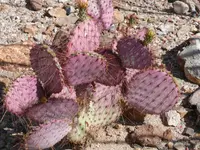
Mojave pricklypear, Opuntia erinacea, is a desert-dwelling cactus native to the Mojave and Great Basin regions of the western United States. It forms low, spreading clumps of oval pads covered in sharp spines and fine, hairlike glochids that easily detach.

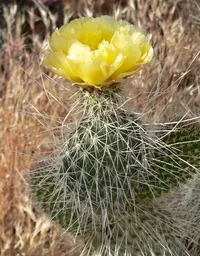
In spring, it produces showy flowers in shades of yellow, pink, or magenta, followed by fleshy, often spiny fruits. Its slow, compact growth habit makes it suitable for rock gardens, xeriscapes, and containers.

This species is highly drought tolerant and prefers strong light, fast-draining mineral soil, and infrequent watering. Understanding these arid conditions is key to how to care for Mojave pricklypear successfully.

Main Plant Requirements

Care Difficulty

Easy Care

Light Preference

Full Sun

Water Requirements

Low Water

Temperature Preference

Cold Hardy

Hardiness Zone

5–9

Soil Texture

Sandy, Rocky, Loamy

Soil pH

Slightly acidic (6.5–7.0), Slightly alkaline (7.0–7.5)

Soil Drainage

Well-drained

Fertilization

Minimal (feed rarely)

Get Personalized Care Plan

Scan your plant to receive care tips personalized for your specific plant

Available on iOS and Android

How to Care for the Mojave pricklypear

Opuntia erinacea thrives in strong, direct sun typical of arid landscapes.

  • Provide 6–10 hours of full sun daily; open, south- or west-facing exposures suit Mojave pricklypear in most US desert or dry garden settings.
  • Plant in a spot with unfiltered sun, but in very hot regions offer light afternoon shade to prevent pad scorching and excessive drying of young plants.
  • In winter, full sun is still beneficial; plants grown in too much shade become thin, elongated, and less cold tolerant over time.

Opuntia erinacea is highly drought tolerant and prefers infrequent, deep watering.

  • Allow soil to dry completely, at least the top 5–10 cm, before watering; in hot dry weather, this may mean watering only every 2–4 weeks outdoors.
  • Use very fast-draining, sandy or gravelly soil so water leaves the root zone within minutes, reducing root rot risk after heavy rain or irrigation.
  • Signs of overwatering include soft, yellowing pads and a sour smell near the roots; severe wrinkling and pad shrinkage indicate prolonged underwatering.

This desert cactus tolerates a wide temperature range but still benefits from defined seasonal conditions.

  • For active growth, aim for 70–90°F (21–32°C); it also handles short hot spells up to about 100–105°F (38–41°C) if soil is sharply drained.
  • Mature plants often survive down to about 10–15°F (-12 to -9°C) when dry, but prolonged cold and wet greatly increase the risk of tissue damage.
  • In colder regions, choose the warmest, driest microclimate available, such as a south-facing slope, to protect pads from winter freeze-thaw stress.

This cactus tolerates very dry air and rarely needs extra humidity control.

This cactus needs very fast-draining, mineral-based soil to prevent root and pad rot.

  • Use a gritty mix such as 60–70% coarse sand, pumice, or small gravel with 30–40% cactus potting mix.
  • Keep structure open and airy so water drains through within seconds, not minutes, after watering.
  • Aim for slightly alkaline to neutral pH around 7.0–8.0, avoiding peat-heavy, acidic mixes.
  • For Opuntia erinacea outdoors, plant on a slope, raised bed, or berm to improve drainage in rainy climates.

This species suits container growing when the pot and medium prevent prolonged moisture around roots.

  • Choose a wide, shallow, heavy pot so the spreading pads do not tip the container in wind or when bumped.
  • Prefer unglazed terracotta, which evaporates moisture faster and reduces the chance of root rot.
  • Elevate the pot on feet or bricks so all drainage holes stay clear and water runs off quickly after rain or watering.

Opuntia erinacea needs very light feeding in cultivation, as it is adapted to nutrient-poor desert soils.

  • Use a low-dose balanced cactus fertilizer or diluted balanced NPK at 1⁄4–1⁄2 strength in spring and early summer.
  • Feed every 4–6 weeks during active growth only if pads look pale or growth is weak.
  • Skip fertilizer in fall and winter to avoid soft, frost-prone growth.
  • For caring for Mojave pricklypear in the ground, lean soil with minimal compost is usually sufficient.

Pruning Opuntia erinacea is mainly for safety, shape control, and plant health rather than for vigor.

  • Best time is late winter to early spring before active growth starts.
  • Remove dead, damaged, diseased, or rubbing pads using sharp, disinfected pruners or a clean knife.
  • Cut at the pad joint, supporting the pad to avoid tearing and leaving clean attachment points.
  • Selective thinning of crowded pads improves airflow, reduces rot risk, and keeps the clump within bounds.

Transplanting or repotting Opuntia erinacea is infrequent but useful when growth slows or space is limited.

  • Look for roots circling the pot, water running straight through, or noticeably slowed growth as signs to move it.
  • Plan repotting or transplanting in late spring to early summer, once nights are reliably warm and soil drains well.
  • Typically move container plants every 3–4 years into a slightly wider, shallow pot with gritty cactus mix.
  • Minimize root stress by keeping the root ball mostly intact, handling pads with tongs, and waiting 5–7 days before the first light watering.

Opuntia erinacea is commonly propagated from pad cuttings, though seed is also possible for larger batches.

  • Take healthy, mature pads in late spring or early summer using thick gloves or tongs.
  • Let cut pads dry and callus for 7–14 days in a warm, shaded place before planting.
  • Set pads upright in barely moist, sharply draining cactus mix and keep at 70–80°F with bright, indirect light.
  • Seed propagation requires warm temperatures, well-draining sandy soil, and light, even moisture until germination.

Opuntia erinacea is relatively cold hardy but still benefits from thoughtful winter care in wet or very cold climates.

  • Established plants in the ground often tolerate brief drops near 0°F if soil drains quickly.
  • In rainy winters, mound soil or use gravel mulch to keep the root zone dry and reduce rot risk.
  • For containers, move pots under a roofed, bright, frost-free area or an unheated greenhouse.
  • Avoid heavy winter watering; allow soil to dry almost completely so pads slightly shrivel and resist freezing.

Care Tips

Use gritty mulch

Apply a 2–3 cm top layer of coarse gravel or small rocks around the base to keep pads dry at soil level, reduce rot risk, and discourage weeds without trapping moisture against the stems.

Winter moisture control

In climates with wet winters, place the plant on a slight mound or raised bed and avoid snow or roof runoff so the roots stay dry during its cold rest period.

Pad propagation hygiene

When taking pads for propagation, use a sterile, sharp knife, let the cut surfaces callus for 7–14 days in a dry, shaded place, then plant them upright so only the lowest 1–2 cm enters the substrate.

Glove and tool protocol

Use rigid tongs and thick, tightly woven or leather gloves when handling pads, and keep a dedicated brush or tweezers on hand to remove any loose spines or glochids from the soil surface after work.

Salt and mineral management

If grown in containers and tap water is hard, occasionally leach the pot by watering thoroughly and letting excess drain away to reduce salt buildup that can damage roots when growing Mojave pricklypear.

Common Pests and Diseases

Cochineal scale

This pest forms dense white, cottony patches on pads and exudes bright red dye-like fluid when crushed. Symptoms include weakened pads, yellowing, and reduced growth on infested segments.

Solution

Remove heavily infested pads with sterilized pruners and dispose of them in the trash, not compost. For remaining colonies, spray pads thoroughly with a strong jet of water to dislodge insects, then treat remaining clusters with cotton swabs dipped in 70% isopropyl alcohol or apply a light horticultural oil, repeating every 7–10 days until new waxy spots stop appearing.

Cactus mealybugs

These insects appear as small white, fuzzy clusters around areoles and in pad joints, sucking sap and causing localized yellowing and stunted growth. Honeydew they excrete can attract ants and promote sooty mold on nearby surfaces.

Solution

Quarantine affected plants, then physically remove visible clusters with a cotton swab dipped in 70% isopropyl alcohol. Follow with a thorough spray of insecticidal soap or a light horticultural oil in the evening, repeating weekly for several cycles and reducing excess nitrogen fertilizer that promotes soft, attractive growth.

Fusarium pad rot

This disease causes sunken, brown to black lesions on pads that may expand, turn corky, and eventually cause the pad to collapse from the infection point. Symptoms include internal reddish or dark streaks in affected tissue when pads are cut open.

Solution

Cut away affected pads well into healthy green tissue with sterilized tools and discard in the trash. Improve drainage, keep the base of the plant dry, avoid overhead watering, and space plants to increase airflow; in wet climates or poorly drained sites, grow Opuntia erinacea in raised beds or containers filled with gritty, fast-draining soil.

Cercospora pad spot

This disease produces small, circular to irregular tan, gray, or brown spots on pads, often with darker margins that may coalesce and cause cosmetic scarring. Severe infections can reduce vigor, especially on young pads.

Solution

Remove and discard heavily spotted pads to reduce spore sources, and avoid wetting pads when irrigating. Provide full sun, good spacing, and dry, fast-draining soil; in humid regions, improve airflow and consider moving container plants to a sunnier, breezier position to limit prolonged surface moisture as part of general Opuntia erinacea care.

Interesting Facts

Variable spine cloaks

This species shows unusual variation in spine density and length, from almost naked pads to densely woolly, shaggy spines, even within the same population. The long, hairlike spines trap air and shade the pad surface, helping protect it from intense desert sun and temperature swings.

Cold-hardy desert cactus

Unlike many desert cacti, this species tolerates winter snow and subfreezing temperatures in parts of the Great Basin and Colorado Plateau. Its pads can supercool and partially dehydrate in winter, reducing ice formation inside the tissues.

Desert wildlife resource

In its native range, rodents, rabbits, and desert tortoises feed on the fruits and sometimes the pads once the spines weather off or are removed by other animals. Birds and small mammals also use the dense, spiny clumps as shelter from predators and harsh weather.

Botan icon

Did you know?

Some populations of this species in the Mojave and Great Basin deserts form natural hybrids with nearby Opuntia species, creating highly variable stands where spine color, pad shape, and hairiness blend in complex patterns that make field identification challenging even for specialists.

FAQs about Mojave pricklypear

This species can form dense clumps over time, spreading slowly by pads that root where they touch the ground. It is not typically invasive in dry, low-fertility landscapes but can outcompete delicate plants in small beds.

Grow Healthy Plants with Botan Care

Keep your plants happy and healthy with plant identification, disease detection, and easy care guidance.

Botan plant care app — identify plants on mobile

Explore More Plants