Kamchatka Stonecrop Care (Phedimus kamtschaticus)

Kamchatka Stonecrop

About Kamchatka Stonecrop

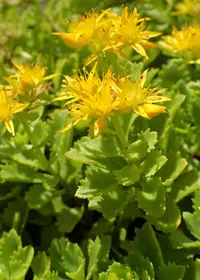
Kamchatka stonecrop, Phedimus kamtschaticus, is a low-growing perennial succulent often used as a groundcover in beds, rock gardens, and green roofs. It forms spreading mats of fleshy, toothed leaves that emerge fresh green and often develop red or bronze tones in strong sun.

In late spring to summer it produces clusters of star-shaped yellow flowers that attract pollinators and add strong seasonal color. The species is native to rocky slopes and coastal areas of northeastern Asia, including the Kamchatka Peninsula.

Phedimus kamtschaticus is valued for its cold hardiness, drought tolerance, and general toughness, which makes it straightforward to care for Kamchatka Stonecrop in most temperate climates. It prefers full sun, well-drained soil, and moderate to low moisture.

Main Plant Requirements

Care Difficulty

Easy Care

Light Preference

Full Sun

Water Requirements

Low Water

Temperature Preference

Cold Hardy

Hardiness Zone

3–8

Soil Texture

Sandy, Loamy, Rocky

Soil pH

Acidic (5.5–6.5), Slightly acidic (6.5–7.0)

Soil Drainage

Well-drained

Fertilization

Minimal (feed rarely)

Get Personalized Care Plan

Scan your plant to receive care tips personalized for your specific plant

Available on iOS and Android

How to Care for the Kamchatka Stonecrop

This hardy groundcover thrives in full sun but accepts some light shade, especially in hotter regions.

  • Provide 6–8 hours of direct sun daily for dense growth and strong color; morning sun with light afternoon shade suits most climates.
  • Tolerates partial shade (3–5 hours sun), though Kamchatka Stonecrop may grow looser and bloom less with too little light.
  • In hot summers, protect from intense late-afternoon sun to reduce leaf scorch, while in cooler seasons slightly increase sun exposure to maintain compact form.

This drought-tolerant succulent prefers infrequent, deep watering and dry intervals between waterings.

  • Water only when the top 3–5 cm of soil are completely dry; in average garden conditions, this often means waiting several days to weeks between waterings.
  • Ensure sharply draining soil or raised beds so water does not pool around roots; mix in sand or grit on heavier soils to prevent rot.
  • Reduce watering in cool or wet seasons; pale, mushy leaves signal overwatering, while shriveled, soft leaves and limp stems indicate the plant needs moisture.

This cold-hardy perennial tolerates a wide temperature range but grows best in moderate conditions.

  • Active growth is strongest around 60–75°F (16–24°C), though the plant continues to perform acceptably a bit above or below this range.
  • Fully hardy in winter once established, often tolerating drops near -20°F (-29°C) with proper soil drainage and no standing water around the crown.
  • Handles summer heat up to about 90–95°F (32–35°C) if soil is not waterlogged; during extreme heat, light afternoon shade and slightly increased soil moisture support recovery.

This hardy succulent tolerates a wide humidity range and rarely needs special humidity control.

Phedimus kamtschaticus prefers lean, fast-draining mineral soil that never stays waterlogged.

  • Use sandy or gravelly loam with 30–50% coarse material such as grit, pumice, or perlite for drainage and aeration.
  • Aim for slightly acidic to neutral pH around 6.0–7.5, which suits most garden and container situations.
  • Mix in only a thin layer of compost; overly rich, organic-heavy substrates reduce drought tolerance and can cause floppy growth.
  • Avoid dense clay, peat-heavy mixes, or any soil that holds water for more than 1 day after thorough watering.

This species is very suitable for container growing outdoors on patios, balconies, or rock gardens.

  • Choose a wide, shallow container to match its spreading habit and prevent wasted depth that stays overly wet.
  • Use a heavy or low, broad pot if exposed to wind so the spreading foliage does not tip the container.
  • Elevate the pot on feet or bricks so drainage holes stay clear and runoff leaves the container quickly after rain or watering.

This drought-tolerant succulent needs only light feeding to stay healthy in most garden soils.

  • Apply a balanced, slow-release fertilizer (around 10-10-10) once in spring as new growth starts.
  • Use a low dose, at 1/2–1/4 the label rate, to avoid overly lush, floppy stems.
  • On poor or sandy soils, supplement with a thin layer of compost around, not on, the crowns.
  • Withhold fertilizer for Kamchatka Stonecrop in fall and winter when growth is dormant.

Basic pruning keeps Phedimus kamtschaticus dense, tidy, and flowering well.

  • In early spring, cut back all old, winter-killed stems to just above the new shoots.
  • During the growing season, trim spent flower stems to encourage a neater mat and possible light rebloom.
  • Remove any dead, damaged, or overcrowded sections with clean hand pruners or sharp scissors.
  • Lightly shear overly tall or sprawling patches to maintain a low, even groundcover shape.

This species is most often grown as a groundcover, with only occasional transplanting or repotting needed.

  • Transplant in early spring or early fall when temperatures are mild and soil is workable.
  • Look for tight, congested clumps, bare centers, or slow spread as signs it benefits from lifting and replanting.
  • If grown in pots, repot every 2–3 years when roots circle the container or water drains very quickly.
  • Lift clumps gently, divide into sections with healthy roots, replant at the same depth, and water well to limit stress.

This mat-forming sedum is commonly multiplied to fill gaps or start new patches.

  • Divide mature clumps in early spring or early fall, replanting sections with several shoots and roots.
  • Take 5–8 cm stem cuttings in late spring or summer and root them in gritty, barely moist mix.
  • Allow cut ends to dry for 1–2 days before inserting to reduce rot risk.
  • Sow seeds on the surface of well-drained mix, providing bright light and very light moisture until germination.

This hardy perennial usually needs minimal winter attention in the ground across most temperate climates.

  • Foliage dies back after hard frosts, but underground parts tolerate freezing in USDA zones roughly 3–8.
  • Apply a light 2–5 cm layer of mulch around, not over, crowns in late fall to moderate soil temperature.
  • Container plants are more exposed; move pots to a sheltered spot or unheated garage in very cold regions.

Care Tips

Encourage Dense Mats

Shear back the top 2–3 cm of stems immediately after flowering to prompt compact, carpet-like regrowth and reduce open, woody patches over time.

Control Unwanted Spread

Install a shallow root barrier or use edging stones 5–7 cm deep along beds and paths to keep the plant from creeping into lawns or delicate groundcovers.

Winter Drainage Management

In regions with wet winters, slightly mound the planting area and top-dress annually with 1–2 cm of coarse grit or small gravel to prevent crown rot from standing moisture around the stems.

Rock Crevice Placement

Tuck divisions into rock crevices or between pavers with at least 5–7 cm of root space so the plant can anchor firmly and cascade without being dislodged by rain or foot traffic.

Timed Division Strategy

Divide mature clumps every 3–4 years in early spring, replant only the youngest, firm outer sections, and discard the oldest woody centers to maintain vigorous, floriferous carpets when growing Kamchatka Stonecrop.

Common Pests and Diseases

Aphids

These insects cluster on young shoots and flower stems, sucking sap and causing distortion, sticky honeydew, and sooty mold on leaves. This pest is most common in spring flushes of new growth and on stressed groundcover patches.

Solution

Spray affected shoots with a strong stream of water to dislodge colonies, then spot-treat remaining clusters with insecticidal soap or a light horticultural oil, repeating weekly until control is achieved. Encourage natural predators like lady beetles by avoiding broad-spectrum insecticides and limit excess nitrogen fertilization that promotes soft, aphid-prone growth.

Mealybugs

These insects appear as small white cottony clusters in leaf axils and along stems, weakening plants by feeding on sap. Symptoms include stunted patches, yellowing leaves, and patches that fail to spread evenly in the bed.

Solution

Remove heavily infested stems and dispose of them, then dab remaining mealybugs with cotton swabs dipped in 70% isopropyl alcohol or use insecticidal soap directed into crevices. Improve spacing and reduce overhead watering to lower humidity around foliage, which helps prevent reinfestation, especially in Kamchatka Stonecrop indoor care situations.

Sedum leaf spot

This disease causes small tan to brown spots on leaves that can coalesce, leading to premature leaf drop and thinning mats. Symptoms include cosmetic damage that becomes more noticeable in humid, poorly ventilated sites.

Solution

Remove and discard affected leaves and any fallen debris, then water at soil level instead of overhead to keep foliage dry. Improve air movement, avoid crowding with other perennials, and if outbreaks persist, apply a labeled fungicide for leaf spots early in the season according to package directions.

Botrytis blight

This disease produces gray, fuzzy mold on damaged or senescing leaves and flower clusters, especially during cool, wet periods. Symptoms include soft, water-soaked tissue that collapses and spreads through dense groundcover patches.

Solution

Promptly cut away and discard infected plant parts, thinning crowded areas to improve airflow over the mat. Water in the morning at soil level, avoid wetting foliage, and in persistent wet climates consider using a preventive fungicide labeled for Botrytis when cool, rainy weather is forecast.

Slugs and snails

These pests chew irregular holes in succulent leaves and can skeletonize new shoots, particularly in damp, shaded edges of plantings. Symptoms include slime trails on stones or mulch and ragged foliage near ground level.

Solution

Hand-pick slugs and snails at dusk or dawn and use iron phosphate bait placed around, not on, the planting to reduce populations. Reduce hiding places by removing dense mulch and debris, and use coarse, dry mulches or gravel that create a less favorable surface for movement when growing Kamchatka Stonecrop.

Interesting Facts

Cold-adapted succulent

This species is native to volcanic and rocky slopes in Kamchatka and surrounding regions, where it tolerates long, cold winters that would kill many other succulents.

Seasonal color shifts

Its fleshy leaves can turn orange to red in strong sun and cool autumn temperatures, creating a marked seasonal color change compared with the green summer foliage.

Mat-forming groundcover

Short, creeping stems root along the soil surface, forming dense mats that help stabilize shallow, stony substrates in its natural habitat.

Botan icon

Did you know?

Genetic and morphological studies led taxonomists to separate this species from the traditional Sedum group, placing it in the genus Phedimus as part of a reorganization of the Crassulaceae family based on modern phylogenetic evidence.

FAQs about Kamchatka Stonecrop

This species spreads by short, creeping stems and can form a low mat over time, but it is usually not aggressive. It is easy to edge or divide if it starts to encroach on nearby plants.

Grow Healthy Plants with Botan Care

Keep your plants happy and healthy with plant identification, disease detection, and easy care guidance.

Botan plant care app — identify plants on mobile

Explore More Plants