


Rotate For Symmetry
Turn the pot 90° every 1–2 weeks so all sides receive similar light exposure and the rosette stays compact and even instead of leaning toward the brightest side.

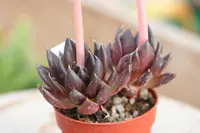
Echeveria affinis is a compact succulent from Mexico, valued for its dark, pointed rosettes and neat, architectural form. It stays low and slowly clumps over time, making it suitable for pots and shallow dishes.
Leaves are usually deep green to almost black, with a light powdery coating that reduces water loss. In good light it produces slender flower stalks with small, colorful blooms.
It is generally easy to grow for beginners, as it tolerates dry indoor air and short periods of neglect. To care for Echeveria affinis, provide bright light, minimal water, and a gritty, fast-draining soil mix.

Care Difficulty
Easy Care

Light Preference
Full Sun

Water Requirements
Low Water

Temperature Preference
Tropical / Frost Sensitive

Hardiness Zone
10–11

Soil Texture
Sandy, Loamy, Rocky

Soil pH
Slightly acidic (6.5–7.0), Neutral (7.0)

Soil Drainage
Well-drained

Fertilization
Minimal (feed rarely)
Scan your plant to receive care tips personalized for your specific plant
Available on iOS and Android
This species prefers bright, direct light but must be acclimated slowly to strong sun to prevent damage.
This succulent stores water in its leaves and needs infrequent, thorough watering in fast-draining soil.
This plant prefers warm, dry conditions and is sensitive to sustained cold and frost.
This species prefers dry air and does not need added humidity beyond typical indoor levels.
Use a very fast-draining, mineral-based mix that dries quickly between waterings.
This species grows very well in containers when excess water drains away quickly.
Light feeding supports compact growth without forcing soft, weak tissue in Echeveria affinis.
Pruning needs are minimal and mainly focus on tidiness and plant health for Echeveria affinis.
Repotting is infrequent but helps maintain healthy roots and aerated soil for Echeveria affinis.
Propagation is commonly done to multiply plants and refresh aging rosettes of Echeveria affinis.
Winter care is important because this succulent is not tolerant of hard frost.

Plant Health Check
Not sure what's wrong with your plant? Check your plant's health inside the app.
This species develops unusually dark, almost black-green rosettes when grown in high light because its leaves accumulate large amounts of protective pigments such as anthocyanins, which help shield tissues from intense sun.
It is native to higher-elevation regions of central Mexico, where it grows on rocky, well-drained slopes, and this origin explains its strong tolerance for bright sun and brief dry periods.
The rosettes can shift from dark green to deep purplish tones depending on light intensity, temperature, and seasonal conditions, so the same plant may look noticeably different across the year.
Brown leaves usually result from sunburn, overfertilizing, or rot from excess moisture around the roots or in the rosette. Remove damaged leaves, improve drainage, and adjust light exposure to bright but not harsh midday sun.
Keep your plants happy and healthy with plant identification, disease detection, and easy care guidance.

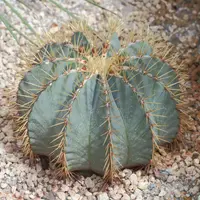
glaucous barrel cactus
Ferocactus glaucescens
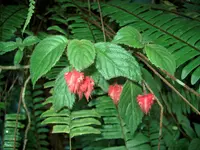
Crantzia cristata
Crantzia cristata
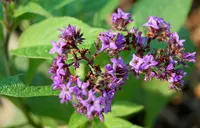
garden heliotrope
Heliotropium arborescens
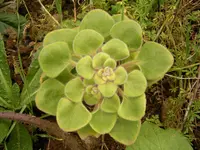
Tree of Love
Aichryson laxum
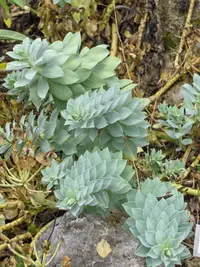
Myrtle spurge
Euphorbia myrsinites
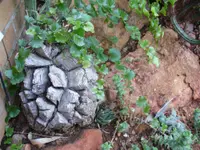 POPULAR
Elephant's Foot Plant
Dioscorea elephantipes
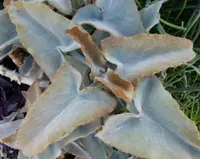 POPULAR
Felt bush
Kalanchoe beharensis

Matucana madisoniorum
Matucana madisoniorum