Opuntia lasiacantha Care

Opuntia lasiacantha

About Opuntia lasiacantha

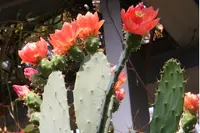
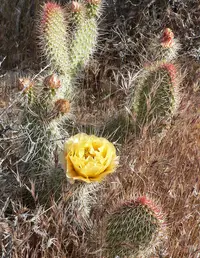
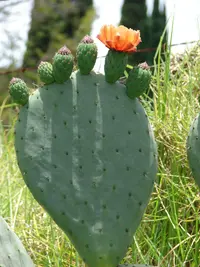
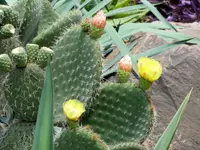
Opuntia lasiacantha is a small to medium prickly pear cactus with flat, rounded pads covered in clusters of spines and fine hairlike bristles called glochids. It tends to form low, spreading clumps over time rather than tall columns.

This species is native to arid and semi-arid regions of Mexico, where it grows in rocky, well-drained soils and full sun. Its drought tolerance and slow, compact growth habit make it suitable for dry gardens and containers when provided with strong light.

Those learning how to care for Opuntia lasiacantha should focus on very sharp drainage, bright exposure, and careful watering, as excess moisture is the main cause of problems in cultivation.

Main Plant Requirements

Care Difficulty

Easy Care

Light Preference

Full Sun

Water Requirements

Low Water

Temperature Preference

Warm Climate

Hardiness Zone

9–11

Soil Texture

Sandy, Rocky, Loamy

Soil pH

Slightly acidic (6.5–7.0), Slightly alkaline (7.0–7.5)

Soil Drainage

Well-drained

Fertilization

Minimal (feed rarely)

Get Personalized Care Plan

Scan your plant to receive care tips personalized for your specific plant

Available on iOS and Android

How to Care for the Opuntia lasiacantha

This cactus thrives in strong sun but benefits from gradual acclimation outdoors.

  • Provide 6–8 hours of direct sunlight daily, ideally with full morning sun and slightly filtered or high-angle sun in mid to late afternoon in very hot climates.
  • Young or recently moved plants need 1–2 weeks of gradual exposure to prevent bleaching, yellowing pads, or brown sunscald patches.
  • In winter, it tolerates lower light, but growth slows; long, thin pads and dull color indicate insufficient light for Opuntia lasiacantha.

Watering should mimic arid conditions with thorough but infrequent soakings.

  • Outdoors in warm seasons, water only when the top 5–8 cm of soil is completely dry, then soak deeply so water drains quickly away from the roots.
  • Use very well-draining, gritty soil on a slope or raised mound; standing water or heavy clay greatly increases root-rot risk.
  • Reduce watering to rare, light soakings in cool or winter periods; soft, shriveling pads suggest underwatering, while mushy, yellowing pads indicate overwatering.

This species prefers warm, dry climates and tolerates significant heat once established.

  • Optimal growth occurs around 70–90°F (21–32°C), with strong light and low humidity supporting compact, firm pads.
  • Mature plants usually survive short drops to about 20–25°F (-6 to -4°C) if soil is very dry, but repeated hard frosts or wet cold increase tissue damage and rot risk.
  • In extreme heat above 100°F (38°C), ensure soil does not stay wet and provide light afternoon shade to reduce stress and pad scorching.

This cactus handles low humidity well and rarely needs special humidity control.

  • Optimal range is 20–40% relative humidity, similar to dry indoor air or arid outdoor conditions.
  • Dry air is usually tolerated; problems arise more from excess moisture than from low humidity.
  • If pads shrivel while soil stays moist, humidity is likely too high; increase air movement and avoid crowding around the plant.

Provide very fast-draining, mineral-rich soil to prevent root rot in this desert cactus.

  • Use a gritty mix such as 50% cactus potting mix with 50% coarse materials like pumice, perlite, and coarse sand.
  • Aim for a loose, open structure that lets water run through in seconds and leaves many air pockets around the roots.
  • Slightly acidic to slightly alkaline pH (6.0–7.8) is acceptable, so focus more on drainage than on pH adjustments.
  • Avoid peat-heavy, compact, or water-retentive soils, which stay wet too long and quickly damage roots of Opuntia lasiacantha.

This species is suitable for container growing when the pot is set up to stay dry and stable.

  • Choose a wide, shallow pot so the spreading root system can anchor the plant and reduce tipping in wind.
  • Select unglazed clay to let moisture evaporate faster, which helps keep the root zone dry after watering.
  • Elevate the pot on feet or bricks so drainage holes stay clear and water cannot pool under the container.

This drought-adapted cactus needs only light feeding in containers or very poor soils.

  • Use a low-nitrogen balanced cactus fertilizer (around 5-10-10) or a diluted general balanced NPK product.
  • Feed potted Opuntia lasiacantha once in late spring and once in mid-summer during active growth.
  • Dilute liquid fertilizer to 25–50% of the label rate to avoid soft, weak pads and root burn.
  • Stop feeding in late summer; do not fertilize in fall or winter to allow firm, cold-hardy growth.

Pruning is minimal and mainly used to manage size and remove problem pads.

  • Best time is late spring to early summer, once the risk of hard frost has passed.
  • Remove only dead, diseased, storm-damaged, or badly crowded pads to keep the clump open.
  • Use thick gloves and clean, sharp pruners or a knife; cut pads at the joint without tearing tissue.
  • Moderate pruning can control spread and improve air flow but heavy cutting may reduce flowering.

This species is usually grown in the ground, with transplanting done infrequently and only when necessary.

  • Transplant in late spring or early summer when soil is warm and dry, avoiding cold or wet periods.
  • Look for crowded clumps, poor vigor, or pads shading each other heavily as signs a plant needs a new site.
  • If in a container, move to a slightly wider pot every 3–4 years when roots circle the pot or growth slows.
  • Wear protective gloves, keep roots as intact as possible, and allow disturbed roots to dry 1–2 days before a light watering.

Propagation is commonly done from pads and is more predictable than growing from seed.

  • Take healthy, mature pads in late spring or early summer using clean, sharp tools and thick gloves.
  • Allow cut pads to callus in a dry, shaded place for 7–14 days before planting.
  • Plant the callused base in very well-drained cactus mix, burying only the lower edge, and keep soil barely moist.
  • Maintain bright light, warm temperatures (70–85°F), and low humidity to encourage rooting over several weeks.

This cactus is fairly cold tolerant when dry but still benefits from thoughtful winter management.

  • In-ground plants in mild, dry winter climates often overwinter well with little intervention.
  • Apply a light gravel or coarse sand mulch around the base to keep the crown drained, not to add warmth.
  • Keep soil almost completely dry in winter; excess moisture in cold conditions encourages rot.
  • Move container plants to a bright, cool, frost-free spot and avoid watering except to prevent severe shriveling.

Care Tips

Use mineral mulch

Top-dress the root zone with 1–2 in of coarse gravel or pumice instead of organic mulch to keep pads dry at the base and reduce rot and slug damage when growing Opuntia lasiacantha outdoors.

Elevate for drainage

Plant on a slight mound or raised berm in the garden, or use a pot with feet or pot risers, to ensure excess water runs off quickly and does not pool around the cladodes.

Pad orientation check

When transplanting, keep the broad surface of the pad roughly facing east–west so that each side receives moderate sun rather than one side taking all the afternoon intensity, which helps reduce sunscald on newly planted sections.

Root inspection timing

Every 2–3 years, unpot during the warm, dry season to inspect roots for rot or circling and lightly trim damaged sections, then replant in fresh, dry mix and keep dry for 5–7 days to allow cuts to callus.

Tongs and padding

Use long grilling tongs and a folded layer of newspaper or foam between the metal and pad when handling, which protects both your hands from glochids and the pads from bruising or puncture damage.

Common Pests and Diseases

Cochineal scale

This pest appears as white, cottony or tufted patches on pads, often along ribs or areoles, and produces red carminic dye when crushed. Symptoms include sticky honeydew and gradual yellowing or weakening of affected segments.

Solution

Isolate the plant, then physically remove colonies by spraying pads with a strong jet of water and wiping with cotton swabs dipped in 70% isopropyl alcohol. For larger infestations, use repeated applications of a horticultural soap or neem oil spray, ensuring good coverage of pad surfaces and crevices, and reduce excess nitrogen fertilization that encourages soft, susceptible growth.

Cactus longhorn beetle

This pest is a dark beetle whose larvae bore into pads and stems, causing sunken, yellowing spots that may collapse and ooze. Symptoms include internal tunneling and sudden pad drop or structural weakness in clumps.

Solution

Inspect regularly at dusk and remove adult beetles by hand, destroying them before they lay eggs. Cut out and discard any tunneled or collapsing pads, then maintain dry, open, low-organic soil conditions and avoid heavy mulch around the base to reduce egg-laying sites and help with growing Opuntia lasiacantha in arid-style plantings.

Corky scab

This disease causes rough, brown, corky patches on pads, often starting near the base or areas exposed to mechanical damage and prolonged surface moisture. Symptoms include cosmetic scarring that can thicken and crack but usually does not kill the plant.

Solution

Improve air circulation and keep pad surfaces dry by watering at the soil line rather than overhead, especially in cool weather. Remove severely disfigured pads with a clean knife, avoid crowding plants, and protect pads from repeated minor injuries that can act as entry points for pathogens.

Soft scale

These insects appear as small, dome-shaped brown or tan bumps attached to pads and may be mistaken for natural tissue. This pest feeds on sap, leading to yellowing, reduced vigor, and honeydew that can encourage sooty mold growth on the pads.

Solution

Gently scrape individual scales off with a soft brush or cloth, or wipe infested areas with cotton pads dipped in 70% isopropyl alcohol. For larger plants, use a horticultural oil spray applied in mild temperatures, repeating every 7–14 days until new growth appears clean, and prevent ant activity that protects scale colonies.

Anthracnose

This disease produces circular, sunken, dark spots on pads that may develop pale centers and spread in wet, warm conditions. Symptoms include pad tissue collapse in advanced cases and potential spread across closely spaced plants.

Solution

Promptly prune and discard infected pads, sterilizing cutting tools between cuts with alcohol. Reduce overhead watering, space plants for better airflow, and in persistently humid climates consider a copper-based fungicide applied according to label directions at the first sign of new spotting.

Interesting Facts

Short-spined cushion pads

This species forms low, compact pads with relatively short spines compared to many other opuntias, which helps it reduce mechanical damage from wind while still discouraging herbivores.

Hairy areole covering

Its areoles often bear conspicuous whitish hairs that partially shade the growing tissue and may help reduce water loss in its native arid habitats in northern Mexico.

Diagnostic fruit features

Specialists often identify this species by its small, usually reddish to purple, spineless fruits combined with its distinct pad and spine morphology, which together separate it from closely related prickly pears in the region.

FAQs about Opuntia lasiacantha

Growth is generally slow to moderate. Young plants may add 5–10 cm of new pad length per year under warm, bright, dry conditions. Poor drainage, cool temperatures, or frequent disturbance at the roots can reduce growth significantly.

Grow Healthy Plants with Botan Care

Keep your plants happy and healthy with plant identification, disease detection, and easy care guidance.

Botan plant care app — identify plants on mobile

Explore More Plants