


Glove-safe handling
Use thick leather or specialized cactus gloves and long-handled tongs when repotting or moving pads to avoid injury from spines and tiny glochids, and keep a roll of duct tape handy to lift out any embedded glochids from skin.

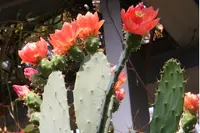
Red-flower pricklypear, Opuntia elatior, is a shrubby, branching cactus known for its flat, paddle-like segments and striking red to reddish-orange flowers. It often forms dense, upright clumps with spiny pads that may also carry tiny barbed hairs called glochids, which can easily irritate skin.
This species is native to arid and semi-arid regions of South Asia and nearby areas, where it thrives in strong sun and very well-drained, often rocky soils. Its drought tolerance and low nutrient needs make it relatively easy to manage once established, though handling requires care due to the spines. For those learning how to care for Red-flower Pricklypear, it suits bright, dry locations with minimal watering and free-draining soil.

Care Difficulty
Easy Care

Light Preference
Full Sun

Water Requirements
Low Water

Temperature Preference
Tropical / Frost Sensitive

Hardiness Zone
10–12

Soil Texture
Sandy, Loamy, Rocky

Soil pH
Slightly acidic (6.5–7.0), Neutral (7.0)

Soil Drainage
Well-drained

Fertilization
Minimal (feed rarely)
Scan your plant to receive care tips personalized for your specific plant
Available on iOS and Android
This cactus thrives in strong light and is best suited to open, sunny positions.
This species is highly drought-tolerant and prefers infrequent, deep watering.
This cactus prefers warm, dry conditions and has good heat tolerance when established.
This cactus handles low indoor humidity well and rarely needs special adjustment.
Soil for this cactus must be very fast-draining and low in organic matter.
This species is suitable for container growing when the pot is chosen to manage both drainage and the plant’s spreading, heavy pads.
This cactus needs only light feeding to support healthy growth in containers or poor soils.
Pruning Opuntia elatior is mainly done to control size, remove damage, and improve safety around paths.
Container-grown plants or crowded clumps benefit from occasional transplanting to maintain strong growth.
New plants are most commonly raised from pad cuttings, with seeds used mainly for larger-scale or genetic diversity.
This cactus is sensitive to hard freezes and benefits from basic winter protection in colder regions.

Plant Health Check
Not sure what's wrong with your plant? Check your plant's health inside the app.
This cactus produces striking red flowers with tepals, meaning the petals and sepals are not clearly distinct, which is typical for many cacti but especially notable in this species because of the strong, uniform red coloration.
It is naturally distributed in dry coastal regions and seasonally dry forests of India and nearby areas, where it tolerates high temperatures, intense sun, and long dry periods on rocky or sandy soils.
Its flattened stem segments (pads) carry both large spines and tiny barbed hairs called glochids, which detach easily and embed in skin, providing the plant with an effective defense against many herbivores.

In parts of western India, this species is widely planted as a living fence, forming dense, thorny barriers that mark field boundaries and help protect crops from grazing animals and human intrusion.
The bright red flowers are rich in nectar and pollen, so they attract bees, native solitary bees, and sometimes butterflies. Providing several plants together increases floral display and makes the area more attractive to pollinating insects.
Keep your plants happy and healthy with plant identification, disease detection, and easy care guidance.

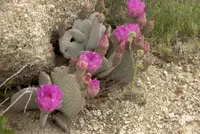
beavertail pricklypear
Opuntia basilaris
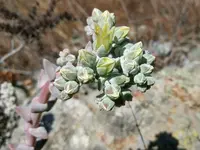
Greene's liveforever
Dudleya greenei
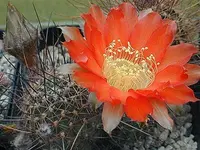
Echinopsis haematantha
Echinopsis haematantha
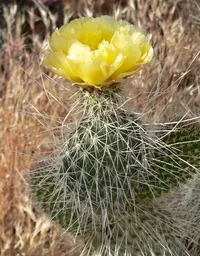
Mojave pricklypear
Opuntia erinacea
Pine Bolete
Boletus pinophilus
Rhipsalis pachyptera
Rhipsalis pachyptera
Blue-staining Slippery Jack
Suillus tomentosus
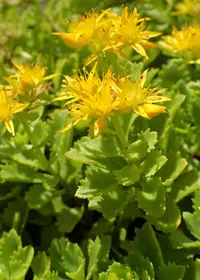
Kamchatka Stonecrop
Phedimus kamtschaticus