Pine Bolete Care (Boletus pinophilus)

Pine Bolete

About Pine Bolete

Pine bolete (Boletus pinophilus) is an ectomycorrhizal mushroom that forms a symbiotic partnership with pine trees, helping them absorb water and nutrients. It is not a typical houseplant, but an edible forest fungus valued by foragers.

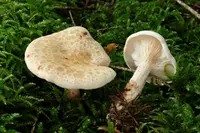
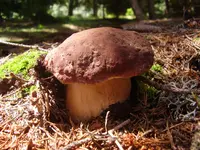
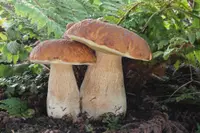
The cap is usually reddish brown, with a pale, thick stem and a sponge-like pore surface instead of gills. It grows from the ground near pines in temperate and montane forests across Europe and parts of North America.

This species prefers undisturbed, well-drained, acidic soils and stable, cool forest microclimates, which makes deliberate cultivation challenging. As a result, attempts to care for Pine Bolete at home are rarely successful and require specialized fungal cultivation knowledge.

Main Plant Requirements

Care Difficulty

Hard Care

Light Preference

Partial Shade

Water Requirements

Keep Soil Moist

Temperature Preference

Cool Climate

Hardiness Zone

3–7

Soil Texture

Sandy, Loamy, Organic-rich

Soil pH

Strongly acidic (4.5–5.5), Acidic (5.5–6.5)

Soil Drainage

Moist but well-drained

Fertilization

Minimal (feed rarely)

Get Personalized Care Plan

Scan your plant to receive care tips personalized for your specific plant

Available on iOS and Android

How to Care for the Pine Bolete

This ectomycorrhizal mushroom prefers bright woodland conditions with moderated, indirect light rather than open-field sun.

  • Aim for dappled or filtered sunlight under pine or mixed conifer canopy, roughly 3–6 hours of broken light per day, avoiding exposed midday sun.
  • Pine Bolete fruits best where morning sun reaches the forest floor and afternoon light is softened by tree shade, preventing drying of the duff layer.
  • Avoid full, unfiltered sun, which overheats and desiccates the soil; deep, continuous shade can reduce fruiting density and delay mushroom formation.

This species depends on stable soil moisture around host tree roots rather than direct watering of the mushrooms themselves.

  • Check the forest floor or bed: the top 2–5 cm should feel slightly moist but not soggy; crumbly, dusty soil indicates insufficient moisture for reliable fruiting.
  • In natural or semi-managed sites, prioritize free-draining, sandy or loamy soil; standing water, sour smell, or slimy litter suggest overwatering and root stress.
  • During dry, warm periods, supplemental irrigation near host pines can be applied deeply but infrequently, allowing partial surface drying between soakings to support Boletus pinophilus.

This mushroom fruits in cool to mild conditions and is sensitive to both hard frost and intense heat.

  • Optimal fruiting usually occurs around 50–68°F (10–20°C), especially with cool nights and moist soil under established conifers.
  • Mycelium in the soil may tolerate down to about 23–28°F (-5– -2°C), but repeated hard freezes can damage fine roots and suppress future fruiting.
  • Sustained temperatures above 77–82°F (25–28°C) with dry air reduce fruit body formation; in hot summers, shaded pine stands and retained litter help buffer temperature swings.

This fungus needs consistently moist, cool forest-floor conditions rather than controlled ambient humidity.

  • Aim for 70–90% humidity around the substrate by maintaining a damp, not waterlogged, litter layer under pine or spruce.
  • It tolerates brief drier air only if the soil and duff stay evenly moist; prolonged dry air dehydrates developing fruiting bodies.
  • Watch for cracked caps, pale, shriveling pores, and rapid collapse as signs of low humidity around the substrate, and increase moisture with misted leaf litter or a breathable cover.

Boletus pinophilus relies on a specific forest soil environment rather than standard garden bed preparation.

  • Use a loose, sandy to sandy-loam soil with high organic matter, mimicking conifer forest duff rich in decomposed needles and leaves.
  • Ensure rapid drainage with no standing water; excess moisture around the mycorrhizal zone greatly increases rot and suppresses fruiting.
  • Target a slightly acidic pH, roughly 4.5–6.0, often achieved naturally under pines or spruces where needle fall acidifies the top layer.
  • Improve aeration by incorporating coarse sand, fine bark chips, and well-rotted leaf mold, and avoid compacted clay, heavy peat blocks, or fertilized potting mixes.

This species is not realistically suitable for container growing because it depends on a stable mycorrhizal partnership with mature pine or spruce trees.

This mycorrhizal fungus relies mainly on its pine hosts, so direct feeding is minimal for Pine Bolete.

  • Maintain a naturally low to moderate fertility site; avoid rich, heavily fertilized soils that disrupt mycorrhizal balance.
  • If trees show nutrient deficiency, use a light, balanced NPK or compost in early spring, applied broadly around the root zone, not on mushrooms.
  • Limit any feeding to 1–2 light applications per growing season, at half the label strength, to prevent excessive soil nutrients.
  • Avoid synthetic, high-salt fertilizers and frequent dosing, which can reduce mycelium vigor and fruiting over time.

Boletus pinophilus is a wild mycorrhizal fungus, so it does not require true pruning, only careful harvesting.

  • Harvest mushrooms by cutting the stem at ground level with a clean knife to minimize soil disturbance.
  • Remove only healthy, mature fruiting bodies, leaving very small or old, decaying ones to support natural spore release.
  • Avoid raking or trimming surrounding pine roots and forest litter, which can damage the mycelium network and reduce future crops.
  • Keep the area free of trash and compacted soil rather than cutting or shaping any plant tissue.

This species is rarely grown in containers; management focuses on site choice and minimal disturbance rather than classic repotting.

  • Treat any move as long-term site establishment, selecting a stable pine-dominated location with acidic, well-drained soil.
  • Transplant only when creating new pine plantings, ideally in early spring or early autumn when soil is cool and moist.
  • Avoid disturbing existing forest patches; digging can break mycelium threads and sharply reduce Boletus pinophilus fruiting.
  • If using inoculated pine seedlings, handle root balls gently, keep roots shaded and moist, and plant at the same depth to limit stress.

This fungus is challenging to propagate intentionally because it depends on a living pine root system and complex soil biology.

  • Use spore-based methods by spreading pieces of mature caps or spore slurry around young pines in suitable, undisturbed soil.
  • Time any attempts for late summer to early autumn when soil temperatures are mild and moisture is consistent.
  • Maintain an acidic, well-drained, low–moderate nutrient environment to encourage mycorrhizal colonization rather than dense turf or rich garden soil.
  • Allow several years for possible establishment; visible mushrooms appear only if the mycelium successfully bonds with pine roots.

In suitable climates this forest fungus is naturally cold hardy and typically needs no dedicated winter care.

  • Leave existing leaf litter and pine needles in place as a natural insulating mulch over the root and mycelium zone.
  • Avoid deep soil disturbance, heavy machinery, or logging activity in winter, which can physically damage the underground network.
  • For container-grown inoculated pines, keep pots in a sheltered, unheated spot and protect the root zone from repeated freeze–thaw cycles.

Care Tips

Correct host pairing

Establish the fungus only under mature pines (especially Pinus sylvestris or P. nigra) and avoid mixing with unrelated tree species in the same bed, as this reduces the chance of successful mycorrhiza formation.

Gentle soil disturbance

In late fall or early spring, lightly loosen only the top 1–2 cm of needle litter without breaking fine roots, which improves gas exchange and helps mycelium spread while preserving the delicate root-fungus interface.

Targeted spore introduction

When using spore slurries, pour them in a ring 30–60 cm from the trunk where fine feeder roots are most active, rather than directly at the base of the tree, and then cover with a thin layer of pine needles.

Mulch with pine litter

Maintain a 3–5 cm layer of clean, dry pine needles instead of generic wood mulch to mimic the natural forest floor, keeping the soil acidic and stable for growing Pine Bolete.

Minimal fruiting disturbance

Cut mature mushrooms cleanly at the base instead of pulling them out, and leave very small or overripe specimens in place so they can continue to release spores and sustain the local population.

Common Pests and Diseases

Mycophagous slugs

This pest feeds on young fruiting bodies, often hollowing out caps and stems and leaving slime trails and ragged bite marks. Damage is usually worst in moist, shaded pine forests after rain.

Solution

Hand-pick slugs during damp evenings, use physical barriers such as copper tape or rough sand around productive patches, and reduce dense ground litter that shelters them. In heavily damaged areas, selective use of iron phosphate slug baits can help while keeping applications away from edible specimens.

Fungus gnats

These insects lay eggs in moist organic substrates, and their larvae tunnel through developing mushrooms, causing internal browning and soft, watery tissues. Symptoms include small entry holes and rapid decomposition of affected fruiting bodies.

Solution

Harvest mushrooms promptly at the button to mid‑maturity stage to limit larval development, and avoid over‑irrigation or water pooling in managed pine stands. In cultivation or trial plots, yellow sticky traps and targeted biological controls such as Bacillus thuringiensis var. israelensis can reduce gnat populations.

Parasitic Hypomyces

This disease is caused by Hypomyces species that overgrow mushrooms with a white, then yellowish crust, leading to distorted, spongy, or completely deformed fruiting bodies. Symptoms include loss of normal cap color and texture and an inability to form healthy pores.

Solution

Remove and discard all infected mushrooms, including nearby deformed specimens, to limit spore spread. Avoid disturbing infected areas during wet weather, and in any managed or semi‑cultivated setting, favor good air movement and avoid dense brush that keeps the forest floor constantly humid.

Bacterial soft rot

This disease develops in very wet, warm conditions and causes the flesh of the mushroom to become slimy, translucent, and foul‑smelling. Symptoms include rapid collapse of caps and stems, often starting from handling wounds or insect damage.

Solution

Harvest carefully to avoid bruising, keep collected mushrooms cool and dry, and avoid leaving damaged specimens on the ground in productive areas. In managed environments, reduce standing water and heavy soil compaction to keep surface conditions from staying saturated.

Mold contamination

This disease results from fast‑growing competitor molds colonizing damaged or aging fruiting bodies, producing green, blue, gray, or white fuzz on pores and cap surfaces. Symptoms include off‑odors and rapid drying or collapse of affected mushrooms.

Solution

Collect only young, firm mushrooms and remove any specimens that show early mold growth, leaving them out of baskets used for healthy harvest. In experimental or cultivation setups, lower humidity slightly, increase air exchange, and promptly remove senescent or insect‑damaged mushrooms to reduce mold spore load.

Interesting Facts

Pine specialist partner

This species forms ectomycorrhizal associations almost exclusively with pine trees, especially Scots pine and stone pine, exchanging mineral nutrients and water for sugars from the host roots.

Cold-tolerant fruiting

It often fruits in cool conditions of late summer to autumn in coniferous forests, tolerating relatively low temperatures that would inhibit many other edible bolete species.

Distinct reddish cap

Mature mushrooms typically show a deep reddish-brown, velvety cap contrasting with a pale, whitish stipe and white, non-bruising pores, which helps distinguish it from some toxic red-pored boletes.

Botan icon

Did you know?

In parts of central and northern Europe, this species is considered one of the most highly valued wild boletes for its dense, slow-cooking flesh, and it is often dried and traded alongside porcini (Boletus edulis) despite being a distinct species with a stronger, resinous aroma linked to its close association with pine forests.

FAQs about Pine Bolete

This species is considered a choice edible mushroom in its native range when correctly identified and cooked. It must never be eaten raw. Always avoid specimens that are overmature, infested, decayed, or confused with similar toxic boletes.

Grow Healthy Plants with Botan Care

Keep your plants happy and healthy with plant identification, disease detection, and easy care guidance.

Botan plant care app — identify plants on mobile

Explore More Plants