Root zone management
Install a wide mulch ring 5–10 cm deep around the tree, kept 10–15 cm away from the trunk, to protect shallow roots, stabilize soil moisture, and reduce mechanical damage from mowers and string trimmers.

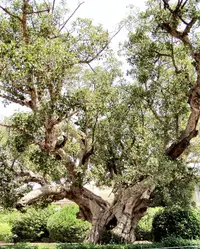
Sycamore fig, Ficus sycomorus, is a large, fast-growing fig tree traditionally found in parts of East Africa and the Middle East. It is a warm-climate species that thrives in frost-free areas and is not suited to small gardens or containers long term.
The tree develops a broad, dense crown with thick branches and rough, flaking bark. Its leaves are large, oval, and leathery, giving a deep shade under the canopy.
Ficus sycomorus produces small, rounded figs directly on branches and trunk, a growth pattern called cauliflory, where flowers and fruit form on older wood. Understanding how to care for sycamore fig begins with recognizing its need for consistent warmth, sun, and reasonably moist, well-drained soil.

Care Difficulty
Moderate Care

Light Preference
Full Sun

Water Requirements
Moderate Water

Temperature Preference
Tropical / Frost Sensitive

Hardiness Zone
10–12

Soil Texture
Sandy, Loamy, Organic-rich

Soil pH
Slightly acidic (6.5–7.0), Neutral (7.0)

Soil Drainage
Moist but well-drained

Fertilization
Minimal (feed rarely)
Scan your plant to receive care tips personalized for your specific plant
Available on iOS and Android
This large fig species prefers bright, warm conditions similar to its native savanna edges.
This tree prefers consistently moist, deep soil but does not tolerate prolonged waterlogging.
This species thrives in warm, frost-free climates with stable temperatures.
This species prefers moderately humid air but usually adapts to typical indoor levels.
Ficus sycomorus grows best in deep, well-drained, slightly moist soil with ample organic matter.
This tree can be grown in large containers for the short to medium term if root space and stability are carefully managed.
This fast-growing tree benefits from moderate feeding when grown in managed landscapes or large containers.
Thoughtful pruning helps Ficus sycomorus develop a strong structure and safe, manageable canopy.
This large tree is usually transplanted to the ground once young, rather than kept long term in containers.
Ficus sycomorus is commonly propagated from cuttings for consistent characteristics and strong growth.
This species is frost sensitive and needs protection in regions with cold winters.

Plant Health Check
Not sure what's wrong with your plant? Check your plant's health inside the app.
This species depends on a single tiny wasp, Ceratosolen arabicus, to pollinate its enclosed fig inflorescences, and the wasp in turn can complete its life cycle only inside these figs, making them a classic example of obligate mutualism.
Mature trees can produce several overlapping crops of figs across much of the year in suitable climates, providing a nearly continuous food source for birds, bats, and other wildlife in African and Middle Eastern ecosystems.
Sycamore fig was widely cultivated in ancient Egypt, where its wood and fruits were important in daily life and religious practices, and it appears frequently in tomb paintings and archaeological remains dating back thousands of years.

Individual sycamore figs can live for several centuries and develop massive, wide-spreading crowns with trunks so broad that they have been used as local landmarks and gathering sites in many East African and Middle Eastern communities.
Growth is usually fast in warm climates, often 60–90 cm per year once established. Rate depends on water availability, soil fertility, and root space. Heavy pruning, poor soil, or drought can slow development significantly. Ficus sycomorus plant care strongly influences vigor.
Keep your plants happy and healthy with plant identification, disease detection, and easy care guidance.