Early leader selection
In the first 2–3 years, choose a single straight central leader and remove or shorten any competing upright shoots to develop a strong, stable trunk that can support future canopy weight.

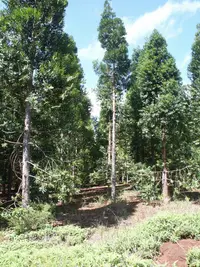
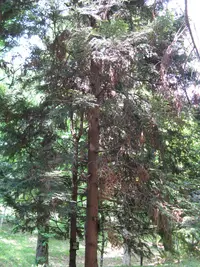
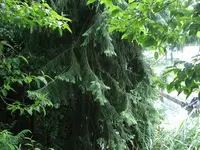
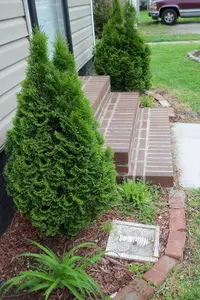
Koghis kauri (Agathis lanceolata) is a rare coniferous tree from New Caledonia, belonging to the ancient Araucariaceae family. It forms a straight trunk with a dense, symmetrical crown. Leaves are leathery, narrow, and lance-shaped, giving the tree a clean, architectural look even when young. The bark becomes thick and rough with age. In nature, it grows in montane forests on ultramafic soils, which are low in nutrients and often metal-rich. This background makes it slow-growing and somewhat demanding in cultivation. Consistent moisture, mild temperatures, and excellent drainage are important if you want to care for Koghis kauri successfully.

Care Difficulty
Hard Care

Light Preference
Partial Shade

Water Requirements
Regular Water

Temperature Preference
Tropical / Frost Sensitive

Hardiness Zone
11–12

Soil Texture
Sandy, Loamy, Organic-rich

Soil pH
Acidic (5.5–6.5)

Soil Drainage
Moist but well-drained

Fertilization
Minimal (feed rarely)
Scan your plant to receive care tips personalized for your specific plant
Available on iOS and Android
This species prefers bright, gentle light that mimics high, open forest conditions.
This conifer prefers evenly moist, well-drained soil without long dry or waterlogged periods.
This species is a subtropical conifer that needs mild, frost-free conditions for reliable growth.
This conifer prefers moderate, stable humidity and tolerates typical indoor levels if not extremely dry.
Agathis lanceolata prefers deep, evenly moist, well-drained mineral soil that does not compact.
This species can be grown in containers for some years, especially when kept as a juvenile specimen.
Agathis lanceolata grows slowly and needs modest feeding when cultivated.
Agathis lanceolata requires minimal pruning, mainly to maintain health and safe structure.
Koghis kauri is usually grown in the ground, with container culture limited to young plants.
Agathis lanceolata is most often propagated from seed under controlled conditions.
This subtropical conifer is sensitive to hard frost and needs winter protection in cooler climates.

Plant Health Check
Not sure what's wrong with your plant? Check your plant's health inside the app.
This conifer is endemic to a very small area of ultramafic (metal-rich, nutrient-poor) soils on the island of New Caledonia, which strongly restricts its natural distribution and shapes its ecology.
The species can tolerate ultramafic substrates that are naturally high in nickel and other heavy metals, an environment where many other trees struggle to survive.
As a member of the Araucariaceae, this species represents a relic of ancient southern hemisphere conifer floras that once formed extensive forests across the Gondwanan supercontinent.

The species is listed as Critically Endangered on the IUCN Red List due to its extremely restricted range and continuing habitat pressure, making its remaining wild populations a high conservation priority.
In the ground, this conifer can become a large tree, often 15–25 m or more in suitable climates. In cultivation and containers it stays much smaller, especially when root-restricted and lightly pruned when young.
Keep your plants happy and healthy with plant identification, disease detection, and easy care guidance.