Shelter From Wind
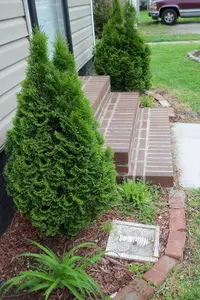
Site young trees where they are screened from prevailing winds by a fence or taller vegetation, as strong, drying winds can distort the narrow crown and increase moisture loss in the fine foliage.

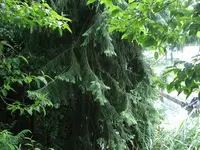
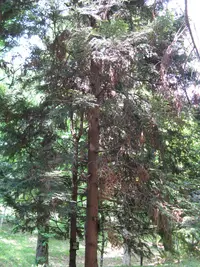
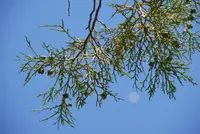
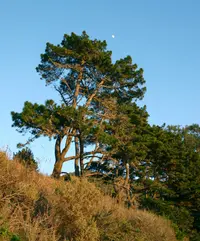
Taiwania cryptomerioides, commonly called coffin tree, is a large, long-lived conifer known for its straight trunk and fine, layered foliage. In nature it can form impressive forest trees with a tall, narrow crown.
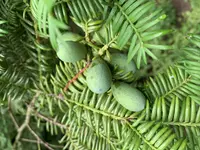
This species is native to high mountain regions of Taiwan and parts of mainland East Asia, where it grows in cool, moist forests. Its evergreen needles and aromatic wood make it distinctive in collections and larger gardens.
The tree prefers cool, humid climates, consistent moisture, and deep, well-drained soil, so it is not an easy choice for small gardens or hot, dry areas. Gardeners who want to care for Coffin Tree should provide shelter from extreme heat and drying winds.

Care Difficulty
Moderate Care

Light Preference
Full Sun

Water Requirements
Moderate Water

Temperature Preference
Cool Climate

Hardiness Zone
6–8

Soil Texture
Loamy, Silty, Organic-rich

Soil pH
Acidic (5.5–6.5)

Soil Drainage
Moist but well-drained

Fertilization
Minimal (feed rarely)
Scan your plant to receive care tips personalized for your specific plant
Available on iOS and Android
This conifer prefers cool, bright conditions with protection from harsh midday sun.
This species prefers consistently moist, cool soil that never stays waterlogged.
This high-elevation conifer prefers cool, mild climates and dislikes extreme heat or severe drying winds.
This conifer prefers moderate ambient humidity and copes reasonably well with typical outdoor air levels.
Taiwania cryptomerioides performs best in cool, consistently moist, well-drained soil with high organic content.
This species can be grown in containers for several years, mainly in its juvenile stage.
Coffin Tree (Taiwania cryptomerioides) grows best with light, balanced nutrition rather than heavy feeding.
Taiwania cryptomerioides needs only minimal pruning to maintain a healthy structure.
This conifer is usually grown in the ground, so focus on careful transplanting of young Taiwania cryptomerioides rather than frequent repotting.
Propagation of Taiwania cryptomerioides is possible but more specialized than for many garden shrubs or perennials, so it is not a casual home project.
Established Taiwania cryptomerioides trees are generally cold hardy in suitable climates and need only modest winter care.

Plant Health Check
Not sure what's wrong with your plant? Check your plant's health inside the app.
This species is considered a living relict, with fossil relatives known from the Paleogene, meaning its lineage has changed relatively little for tens of millions of years compared to many other conifers.
In its native mountain forests of Taiwan, mature trees can reach very large sizes and form some of the tallest natural forest canopy there, with straight, columnar trunks and narrow crowns.
Natural populations typically grow on cool, moist, high mountain slopes where frequent fog and cloud cover contribute significantly to their water input, especially during drier periods.

The common English name coffin tree comes from its historical use in Taiwan, where the durable, fine-textured wood was prized for making high-quality coffins and certain traditional buildings.
In garden conditions this conifer is generally slow to moderate growing, adding about 20–40 cm per year once established. Growth is often slower in dry, exposed, or nutrient-poor sites, especially during the first few years after planting.
Keep your plants happy and healthy with plant identification, disease detection, and easy care guidance.