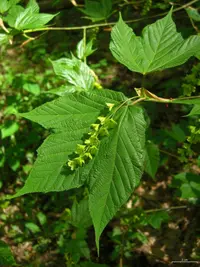
parasol leaf tree Care (Macaranga tanarius)

Also known as: Elephant's Ear, Blush Macaranga, Macaranga, bingabing
parasol leaf tree

About parasol leaf tree

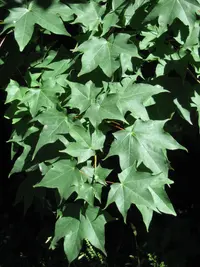
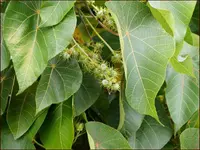
The parasol leaf tree, Macaranga tanarius, is a fast-growing small tree known for its large, rounded leaves that create a broad, umbrella-like canopy. It has a light, open branching structure that gives a soft, tropical look in gardens and larger landscapes.

This species is native to Southeast Asia and the Pacific region, where it often colonizes disturbed or open areas. It is valued for quick coverage and a lush appearance rather than showy flowers.

Macaranga tanarius prefers warm climates, sun to light shade, and moist but well-drained soil. Its rapid growth and tolerance of poorer soils can make it relatively straightforward to care for parasol leaf tree in suitable outdoor conditions.

Main Plant Requirements

Care Difficulty

Moderate Care

Light Preference

Partial Sun

Water Requirements

Moderate Water

Temperature Preference

Tropical / Frost Sensitive

Hardiness Zone

10–12

Soil Texture

Sandy, Loamy, Organic-rich

Soil pH

Acidic (5.5–6.5), Slightly acidic (6.5–7.0)

Soil Drainage

Moist but well-drained

Fertilization

Minimal (feed rarely)

Get Personalized Care Plan

Scan your plant to receive care tips personalized for your specific plant

Available on iOS and Android

How to Care for the parasol leaf tree

Macaranga tanarius prefers bright, filtered light similar to an open forest edge.

  • Provide 4–6 hours of bright, indirect light or gentle morning sun, with protection from harsh midday and late-afternoon sun to prevent leaf scorch.
  • Tolerates light partial shade, but very dense shade leads to leggy growth and larger, thinner leaves with reduced vigor in a parasol leaf tree.
  • In hot summers, use overhead light shade or nearby taller plants; in cooler seasons, allow more direct morning sun to maintain compact growth.

This species prefers consistently moist but not waterlogged soil.

  • Water when the top 3–5 cm of soil feel slightly dry, then soak thoroughly so moisture reaches the deeper root zone without leaving standing water.
  • In warm growing seasons, expect more frequent watering; reduce frequency in cooler months while still preventing the soil from drying out completely around the root area.
  • Signs of overwatering include yellowing leaves and soft stems, while dull, drooping leaves and dry, crumbly soil indicate Macaranga tanarius is staying too dry.

This tropical species grows best in warm, frost-free conditions year-round.

  • Aim for 70–86°F (21–30°C) for active growth; it slows noticeably below about 65°F (18°C).
  • Avoid temperatures below 50°F (10°C); light frost can damage foliage, and harder freezes can kill stems or the whole plant.
  • In hot spells above 95°F (35°C), provide some afternoon shade and mulch the root zone to reduce heat stress and soil moisture loss.

This species prefers moderate to high humidity and reacts to very dry indoor air.

  • Aim for 50–70% humidity to keep leaves broad and turgid on a parasol leaf tree.
  • Dry air causes crispy leaf edges, dull color, and faster leaf drop, especially on new growth.
  • Increase humidity with a nearby humidifier, grouped plants, or a pebble tray, avoiding misting that keeps foliage wet for long periods.

Soil should be loose, moisture-retentive, and very well drained for stable growth.

  • Use a loamy mix with 40–50% organic matter (compost, fine bark) plus coarse material like perlite or pumice.
  • Target slightly acidic to neutral pH around 6.0–7.0 for efficient nutrient uptake.
  • Improve aeration by avoiding heavy clay, adding chunky bark or perlite so roots receive consistent oxygen.
  • Avoid waterlogged, compacted, or salty soils, which encourage root rot and weak, pale foliage in Macaranga tanarius.

This species can be grown in containers, especially while young or in mild climates.

  • Choose a wide, heavy pot to counteract its fast, top-heavy growth and reduce tipping in wind.
  • Select a container material that slightly insulates roots, such as thick plastic or glazed clay, to buffer rapid moisture loss.
  • Ensure a deep enough pot to support a sturdy root column that anchors the tall stems under their large leaves.

Macaranga tanarius grows reasonably well in average soil but benefits from light, balanced feeding in containers or poor ground.

  • Use a balanced, slow-release fertilizer (around 10-10-10) or well-rotted compost at the start of spring growth.
  • Feed container plants every 4–6 weeks during the growing season at half-strength liquid balanced NPK.
  • Reduce or stop feeding in fall and winter, as growth slows and nutrient demand drops.
  • Water before and after applying fertilizer to limit root burn and improve nutrient uptake.

Macaranga tanarius responds well to light structural pruning to keep a stable, safe form.

  • Carry out main pruning in late winter or early spring before strong new growth starts.
  • Remove dead, damaged, crossing, or inward-growing branches to improve light and air movement.
  • Shorten overly long shoots to maintain size and encourage a balanced, multi-branched canopy.
  • Use clean, sharp bypass pruners or a small saw, making smooth cuts just above a bud or branch collar.

This species is usually grown in the ground, so focus on careful transplanting rather than frequent repotting.

  • Transplant young trees in late winter or early spring when soil is workable and growth is just starting.
  • Look for circling roots in containers or slowed growth as signs a parasol leaf tree needs a larger space.
  • Shift container plants up 1 pot size every 1–2 years, loosening circling roots before planting on.
  • Water deeply after transplanting and shade the plant for 1–2 weeks to limit transplant shock and leaf scorch.

Macaranga tanarius is most commonly propagated from seeds under warm, protected conditions.

  • Collect ripe seed and sow in late spring to early summer in a free-draining, sterile seed mix.
  • Maintain temperatures around 70–80°F and steady moisture, not waterlogging, for reliable germination.
  • Provide bright, indirect light and good air circulation to prevent damping-off in young seedlings.
  • Transplant seedlings carefully once they have several true leaves, disturbing roots as little as possible.

This tropical to subtropical tree is frost-sensitive and needs protection in regions with cold winters.

  • In frost-prone areas, grow in containers and move plants indoors or into a greenhouse before temperatures drop below 40°F.
  • Mulch the root zone with 5–8 cm of organic material in mild climates to buffer soil temperature.
  • Avoid cold, drying winds by positioning the tree near a sheltered wall or windbreak during winter.

Care Tips

Wind-firm young stems

Stake young plants with a soft tie on the windward side for the first 1–2 years to prevent rocking that can damage new roots and cause leaning crowns.

Manage surface roots

Leave a wide weed-free ring around the base and apply a 5–8 cm mulch layer, but keep mulch 5–8 cm away from the trunk to protect the shallow feeder roots without risking stem rot.

Encourage strong branching

Once the main stem reaches 1.5–2 m and is well established, lightly tip-prune the leader to encourage lateral branches and a fuller parasol canopy, doing this only during warm, active growth.

Plan for rapid size

Space plants at least 3–4 m away from buildings, fences, or smaller trees, since fast extension growth and large leaves can quickly shade out nearby plantings.

Monitor self-seeding

Inspect surrounding beds and paths 1–2 times per year and remove unwanted seedlings while small, as birds disperse seeds and unchecked volunteers can create a dense thicket when growing parasol leaf tree.

Common Pests and Diseases

Scale insects

This pest often colonizes young stems and leaf undersides, sucking sap and causing yellowing, leaf distortion, and sticky honeydew that can attract sooty mold. Infestations are more common on sheltered or stressed plants.

Solution

Prune and discard heavily infested shoots, then wipe remaining colonies from stems and leaves with a cloth or cotton pad soaked in insecticidal soap or a dilute alcohol solution, testing a small area first. For outdoor plants, encouraging natural predators such as lady beetles and parasitic wasps and avoiding excess nitrogen fertilization helps keep populations low as part of Macaranga tanarius care instructions.

Leaf beetle defoliation

These insects chew irregular holes or entire sections from the large leaves, sometimes skeletonizing them on young plants. Damage can be sudden when beetle populations spike in warm, wet periods.

Solution

Hand-pick adult beetles and larvae in early morning and drop them into soapy water, and remove heavily damaged leaves to reduce egg loads. Maintaining plant vigor with adequate water and balanced nutrients helps the tree outgrow minor damage; in severe cases, use a targeted foliar spray containing spinosad or neem oil, applied in the evening to limit impact on beneficial insects.

Leaf spot

This disease causes small water-soaked lesions on leaves that enlarge into brown or tan spots, sometimes with yellow halos and premature leaf drop. Symptoms include more severe spotting during extended warm, humid weather or on crowded plantings with poor airflow.

Solution

Remove and dispose of affected leaves, including fallen debris, and avoid overhead watering to keep foliage as dry as possible. If spotting progresses, apply a copper-based or chlorothalonil fungicide according to label directions and improve spacing and air circulation around the plant.

Sooty mold

This disease appears as a black, soot-like coating on leaves and stems that grows on honeydew excreted by sap-feeding insects such as scale or aphids. Symptoms include reduced photosynthesis, dull leaf color, and a sticky feel on plant surfaces.

Solution

First manage the underlying honeydew-producing insects with insecticidal soap or neem oil, then gently wash affected leaves with lukewarm water and a mild soap solution to remove the fungal coating. Improve airflow and light exposure to help foliage dry faster and reduce future fungal buildup.

Mealybugs

These insects form white, cottony clusters along leaf veins, petioles, and young stems, extracting sap and leading to leaf curl, stunting, and honeydew deposits. Infestations often build up on sheltered parts of the canopy or container-grown plants kept in warm, stable conditions.

Solution

Isolate affected plants if grown near other ornamentals, then dab visible mealybugs with cotton swabs dipped in isopropyl alcohol and follow with thorough applications of insecticidal soap or neem oil at 7–10 day intervals until no new insects appear. Prune and discard badly infested twigs, and avoid overfertilizing with high-nitrogen products, which encourages soft, mealybug-prone growth.

Interesting Facts

Specialist ant mutualism

In its native range, this species often hosts ant colonies in hollows and crevices of its stems and branches, and the ants help defend the plant from herbivores. The plant provides shelter and food resources such as extrafloral nectar, while the ants patrol and aggressively remove leaf-eating insects.

Pioneer rainforest tree

Macaranga tanarius is a classic pioneer species that quickly colonizes disturbed sites such as landslides, forest edges, and abandoned fields in Southeast Asia and the western Pacific. Its rapid growth and broad, light-catching leaves help stabilize soil and create shade that allows more shade-tolerant rainforest trees to establish.

Ficus mimicry strategy

The large, round, shallowly toothed leaves and overall crown shape can resemble some fig trees (Ficus species) that are common in its habitat. This visual similarity is thought to contribute to its success in open, sunny sites where figs and other fast-growing trees also dominate early successional stages.

Botan icon

Did you know?

The fruits of Macaranga tanarius are adapted for bird dispersal, with small, colorful, fleshy-coated seeds that attract fruit-eating birds, which then carry the seeds away and deposit them with natural fertilizer, helping the species rapidly expand into newly opened or disturbed habitats.

FAQs about parasol leaf tree

This species is generally fast-growing in warm, frost-free climates, often adding 60–120 cm of height per year when well established. Growth slows in cool conditions, poor soil, restricted roots, or if exposed to persistent strong wind.

Grow Healthy Plants with Botan Care

Keep your plants happy and healthy with plant identification, disease detection, and easy care guidance.

Botan plant care app — identify plants on mobile

Explore More Plants