Sturdy structural support
Install a short, wide plant stake or discreet trellis early on and tie the main stems loosely with soft ties so the heavy flower panicles stay upright and do not snap in wind or heavy rain.

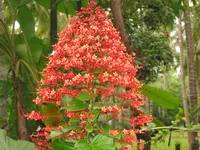
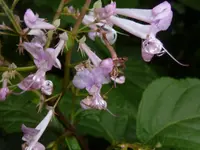
Pagoda flower, Clerodendrum paniculatum, is a tropical shrub known for its tall, tiered clusters of bright orange-red blooms that resemble a pagoda roof. It typically grows as a bushy plant with large, heart-shaped leaves that create a dense, lush backdrop for the flowers.
In nature it occurs in warm, humid regions of Southeast Asia, often in bright forest edges or open areas. The plant is moderately easy to grow if its need for warmth, consistent moisture, and fertile, well-drained soil is met.
It responds best to bright light with some protection from harsh midday sun. Understanding these preferences is the key to how to care for Pagoda Flower successfully in gardens or containers.

Care Difficulty
Moderate Care

Light Preference
Partial Sun

Water Requirements
Regular Water

Temperature Preference
Tropical / Frost Sensitive

Hardiness Zone
9–11

Soil Texture
Loamy, Sandy, Organic-rich

Soil pH
Acidic (5.5–6.5), Slightly acidic (6.5–7.0)

Soil Drainage
Moist but well-drained

Fertilization
Moderate (every 2–4 weeks)
Scan your plant to receive care tips personalized for your specific plant
Available on iOS and Android
This species prefers bright, gentle light that supports strong flowering without leaf scorch.
This shrub prefers consistently moist, never waterlogged soil for steady growth and flowering.
This tropical shrub thrives in warm, frost-free conditions with only mild temperature swings.
This species benefits from moderately high humidity to maintain healthy foliage and flowers.
Clerodendrum paniculatum prefers a loose, moisture-retentive yet free-draining substrate.
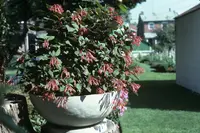
This species is well suited to container growing for patios and protected outdoor spaces.
Clerodendrum paniculatum responds well to consistent but moderate feeding during the warm growing season.
Pruning supports compact growth and stronger blooming in Clerodendrum paniculatum.
This species is often grown in the ground but can adapt to large containers if repotted thoughtfully.
Clerodendrum paniculatum is commonly propagated from semi-ripe cuttings and sometimes from seed.
This tropical shrub is frost-tender and needs protection in regions with cold winters.

Plant Health Check
Not sure what's wrong with your plant? Check your plant's health inside the app.
This species forms large, tiered clusters of many small tubular flowers that stack in a pagoda-like shape, which is the basis for its common name pagoda flower.
In warm climates the plant can produce successive waves of inflorescences from late spring through fall, providing a prolonged nectar source for butterflies and other pollinators.
The flowers often open a lighter orange and deepen toward red as they age, creating a gradient effect across the inflorescence that makes individual flower age and position visually distinct.

In parts of Southeast Asia, this species is sometimes planted near temples and traditional buildings specifically for its architectural flower form, which visually echoes multi-tiered pagoda roofs and is valued as a living ornamental counterpart to the surrounding structures.
Lack of flowers usually comes from insufficient light, low nutrients, or heavy pruning at the wrong time. Allow strong but indirect light, feed with a balanced fertilizer in spring–summer, and avoid cutting young flowering shoots too early.
Keep your plants happy and healthy with plant identification, disease detection, and easy care guidance.