Fuchsia triphylla Care

Fuchsia triphylla

About Fuchsia triphylla

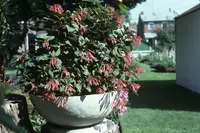
Fuchsia triphylla is a compact, shrubby flowering plant known for its long, tubular blooms that hang in clusters, often in shades of red, orange, or coral. Its narrow, pointed leaves form a neat, bushy mound that works well in containers, hanging baskets, or shaded borders.

This species is native to the Caribbean, where it grows in humid, mild conditions with filtered light. It prefers consistent moisture, good drainage, and protection from strong midday sun.

Gardeners often find it moderately easy to grow once its need for even moisture and shelter from heat is understood. Learning how to care for Fuchsia triphylla helps keep it blooming over a long season in suitable climates or protected outdoor spaces.

Main Plant Requirements

Care Difficulty

Moderate Care

Light Preference

Partial Shade

Water Requirements

Keep Soil Moist

Temperature Preference

Tropical / Frost Sensitive

Hardiness Zone

10–11

Soil Texture

Loamy, Peaty, Organic-rich

Soil pH

Acidic (5.5–6.5), Slightly acidic (6.5–7.0)

Soil Drainage

Moist but well-drained

Fertilization

Moderate (every 2–4 weeks)

Get Personalized Care Plan

Scan your plant to receive care tips personalized for your specific plant

Available on iOS and Android

How to Care for the Fuchsia triphylla

This species prefers bright, gentle light rather than harsh, direct sun.

  • Provide 3–5 hours of soft morning sun with bright dappled or filtered light for the rest of the day; avoid strong afternoon sun, which can scorch leaves and fade flowers on Fuchsia triphylla.
  • In hotter regions, site plants in partial shade with mid‑day protection, such as under light tree cover or on the east or north side of buildings.
  • In spring and fall, plants tolerate a bit more direct sun; in peak summer, increase shade, and in cloudy periods ensure at least bright open shade to prevent leggy, weak growth.

This plant needs consistently moist but not waterlogged soil.

  • Water when the top 2–3 cm of soil feels dry, aiming for evenly moist conditions from spring through early fall rather than alternating between very dry and saturated.
  • Use a rich, well‑drained mix or soil with added organic matter; ensure excess water can drain away freely to reduce root rot risk and sour odors.
  • In hot, windy weather, check moisture daily and watch for drooping or dull, crisping leaves as signs of underwatering; yellowing, soft leaves and wilting in wet soil suggest overwatering.

This species prefers cool to mild conditions and reacts poorly to extremes.

  • Aim for active growth temperatures of 60–75°F (16–24°C); flowering and overall vigor are best toward the cooler end of this range, especially at night.
  • Protect plants from frost; growth slows markedly below about 45°F (7°C), and sustained exposure near or below 32°F (0°C) can kill top growth or the whole plant.
  • In hot spells above 85°F (29°C), provide extra shade and airflow, keep roots cool with mulch, and avoid heat‑stressed midday transplanting or pruning.

This species prefers moderately humid air and reacts quickly to very dry conditions.

  • Aim for 50–70% humidity to keep leaves turgid and flowering consistent.
  • Dry indoor air below 40% causes leaf-edge browning, bud drop, and dull, limp foliage.
  • Increase humidity with grouped plants, a pebble tray under the pot, or brief morning misting while keeping leaves able to dry quickly.

This fuchsia needs loose, moisture-retentive but free-draining soil for steady growth.

  • Use a peat- or coir-based mix with fine bark and perlite for a light, airy, organic-rich structure.
  • Ensure fast drainage so water runs through in seconds but the mix still feels slightly moist when pressed.
  • Keep pH slightly acidic to neutral, around 6.0–7.0, avoiding strongly alkaline mixes that limit nutrient uptake.
  • For containers, fill with 2 parts all-purpose potting mix, 1 part compost, and 1 part perlite to prevent compaction and waterlogging for Fuchsia triphylla.

This species is well suited to container growing on patios, balconies, and shaded entries.

  • Choose a slightly heavy pot or add weight to the base so the plant does not tip when stems elongate and flower clusters form.
  • Select a container wide enough to allow arching stems to spread without crowding the root ball against the rim.
  • Use pots with multiple drainage holes and raise them on pot feet so excess water clears quickly after rain or watering, preventing soggy roots.

During the growing season, Fuchsia triphylla benefits from steady, moderate nutrition to support flowering and leafy growth.

  • Use a balanced liquid fertilizer (around 10-10-10 or 20-20-20) diluted to 1/2–1/4 strength for container plants.
  • Feed every 1–2 weeks from early spring to early fall when growth is active.
  • In garden beds, mix in compost or use a slow-release fertilizer at spring planting.
  • Reduce feeding sharply in late fall and winter, or stop entirely if growth is dormant.

Pruning supports compact growth and abundant blooms on Fuchsia triphylla.

  • In late winter or very early spring, cut back leggy stems by 1/3–1/2 to encourage dense new shoots.
  • Remove dead, damaged, or crossing stems whenever noticed to improve airflow and reduce disease risk.
  • Pinch soft shoot tips during spring and early summer to promote branching and more flower buds.
  • Use clean, sharp pruning shears and make cuts just above a leaf node.

Container-grown Fuchsia triphylla benefits from periodic repotting to refresh roots and growing media.

  • Repot when roots circle the pot base, emerge from drainage holes, or when growth and flowering slow despite good care.
  • Plan to move up 1 pot size every 1–2 years, preferably in early spring before strong new growth starts.
  • Gently loosen circling roots, trim any dead or rotten sections, and set the plant in fresh, well-drained mix.
  • Water thoroughly after repotting, then keep in bright, indirect light for 3–7 days to limit transplant stress.

New plants of Fuchsia triphylla are most often produced from softwood cuttings.

  • Take 7–10 cm soft, non-flowering tip cuttings in late spring or early summer.
  • Strip lower leaves, optionally dip the base in rooting hormone, and insert into moist, sterile, free-draining mix.
  • Maintain high humidity (cover with a clear dome or plastic) and bright, indirect light at 65–75°F.
  • Roots usually form in 2–4 weeks; pot rooted cuttings individually and acclimate slowly to normal conditions.

This species is frost-tender and needs protection in regions with cold winters.

  • In USDA zones colder than 9, treat plants as annuals or overwinter indoors as container specimens.
  • Move pots indoors before night temperatures drop below 40°F, placing them in bright, cool conditions.
  • In mild climates, apply a 5–8 cm mulch layer around the root zone to moderate soil temperatures.
  • Reduce watering in winter, keeping the root ball slightly moist but never waterlogged.

Care Tips

Timed hard pinch

About 4–6 weeks before peak flowering season, pinch back all soft tips by 1–2 leaf pairs to trigger bushier branching and a heavier flush of blooms rather than continuous, sparse flowering.

Bud drop prevention

To reduce flower bud drop, avoid sudden swings in soil moisture or temperature and keep the plant away from hot, dry air from heaters or strong drafts, especially when buds first appear.

Targeted pest checks

Inspect the undersides of leaves and young shoot tips every 7–10 days for whitefly, spider mites, and aphids, and treat early with insecticidal soap or horticultural oil before infestations weaken the plant.

Strategic container refresh

Every 1–2 years, shift into a slightly larger pot and replace at least the outer third of the rootball’s soil, gently teasing out circling roots so the plant can reestablish and maintain strong flowering performance.

Cool-night placement

If possible, move the plant to a bright, cooler spot at night (55–65°F) during the main flowering period, as this diurnal temperature drop supports better bud set and helps with long-term Fuchsia triphylla care instructions.

Common Pests and Diseases

Fuchsia gall mite

This pest feeds on young shoot tips and flower buds, causing distorted, swollen, or blistered growth that often looks tufted or witches’-broom-like. Symptoms include thickened, reddish or pale tissue and failure of normal flowers to form.

Solution

Immediately remove and discard all distorted shoot tips and affected flowers, then dispose of them in the trash, not compost. Improve airflow, avoid overhead watering, and use a targeted miticide or sulfur-based spray according to label directions, repeating as needed to protect new growth when growing Fuchsia triphylla in mild coastal climates where this mite is common.

Fuchsia rust

This disease causes small yellow spots on upper leaf surfaces and orange to rust-colored pustules on the undersides. Symptoms include premature leaf yellowing and drop, especially in crowded, humid conditions.

Solution

Remove and discard infected leaves as soon as they are noticed and keep the area under the plant free of fallen foliage. Provide good spacing and airflow, water at soil level, and if rust persists, apply a labeled fungicide for rust diseases at the recommended interval until new growth appears clean.

Whitefly

These insects are tiny white, moth-like sap suckers that fly up in a cloud when the plant is disturbed. This pest weakens plants, causes leaf yellowing, and produces sticky honeydew that can lead to sooty mold on leaves and flowers.

Solution

Regularly check the undersides of leaves and squash or rinse off eggs and nymphs with a firm stream of water, then allow foliage to dry quickly. Use yellow sticky traps to monitor and reduce adult numbers, and if infestation is persistent, apply insecticidal soap or horticultural oil thoroughly to leaf undersides, repeating every 5–7 days until populations decline.

Botrytis blight

This disease appears as soft, water-soaked patches on flowers, buds, and tender stems that soon develop gray, fuzzy mold, especially in cool, damp conditions. Symptoms include bud drop, mushy petals, and dieback of affected shoots.

Solution

Promptly remove and discard faded flowers, infected buds, and soft stems, cutting back into healthy tissue and keeping debris out of pots and beds. Increase airflow, avoid wetting flowers and foliage, water in the morning, and in severe or recurring cases use a labeled botrytis fungicide while also improving sanitation and spacing.

Interesting Facts

Madagascar forest origin

This species is native to humid montane forests of Madagascar, unlike many ornamental fuchsias that originate from Central or South America, which influences its preference for mild temperatures and consistent moisture in cultivation.

Long-tubed nectar flowers

Its bright orange to red, narrow tubular flowers are adapted for pollination by long-billed birds such as sunbirds in its native range, with the deep floral tube helping exclude less efficient pollinators.

Continuous blooming habit

Under favorable conditions this species can flower almost continuously from spring through fall, producing successive flushes of blooms rather than a single short flowering period, which makes it highly valued for ornamental use.

Botan icon

Did you know?

Fuchsia triphylla was among the earliest fuchsias introduced into European horticulture in the late 18th century, and it played a key role in early breeding work that produced many modern hybrid fuchsias with elongated, brightly colored flowers.

FAQs about Fuchsia triphylla

Lack of blooms usually comes from insufficient light, depleted nutrients, or old, unpruned stems. Regular deadheading, balanced fertilization during the growing season, and moderate light encourage flowering and are key parts of Fuchsia triphylla care instructions.

Grow Healthy Plants with Botan Care

Keep your plants happy and healthy with plant identification, disease detection, and easy care guidance.

Botan plant care app — identify plants on mobile

Explore More Plants