Columnea purpurata Care

Columnea purpurata

About Columnea purpurata

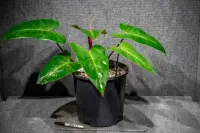
Columnea purpurata is a trailing, evergreen houseplant from tropical cloud forests in Brazil. It belongs to the gesneriad group, the same family as African violets. The plant forms arching stems with fleshy leaves and tubular flowers, often bright red or orange with contrasting throats. This makes it popular for hanging baskets and shelves where the stems can cascade freely. Columnea purpurata prefers warm, stable indoor conditions with bright, indirect light, moderate humidity, and airy, well-drained potting mixes. It is considered moderately demanding, as irregular watering, dry air, or strong direct sun can quickly stress the plant, so learning how to care for Columnea purpurata improves long-term success.

Main Plant Requirements

Care Difficulty

Moderate Care

Light Preference

Bright Indirect Light

Water Requirements

Moderate Water

Temperature Preference

Tropical / Frost Sensitive

Hardiness Zone

11–12

Soil Texture

Loamy, Peaty, Organic-rich

Soil pH

Acidic (5.5–6.5), Slightly acidic (6.5–7.0)

Soil Drainage

Moist but well-drained

Fertilization

Light (every 4–6 weeks)

Get Personalized Care Plan

Scan your plant to receive care tips personalized for your specific plant

Available on iOS and Android

How to Care for the Columnea purpurata

This trailing epiphyte prefers bright, gentle light that mimics shaded forest canopies.

  • Provide 6–8 hours of bright, filtered light each day, such as near an east or north window or under light tree cover outdoors.
  • Allow soft morning sun but protect Columnea purpurata from direct midday or afternoon sun, which can scorch leaves and fade flowers.
  • If stems stretch, leaves pale, or flowering declines, increase light with sheer-curtained windows or grow lights, especially in winter when natural light is weaker.

Watering should keep the root zone evenly moist but never saturated.

  • Water when the top 2–3 cm of the mix feels dry, using tepid water, and let excess drain fully to protect the fine roots.
  • In spring and summer, expect to water more frequently as growth and evaporation increase; reduce frequency in fall and winter as growth slows.
  • Watch for yellowing, mushy leaves and a sour smell as signs of overwatering, and crisp edges or limp, thin leaves as signs the plant is too dry.

This species thrives in consistently warm, frost-free conditions similar to its tropical origins.

  • Aim for 65–80°F (18–27°C) for active growth, avoiding sudden swings greater than about 10°F (6°C) within a day.
  • Protect from cold; growth slows below 60°F (16°C), tissue damage occurs near 45°F (7°C), and frost can kill exposed stems and leaves.
  • In hot spells above 85°F (29°C), increase shade, airflow, and humidity while keeping the rooting zone slightly cooler and out of direct heat sources.

This species benefits from consistently high humidity for best growth indoors.

  • Aim for 50–70% humidity; it tolerates brief dips lower but foliage quality declines in very dry air.
  • Crisping leaf edges, dull foliage, and failure to flower well indicate humidity stress.
  • Increase humidity with a nearby humidifier, grouped plants, or a pebble tray placed under but not touching the pot.

Columnea purpurata prefers a loose, airy, organic-rich substrate similar to an epiphytic mix.

  • Use a mix such as 50% peat or coco coir, 25% fine bark, and 25% perlite to create a fibrous, well-aerated structure.
  • Ensure rapid drainage; water should flow through in seconds, leaving the mix moist but never waterlogged.
  • Keep pH slightly acidic, around 5.5–6.5, which supports nutrient availability for sensitive roots.
  • Avoid heavy garden soil, high-clay mixes, or compacted potting media that stay wet and exclude air from the root zone.

This species is well suited to container culture, especially in hanging baskets.

  • Choose a wide, shallow container to accommodate surface-leaning stems and prevent the root ball from staying soggy at depth.
  • Use a light plastic or resin pot if frequent drying is an issue, or a clay pot if extra evaporation is needed in very humid rooms.
  • Secure hanging baskets or wall pots firmly, as the trailing mass becomes heavy and can torque weak hooks or brackets over time.

Feeding supports compact growth and flowering in Columnea purpurata grown indoors.

  • Use a balanced liquid fertilizer (for example 10-10-10 or 20-20-20) diluted to 1/4–1/2 strength for container plants.
  • Apply every 2–4 weeks during spring and summer when the plant is actively growing and blooming.
  • Switch to a weak feeding once every 6–8 weeks in fall and winter, or pause if growth is very slow.
  • Avoid heavy slow-release pellets; a light top-dressing of fine compost once a year is sufficient for organic supplementation.

Thoughtful pruning keeps Columnea purpurata dense, tidy, and flowering well.

  • Shape after main flowering flush in late winter or early spring so new growth carries buds.
  • Remove dead, weak, or damaged stems at their base using clean, sharp scissors or snips.
  • Shorten overly long or tangled trailing shoots to encourage branching and a fuller hanging form.
  • Pinch soft tips of young stems during the growing season to increase side shoots and flower sites.

Pot management aims to maintain a lightly root-bound but healthy Columnea purpurata.

  • Check for roots circling the pot, emerging from drainage holes, or unexplained slow growth as signs repotting is needed.
  • Plan to repot every 2–3 years in late winter or early spring before strong new growth starts.
  • Move only 1 pot size up, using a loose, peat- or coco-based mix with added perlite for airflow.
  • Gently tease outer roots, keep the root ball as intact as possible, water thoroughly, and shade from strong sun for 3–5 days after repotting.

New plants are most often raised from softwood stem cuttings rather than seed.

  • Take 7–10 cm non-flowering tip cuttings in spring or early summer from healthy Columnea purpurata shoots.
  • Remove lower leaves, optionally dip in rooting hormone, and place stems in moist, airy mix or rockwool.
  • Maintain 70–75°F, high humidity (60–80%), and bright, indirect light to support root formation.
  • Once roots are 2–3 cm long, pot cuttings individually and keep slightly more humid than mature plants for several weeks.

This tropical species is frost-sensitive and must be kept above chilling temperatures in winter.

  • Overwinter Columnea purpurata indoors at 60–70°F with bright, filtered light away from cold drafts.
  • If grown outside in warm months, bring containers in before temperatures drop below 55°F.
  • Reduce watering slightly in winter, allowing the top of the mix to dry more between waterings without letting the root ball fully dry.
  • Avoid placing pots directly on cold windowsills; use an insulating tray or stand to keep roots warmer.

Care Tips

Encourage Compact Growth

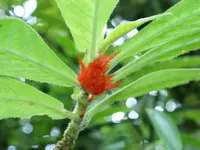
Pinch back soft stem tips just above a leaf pair every few months to keep vines compact and encourage dense flowering along the stems rather than leggy, bare growth.

Refresh Aging Stems

Every 1–2 years, take 7–10 cm tip cuttings from the healthiest shoots, root them, and plant them back into the same pot to renew the plant and maintain a full, cascading habit.

Optimize Basket Display

Grow the plant in a hanging basket or on a high shelf so stems can trail freely, but keep the top of the pot near window height to give the crown bright, even light for better bud formation.

Flowering Rest Period

After a heavy flowering cycle, reduce fertilizer and slightly lower watering frequency for 4–6 weeks to allow the plant to rest, then resume normal feeding to support the next flush of blooms when caring for Columnea purpurata.

Prevent Botrytis On Blooms

Provide strong air movement around flowers with a small fan on low setting and promptly remove spent blooms to reduce the risk of grey mold (Botrytis) on dense clusters of flowers.

Common Pests and Diseases

Mealybugs

This pest appears as small white cottony clusters along stems, leaf axils, and flower stalks, often causing leaf yellowing and sticky honeydew on surfaces below the plant.

Solution

Remove visible insects with a cotton swab dipped in 70% isopropyl alcohol, then wash the plant gently with lukewarm water and mild soap; repeat weekly until no new clusters appear. For heavier infestations in Columnea purpurata indoor care, use a systemic insecticide labeled for indoor ornamentals and isolate the plant from others during treatment.

Western flower thrips

These insects feed inside tubular flowers and on tender growth, leading to distorted blooms, silvery streaks on leaves, and dark specks of frass on petals and foliage.

Solution

Remove and discard all heavily damaged flowers and soft shoots, then shower the plant to dislodge adults and larvae. Follow with targeted treatments such as spinosad or insecticidal soap applied according to label directions, and reduce pest pressure by keeping old blooms pruned and avoiding overcrowding around the plant.

Cyclamen mites

This pest attacks young leaves and shoot tips, causing tight rosettes, stunted or misshapen growth, and failure of new leaves and flowers to open properly, often without obvious insects visible to the eye.

Solution

Isolate the plant immediately, remove and discard the most distorted growth, and increase air movement around the plant to discourage mite buildup. For persistent problems, apply a miticide specifically labeled for cyclamen mites or use repeated treatments with horticultural oil, ensuring good coverage of shoot tips and leaf undersides while keeping the plant out of direct sun during application.

Botrytis blight

This disease causes soft brown spots on flowers and leaves that quickly develop gray fuzzy mold, especially under cool and humid indoor conditions with poor air movement.

Solution

Remove and discard all affected flowers and leaves, then improve airflow, reduce overhead watering, and keep foliage dry, particularly in the evening. If outbreaks repeat, apply a fungicide labeled for Botrytis on ornamentals and maintain good hygiene by promptly removing spent blooms and plant debris from around the pot.

Leaf spot (fungal)

Symptoms include small water-soaked areas on leaves that enlarge into brown or tan spots, sometimes with darker borders, leading to premature leaf drop on older stems.

Solution

Cut off and discard leaves and stems with numerous spots, and take care to water at the soil level rather than on the foliage to keep leaves dry. Improve spacing and ventilation around the plant; in severe or recurring cases, use a broad-spectrum ornamental fungicide according to label directions to protect new leaves while adjusting care practices to avoid prolonged leaf wetness.

Interesting Facts

Velvet tubular flowers

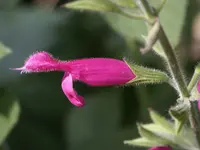
This species produces slender, tubular flowers with a velvety surface and rich purplish to red-purple coloring, an adaptation that visually signals to bird pollinators and protects delicate tissues from excess light and water loss.

Epiphytic growth habit

In its native range, this plant often grows as an epiphyte on tree branches, anchoring to bark rather than rooting in soil, which allows it to access better light in the forest canopy while collecting moisture and nutrients from organic debris.

Hummingbird pollination link

The long, narrow corolla and hanging flower position are characteristic of hummingbird-pollinated Neotropical Gesneriaceae, and this species is considered adapted to these fast-moving birds that can easily access nectar deep within the tube.

FAQs about Columnea purpurata

Lack of flowers usually comes from insufficient light, old or exhausted stems, or missing rest periods. Provide bright, indirect light, avoid heavy pruning of younger shoots, and allow slightly cooler, drier conditions in winter to trigger flowering.

Grow Healthy Plants with Botan Care

Keep your plants happy and healthy with plant identification, disease detection, and easy care guidance.

Botan plant care app — identify plants on mobile

Explore More Plants