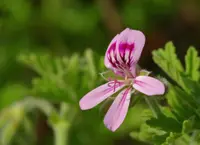
Pinch After Flowering
Lightly pinch back spent flowering stems just above a healthy leaf pair to encourage compact regrowth and a fresh flush of blooms rather than letting old stems elongate and exhaust the plant.


Mexican foxglove, Tetranema roseum, is a compact, clumping perennial grown mainly for its soft, tubular pink to lavender flowers and lush green foliage. It usually forms low mounds that suit borders, mixed beds, and shaded containers.
This species is native to the cool, moist highlands of Mexico and Central America, where it grows in partial shade and humus-rich forest soils. Its preference for consistent moisture, mild temperatures, and protection from harsh sun makes it moderately easy in suitable climates but less tolerant of drought or intense heat.
Gardeners who learn how to care for Mexican foxglove usually find it reliable in sheltered, evenly moist sites with good drainage and organic matter in the soil.

Care Difficulty
Moderate Care

Light Preference
Partial Shade

Water Requirements
Keep Soil Moist

Temperature Preference
Tropical / Frost Sensitive

Hardiness Zone
10–11

Soil Texture
Loamy, Peaty, Organic-rich

Soil pH
Acidic (5.5–6.5), Slightly acidic (6.5–7.0)

Soil Drainage
Moist but well-drained

Fertilization
Light (every 4–6 weeks)
Scan your plant to receive care tips personalized for your specific plant
Available on iOS and Android
This plant prefers bright, gentle light that avoids harsh midday sun.
This species prefers evenly moist, not saturated, soil during active growth.
This plant grows best in mild, frost-free conditions.
This species prefers moderately moist air and benefits from stable indoor humidity levels.
Tetranema roseum prefers a loose, humus-rich substrate that drains freely yet retains some moisture.
This plant adapts well to container growing for patios, balconies, and small gardens.
Tetranema roseum benefits from light, steady nutrition during its active growing season.
Tetranema roseum responds well to light, targeted pruning that maintains a compact, floriferous plant.
Tetranema roseum is often grown in the ground, but container plants benefit from occasional transplanting to maintain healthy roots.
Tetranema roseum is most commonly propagated by division or softwood stem cuttings during the active season.
Tetranema roseum is only moderately frost tolerant and benefits from simple winter precautions in cooler regions.

Plant Health Check
Not sure what's wrong with your plant? Check your plant's health inside the app.
This species is native to cool, moist montane cloud forests in eastern and southeastern Mexico, where it often grows on shaded, mossy slopes and along stream banks rather than in open, exposed sites.
In cultivation it often flowers from late summer into fall, which is relatively late compared to many ornamental border plants and can extend color in temperate gardens when other perennials start to decline.
The tubular, foxglove-like flowers are structured for bee pollination, guiding visiting bees along nectar lines into the tube so they contact the reproductive parts and transfer pollen between plants.

Although commonly compared to true foxgloves, this species belongs to Plantaginaceae (the plantain family), not Scrophulariaceae, reflecting a taxonomic revision based on molecular genetics rather than on flower shape alone.
Lack of blooms usually comes from low light, nutrient-poor soil, or plants that are still immature. Avoid heavy pruning in late spring, and do not overfertilize with high-nitrogen products, which favor foliage instead of flowers when growing Mexican foxglove.
Keep your plants happy and healthy with plant identification, disease detection, and easy care guidance.