


Encourage Trailing Habit
Position the pot at eye level or higher and gently direct new stems over the container edge so the plant develops an even, cascading curtain instead of a few long, tangled vines.

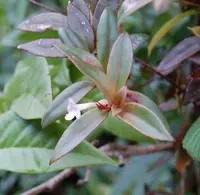
Codonanthopsis crassifolia is a trailing epiphyte from tropical forests in Central and South America, often found growing on trees rather than in soil. It belongs to the African violet family and is valued as a compact hanging or shelf plant.
Stems are slender and cascading, with small, fleshy leaves and tubular flowers that can appear along the shoots, giving a delicate, airy look. The plant tends to branch freely, forming a soft, trailing mat over time.
It is considered moderately easy to grow indoors because it tolerates typical household conditions if extremes are avoided. Understanding how to care for Codonanthopsis crassifolia starts with providing bright, filtered light, lightly moist but airy potting mix, and good drainage.

Care Difficulty
Moderate Care

Light Preference
Bright Indirect Light

Water Requirements
Moderate Water

Temperature Preference
Tropical / Frost Sensitive

Hardiness Zone
11–12

Soil Texture
Loamy, Peaty, Organic-rich

Soil pH
Acidic (5.5–6.5), Slightly acidic (6.5–7.0)

Soil Drainage
Moist but well-drained

Fertilization
Light (every 4–6 weeks)
Scan your plant to receive care tips personalized for your specific plant
Available on iOS and Android
This trailing gesneriad prefers bright, gentle light that mimics a forest canopy edge.
This species prefers evenly moist conditions without staying waterlogged.
Stable, warm conditions support compact growth and regular flowering.
This epiphytic species prefers moderate to high indoor humidity and reacts quickly to very dry air.
This plant grows best in a loose, airy mix that mimics the organic, fast-draining substrate it encounters as an epiphyte.
This trailing Gesneriad is well suited to container culture, especially in hanging baskets or elevated pots.
This plant responds well to modest feeding during its active season in bright indoor conditions.
Pruning helps keep Codonanthopsis crassifolia compact, tidy, and flowering well indoors.
This species prefers slightly snug pots but benefits from periodic repotting to maintain healthy roots.
Codonanthopsis crassifolia is commonly propagated from soft stem cuttings rather than seed in home settings.
This tropical houseplant is not frost hardy and requires mild indoor conditions during winter in temperate climates.

Plant Health Check
Not sure what's wrong with your plant? Check your plant's health inside the app.
This species often grows as an epiphyte in association with ant nests on tree trunks and branches in its native Brazilian habitats, using the ants’ debris as a nutrient source while not harming the host tree.
After flowering, it forms fleshy, berry-like capsules that are attractive to small animals; these fruits help disperse the tiny seeds away from the parent plant in the forest understory.
Its leaves are thick, slightly succulent, and glossy, an adaptation that helps reduce water loss in exposed canopy or branch environments where moisture availability can fluctuate.
Lack of flowers usually relates to insufficient light intensity, overly cool temperatures, or heavy, old growth. Provide bright, indirect light, avoid cold drafts, and prune lightly after flowering to stimulate new shoots, where buds are most likely to form.
Keep your plants happy and healthy with plant identification, disease detection, and easy care guidance.

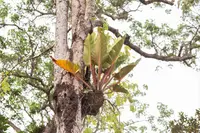
Philodendron melinonii
Philodendron melinonii

Natal orange
Strychnos spinosa
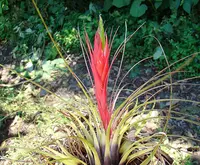
Tillandsia punctulata
Tillandsia punctulata
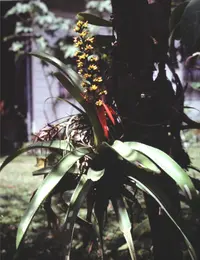
Aechmea mertensii
Aechmea mertensii
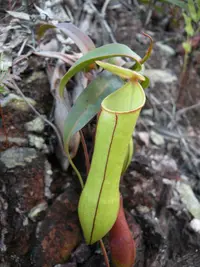
slender pitcher plant
Nepenthes gracilis
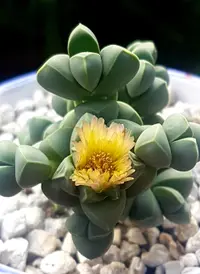
ice plant
Delosperma lehmannii

Copper Birdsnest Philodendron
Philodendron 'Autumn'
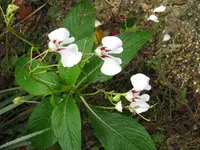
dyers busy lizzie
Impatiens tinctoria