Begonia variegata Care

Begonia variegata

About Begonia variegata

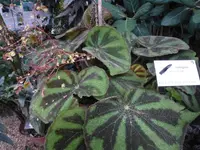
Begonia variegata is a small rhizomatous begonia valued for its patterned foliage rather than its flowers. It typically forms a low, compact clump with asymmetrical leaves marked in contrasting light and dark zones.

This species is native to Southeast Asia, where it grows in shaded, humid forest habitats on well-drained, organic-rich substrates. Its preference for stable warmth, high humidity, and gentle, indirect light can make it somewhat demanding indoors.

Understanding how to care for Begonia variegata starts with recognizing that it dislikes cold drafts, waterlogged soil, and very dry air, so it suits more controlled indoor or terrarium-like conditions.

Main Plant Requirements

Care Difficulty

Moderate Care

Light Preference

Bright Indirect Light

Water Requirements

Moderate Water

Temperature Preference

Tropical / Frost Sensitive

Hardiness Zone

11–12

Soil Texture

Loamy, Peaty, Organic-rich

Soil pH

Acidic (5.5–6.5), Slightly acidic (6.5–7.0)

Soil Drainage

Moist but well-drained

Fertilization

Light (every 4–6 weeks)

Get Personalized Care Plan

Scan your plant to receive care tips personalized for your specific plant

Available on iOS and Android

How to Care for the Begonia variegata

This species prefers bright, indirect light to keep its variegation clear and foliage healthy.

  • Provide 4–6 hours of bright, filtered light daily, such as behind a sheer curtain or under light tree shade.
  • Tolerates partial shade, especially strong afternoon sun, but needs enough brightness to avoid leggy growth and fading patterns on Begonia variegata leaves.
  • Protect from direct midday sun, which can cause leaf scorch and crispy edges; in winter, move slightly closer to the light source or a brighter window.

This plant prefers evenly moist but never waterlogged soil to support steady growth.

  • Allow the top 2–3 cm of soil to dry before watering; use a finger test rather than a fixed schedule, adjusting for pot size and soil type.
  • In spring and summer, expect more frequent watering as growth and evaporation increase; reduce frequency in fall and winter while avoiding complete dry-out.
  • Use a well-draining mix and containers with drainage holes to prevent root rot; watch for yellow, soft leaves (overwatering) or drooping, crisp edges (underwatering).

This species grows best in stable, warm conditions without abrupt temperature swings.

  • Aim for 65–75°F (18–24°C) for active growth, with slightly cooler nights still acceptable if changes are gradual.
  • Keep temperatures above 55°F (13°C); below this, growth slows sharply and tissue damage can occur, especially to tender new leaves.
  • Protect from frost, drafts, and heat sources; avoid prolonged exposure above 85°F (29°C), which can cause wilting and stress, and increase humidity and shade during hot spells.

This species benefits from moderately high, stable humidity indoors.

  • Aim for 50–70% humidity to support healthy foliage and stable growth.
  • Tolerates brief dips to 40%, but sustained dry air causes crisp leaf edges and stalled new leaves.
  • Increase humidity with a nearby humidifier, grouped plants, or a pebble tray, but avoid misting that keeps leaves wet.

This plant prefers a loose, airy, organic-rich substrate that drains quickly yet retains some moisture.

  • Use a mix of 40% peat or coco coir, 40% fine bark, and 20% perlite for structure, moisture retention, and aeration.
  • Target a slightly acidic pH around 6.0–6.5, which supports nutrient uptake and reduces leaf-tip burn risk.
  • Ensure water drains from the pot within seconds; soggy, compact or clay-heavy substrates quickly lead to root rot.
  • Avoid garden soil and dense potting mixes; lighten them by adding bark and extra perlite before planting Begonia variegata.

This species is well suited to container culture for controlled moisture and root conditions.

  • Choose a wide, shallow pot to match its fibrous root system and prevent unused, waterlogged lower layers.
  • Select a slightly heavier material like ceramic if the plant becomes top-heavy, to reduce tipping risk on shelves or stands.
  • Allow a 1–2 cm gap below the rim so water stays inside the pot while you water slowly and evenly across the surface.

This plant responds well to light, consistent feeding during its active season for balanced growth and leaf coloration.

  • Use a balanced liquid fertilizer (around 10-10-10 or 20-20-20) diluted to 1/4–1/2 strength for caring for Begonia variegata.
  • Feed every 3–4 weeks in spring and summer when growth is strongest.
  • Pause or reduce feeding to once every 6–8 weeks in fall and winter, depending on growth rate.
  • Avoid heavy compost or strong slow-release pellets that can burn fine roots; flush the pot with water occasionally to limit salt buildup.

Light, targeted pruning keeps Begonia variegata compact and encourages fresh foliage.

  • Best timing is late winter to early spring, with light touch-ups through the growing season.
  • Remove dead, yellowing, or damaged leaves first, then thin crowded stems to improve airflow.
  • Pinch or trim overly long shoots just above a node to maintain shape and encourage branching.
  • Use clean, sharp scissors or small pruners, disinfected before use, to reduce the risk of disease spread.

Begonia variegata prefers slightly snug pots and only needs repotting when clear stress signs appear.

  • Check for roots circling the pot, pushing from drainage holes, or slowed growth as indicators.
  • Plan to repot every 2–3 years in spring, shifting to a pot only 2–3 cm wider.
  • Use a loose, well-draining mix, handling the brittle roots gently and loosening only the outer layer.
  • Water lightly after repotting, keep in bright indirect light, and avoid strong fertilization for 2–3 weeks to reduce stress.

This species is commonly propagated by stem or leaf cuttings under warm, humid conditions.

  • Take 5–8 cm stem cuttings or healthy leaf sections in late spring to midsummer.
  • Place cuttings in moist, airy medium such as peat-perlite or coco-perlite, with high humidity and bright indirect light.
  • Maintain temperatures around 70–75°F and avoid waterlogging to prevent rot.
  • Once roots form and new growth appears, gradually acclimate to normal room humidity before potting individually.

This begonia is frost tender and needs indoor conditions or mild, protected environments in winter.

  • Move container plants indoors before temperatures drop below 50°F, choosing bright indirect light.
  • Maintain indoor temperatures around 60–70°F and avoid cold drafts or sudden chills.
  • Water less in winter, keeping the mix slightly moist but never saturated to limit root rot risk.
  • In very dry heated rooms, increase humidity locally with trays of water or a small humidifier near the plant.

Care Tips

Rotate For Symmetry

Turn the pot 90° every 1–2 weeks so new leaves develop evenly and the plant does not lean or stretch toward one side of the light source.

Use Shallow Pots

Grow the plant in a wide, shallow pot to match its fibrous root system, which improves aeration, reduces the risk of soggy soil, and stabilizes the top-heavy foliage.

Leaf Surface Hygiene

Wipe leaves gently with a barely damp, soft cloth every 3–4 weeks to remove dust, improve light capture, and allow faster detection of early pest or fungal issues when caring for Begonia variegata.

Targeted Pest Scouting

Inspect the undersides of leaves and along petioles with a hand lens every 1–2 weeks, focusing on new growth and variegated areas where spider mites, mealybugs, and thrips often establish first.

Seasonal Light Shifting

Move the plant slightly farther from windows in high-summer and closer in winter, using sheer curtains or a bright adjacent spot to keep variegation crisp without risking leaf scorch.

Common Pests and Diseases

Powdery mildew

This disease causes a white, powdery film on leaves, often starting on older or shaded foliage, and can distort new growth.

Solution

Improve air circulation around the plant, avoid overhead watering, remove heavily affected leaves, and use a sulfur or potassium bicarbonate-based fungicide labeled for ornamentals if the problem persists, especially important for consistent Begonia variegata indoor care.

Botrytis blight

This disease produces gray, fuzzy mold on leaves, stems, and flowers, especially under cool, humid, and stagnant air conditions.

Solution

Remove and discard all affected plant parts, increase airflow, keep foliage dry, reduce humidity around the plant, and apply a botrytis-specific fungicide if cultural corrections do not stop new lesions from forming.

Mealybugs

These insects appear as white, cottony clusters on leaf nodes, undersides of leaves, and roots, causing yellowing and weakening of the plant.

Solution

Isolate the plant, dab visible insects with cotton swabs dipped in 70% isopropyl alcohol, rinse foliage gently, and repeat weekly; for heavier infestations, use a systemic insecticide or a labeled insecticidal soap, ensuring thorough coverage of leaf undersides and stems.

Spider mites

This pest causes fine speckling or stippling on leaves, with very fine webbing between petioles and stems, and leaves may become dull and drop prematurely in dry conditions.

Solution

Increase humidity, rinse foliage under a gentle stream of lukewarm water, and apply insecticidal soap or horticultural oil to both upper and lower leaf surfaces, repeating treatments every 5–7 days until no new damage appears.

Bacterial leaf spot

Symptoms include small, water-soaked translucent spots that may turn brown with yellow halos, often spreading rapidly across thin begonia leaves in warm, wet conditions.

Solution

Remove and discard infected leaves, keep water off the foliage, improve spacing and airflow, avoid reusing contaminated tools or water, and if the issue recurs, consider replacing the plant and starting with clean material to prevent ongoing bacterial contamination.

Interesting Facts

Southeast Asian origin

Begonia variegata is a naturally occurring species from parts of Southeast Asia, where it grows in warm, humid forest habitats rather than as an artificial hybrid created for ornamental trade.

Distinctive leaf variegation

This species shows stable, genetically based variegation patterns on its leaves, meaning the light and dark areas are part of the plant’s normal growth rather than a symptom of stress or disease.

Shallow forest root system

In its native habitat, this plant typically anchors in leaf litter and thin humus layers over rock or compact soil, relying on a shallow root system adapted to well-drained but consistently moist conditions.

FAQs about Begonia variegata

Brown leaf edges usually result from low humidity, fertilizer burn, or salt buildup in the potting mix. Irregular watering, especially letting the soil swing from very dry to wet, also causes damage. Trim affected leaves and adjust conditions gradually.

Grow Healthy Plants with Botan Care

Keep your plants happy and healthy with plant identification, disease detection, and easy care guidance.

Botan plant care app — identify plants on mobile

Explore More Plants