Japanese Fatsia Care (Fatsia japonica 'Spider's Web')

Also known as: Fatsia, Paperplant

About Japanese Fatsia

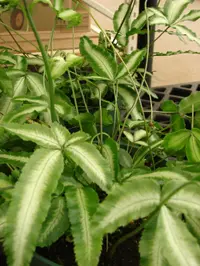
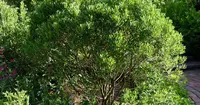
Fatsia japonica 'Spider's Web' is a broadleaf evergreen shrub grown mainly as a shade-tolerant foliage plant. It is valued for its large, hand-shaped leaves speckled and edged with white, giving a soft, variegated look.

This cultivar typically forms a bushy, upright plant with a lush, architectural presence, suitable for containers or sheltered garden beds. It originates from woodland habitats in Japan, so it appreciates protection from harsh sun and drying winds.

Its tolerance of lower light, cool rooms, and occasional care lapses makes it relatively forgiving. Understanding how to care for Japanese Fatsia focuses on providing consistent moisture, well-drained soil, and moderate light without intense direct sun.

Main Plant Requirements

Care Difficulty

Easy Care

Light Preference

Partial Shade

Water Requirements

Moderate Water

Temperature Preference

Cool Climate

Hardiness Zone

7–10

Soil Texture

Loamy, Sandy, Organic-rich

Soil pH

Acidic (5.5–6.5), Slightly acidic (6.5–7.0)

Soil Drainage

Moist but well-drained

Fertilization

Light (every 4–6 weeks)

Get Personalized Care Plan

Scan your plant to receive care tips personalized for your specific plant

Available on iOS and Android

How to Care for the Japanese Fatsia

This shrub prefers bright, indirect light with protection from harsh midday sun to keep variegation crisp.

  • Outdoors, place in dappled or partial shade with 2–4 hours of gentle morning sun and shade from strong afternoon rays.
  • Indoors, Japanese Fatsia thrives near an east or north window, or set back from a bright south window behind sheer curtains.
  • Leaves bleaching, crisping, or showing brown edges indicate too much sun, while sparse growth and large dark leaves suggest insufficient light.

This plant prefers evenly moist, never soggy soil and reacts quickly to extremes in watering.

  • Water when the top 3–5 cm of soil feels dry, allowing moisture to soak through and excess to drain away fully.
  • In spring and summer, expect more frequent watering as growth and evaporation increase; in fall and winter, extend the interval between waterings.
  • For Fatsia japonica 'Spider's Web', yellowing, limp leaves often signal overwatering or poor drainage, while drooping, dry leaves and brittle stems point to underwatering.

This plant grows best in cool to mild conditions and tolerates short periods of cold if protected.

  • Ideal active growth occurs around 60–75°F (16–24°C), with steady conditions helping maintain leaf variegation.
  • Mature plants tolerate brief drops to about 15–20°F (-9 to -6°C) outdoors, but repeated hard freezes can damage shoots and new growth.
  • In hot spells above 85°F (29°C), provide shade and consistent soil moisture, and shelter from drying winds during both summer heat and winter chills.

This plant benefits from moderate humidity but usually adapts well to typical home air.

  • Aim for 40–60% humidity to keep foliage edges smooth and variegation crisp.
  • Tolerates brief dry air, but persistent levels below 30% may cause browning tips and slight leaf curl.
  • Increase humidity with a pebble tray under the pot or grouping plants, rather than frequent misting.

Fatsia japonica 'Spider's Web' prefers moist, airy, organic-rich soil that drains freely but does not dry out too fast.

  • Use a loamy mix of roughly 2 parts peat-free potting mix, 1 part compost, and 1 part perlite or fine bark for structure.
  • Ensure the mix drains within a few minutes after watering while still holding some moisture around the root zone.
  • Aim for slightly acidic to neutral pH, around 6.0–7.0, to support nutrient availability and healthy growth.
  • Avoid heavy clay, waterlogged spots, or very sandy mixes that cause root suffocation or rapid drying.

This species grows well in containers when given stable, well-drained conditions.

  • Choose a wide, heavy container to counteract the plant’s top-heavy crown and prevent tipping in wind.
  • Select thicker-walled ceramic or concrete pots outdoors, which buffer rapid moisture loss compared with thin plastic.
  • Raise the container slightly on pot feet so drainage holes stay clear and excess water escapes quickly after rain or watering.

This shrub responds well to moderate feeding during the main growing season.

  • Use a balanced, water-soluble fertilizer (for example 10-10-10 NPK) at half strength every 4–6 weeks in spring and summer.
  • Alternatively, apply a slow-release granular fertilizer once in early spring for steady nutrition.
  • In rich garden soil, a thin layer of compost around the root zone in spring is usually enough for Japanese Fatsia.
  • Stop feeding in fall and winter to avoid forcing weak, cold-sensitive growth.

Thoughtful pruning keeps Fatsia japonica 'Spider's Web' dense, healthy, and well shaped.

  • Carry out main pruning in late winter or very early spring before new growth starts.
  • Remove dead, diseased, or storm-damaged stems first, using clean, sharp bypass pruners or loppers.
  • Thin crowded interior stems at the base to improve light penetration and airflow.
  • Shorten overlong shoots to a lower leaf or branching point to control size and encourage bushier growth.

Container-grown plants benefit from occasional repotting to support steady growth.

  • Check for roots circling the pot, pushing through drainage holes, or for slowed growth as signs it needs a larger container.
  • Plan to repot every 2–3 years in spring, moving to a pot 2–5 cm wider with fresh, free-draining, humus-rich mix.
  • Water thoroughly a day before repotting, then gently loosen and untangle circling roots to reduce stress.
  • After repotting Fatsia japonica 'Spider's Web', water well, keep in bright shade for 1–2 weeks, and avoid fertilizing for about 4 weeks.

New plants are most reliably produced from semi-ripe stem cuttings or basal shoots.

  • Take 8–12 cm semi-ripe cuttings in late summer, each with 2–3 leaf nodes, and remove lower leaves.
  • Dip cut bases in rooting hormone and insert into a moist, free-draining medium such as 50% perlite and 50% peat-free compost.
  • Maintain bright, indirect light, high humidity, and temperatures around 65–75°F until roots form.
  • Basal shoots with some roots attached can also be divided in spring and potted individually.

This shrub is reasonably cold hardy but benefits from simple winter precautions in colder regions.

  • Mature plants usually tolerate light frosts, but prolonged freezes below about 15°F can damage foliage and young shoots.
  • Apply a 5–8 cm mulch layer around the root zone in late fall, keeping it slightly away from the stems.
  • For container plants, move pots to a sheltered, frost-free spot with bright light, such as an unheated porch or cool sunroom.

Care Tips

Acclimate Outdoor Moves

Shift the plant from indoors to a shaded outdoor spot over 7–10 days in late spring, increasing exposure gradually to prevent leaf scorch and stress when growing Japanese Fatsia.

Use Wind Protection

Place the plant where it is sheltered from strong, drying winds, or use a low windbreak such as a lattice or shrub border to keep the large leaves from tearing and desiccating.

Support Heavy Stems

Install discreet stakes or a short ring support around the main stems as the plant matures, keeping top-heavy growth upright and reducing the risk of stems snapping in storms.

Refresh Tired Containers

Every 2–3 years, root prune the outer 2–3 cm of the root ball and replace the top 5–8 cm of mix with fresh, high-quality potting medium instead of always moving to a larger pot.

Monitor Winter Microclimates

In borderline climates, place outdoor specimens near a warm wall and mulch the root zone 5–8 cm deep, then remove or thin the mulch in spring to avoid keeping the crown too wet and cold.

Common Pests and Diseases

Scale insects

This pest feeds on leaf and stem sap, often causing yellowing, sticky honeydew, and sooty mold on foliage. Infestations on Fatsia are typically found along midribs, leaf undersides, and woody stems.

Solution

Physically remove visible scales with a cotton swab dipped in 70% isopropyl alcohol, then wash leaves with lukewarm soapy water and rinse well. For persistent cases, apply a horticultural oil or insecticidal soap labeled for ornamental shrubs, repeating every 7–10 days until new growth is clean, and improve air circulation to discourage reinfestation.

Vine weevil

This pest damages Fatsia leaves by creating irregular notches along the edges, while the larvae feed on roots in the pot or ground, causing wilting and poor growth. Symptoms include drooping foliage that does not recover after watering and sometimes sudden collapse in containers.

Solution

Hand-pick adult beetles at night using a flashlight and shake them from foliage onto a sheet for removal. In containers, use beneficial nematodes targeting vine weevil larvae according to label directions, and avoid overpotting or chronically wet compost, which favors larval survival.

Spider mites

These insects thrive in warm, dry indoor or sheltered spots and feed on leaf sap, leading to fine stippling, dull foliage, and occasional webbing on leaf undersides. Symptoms include slow decline, leaf edge bronzing, and speckled discoloration on variegated areas.

Solution

Shower the plant thoroughly, focusing on leaf undersides, then wipe or gently brush to remove mites and webs. Raise humidity, reduce heat stress, and if needed apply insecticidal soap or a miticidal horticultural oil at 5–7 day intervals, ensuring full coverage of both leaf surfaces.

Leaf spot

This disease causes tan to brown spots with darker margins on leaves, sometimes with a yellow halo, and can distort or blemish the variegation. Symptoms include scattered lesions that may merge, leading to partial leaf dieback in humid, stagnant conditions.

Solution

Remove and discard affected leaves, keeping foliage as dry as possible by watering at the soil level and avoiding overhead splashing. Improve spacing and airflow, then if spotting continues, use a fungicide labeled for ornamental leaf spots, applying according to label directions during warm, humid periods.

Powdery mildew

This disease produces a white to gray powdery coating on leaf surfaces, often starting on shaded or crowded parts of the plant. Symptoms include distorted young growth and reduced vigor if the infection becomes extensive.

Solution

Prune out heavily affected shoots and thin dense growth to increase light and airflow around the foliage. Avoid overhead watering, keep the plant in brighter, moving air, and if needed apply a sulfur or potassium bicarbonate fungicide labeled for powdery mildew, treating both upper and lower leaf surfaces.

Interesting Facts

Naturally stable variegation

This cultivar shows stable white and light green marbling that arises from a genetic mutation, so new leaves reliably keep the speckled pattern rather than reverting to solid green as many other variegated plants do.

Color shifts with age

Young leaves often emerge more mottled and bright, then slowly deepen to a darker green with fine white speckling as the leaf tissue matures and chlorophyll distribution changes.

Distinct from standard Fatsia

Unlike the typical solid-green Fatsia japonica, this form was selected specifically for its dense splashing of white along the leaf margins and veins, creating a visual texture that appears almost frosted or dusted with paint.

FAQs about Japanese Fatsia

Brown, crispy edges usually come from low humidity, underwatering, or excess fertilizer salts. Check soil moisture, flush the pot occasionally, and keep it away from hot drafts or direct heater airflow to reduce leaf scorch.

Grow Healthy Plants with Botan Care

Keep your plants happy and healthy with plant identification, disease detection, and easy care guidance.

Botan plant care app — identify plants on mobile

Explore More Plants