peacock plant Care (Goeppertia makoyana)

peacock plant

About peacock plant

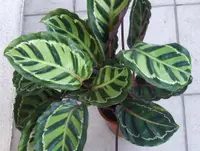
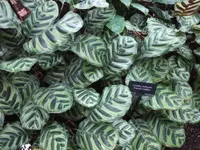
The peacock plant, Goeppertia makoyana, is a tropical, evergreen houseplant valued for its striking, patterned foliage. It forms a compact clump of broad, oval leaves with light green tops marked by dark feather-like bands and rich purple undersides.

This species occurs naturally in the understory of Brazilian rainforests, where it grows in warm, shaded, and humid conditions. Its decorative leaves are sensitive to dry air, sudden temperature changes, and poor watering habits, which can make it moderately challenging for beginners.

Those who learn how to care for peacock plant will find it does best in bright, indirect light, evenly moist but not waterlogged soil, and stable indoor conditions.

Main Plant Requirements

Care Difficulty

Moderate Care

Light Preference

Bright Indirect Light

Water Requirements

Keep Soil Moist

Temperature Preference

Tropical / Frost Sensitive

Hardiness Zone

11–12

Soil Texture

Loamy, Peaty, Organic-rich

Soil pH

Acidic (5.5–6.5), Slightly acidic (6.5–7.0)

Soil Drainage

Moist but well-drained

Fertilization

Light (every 4–6 weeks)

Get Personalized Care Plan

Scan your plant to receive care tips personalized for your specific plant

Available on iOS and Android

How to Care for the peacock plant

Goeppertia makoyana prefers bright, indirect light similar to a lightly shaded forest floor.

  • Provide 6–8 hours of filtered light daily, such as near an east or north window or under sheer curtains to avoid harsh rays.
  • Allow partial shade, especially in summer; brief early-morning sun is acceptable, but avoid direct midday or afternoon sun that can scorch leaves.
  • If leaves fade, stretch, or lose pattern contrast, increase light gradually; in winter, move closer to a bright window or use a diffuse grow light.

Watering should keep the root zone evenly moist without staying soggy.

  • Before watering Goeppertia makoyana, let the top 2–3 cm of soil dry, then water thoroughly until excess drains away.
  • In spring and summer, expect faster drying; in fall and winter, allow slightly longer between waterings while still preventing complete dryness.
  • Signs of overwatering include yellowing, limp leaves, and sour-smelling soil; crisp brown edges and curling leaves usually indicate underwatering or prolonged dryness.

Stable, warm temperatures support healthy growth and patterned foliage.

  • Aim for 65–80°F (18–27°C) for best growth, with minimal daily fluctuation to avoid stress on the foliage.
  • Protect from cold; growth slows below 60°F (16°C), and exposure under 50°F (10°C) can cause leaf damage, especially with drafts.
  • This species does not tolerate frost and struggles in extreme heat above 86°F (30°C), so provide shade, good airflow, and consistent humidity in hot spells.

This species needs consistently high humidity to maintain healthy foliage.

  • Aim for 60–75% humidity; growth and leaf color decline below about 50%.
  • In dry air, leaf edges brown, tips crisp, and new leaves emerge small or curled on the peacock plant.
  • Increase humidity with grouped plants, a nearby humidifier, or a pebble tray, rather than misting leaves directly.

Goeppertia makoyana prefers a loose, airy, organic-rich mix that drains quickly yet stays lightly moist.

  • Use a base of peat or coco coir with added perlite and fine bark to create a fibrous, moisture-retentive yet free-draining structure.
  • Aim for slightly acidic to neutral pH around 5.5–7.0, which supports nutrient uptake and stable leaf color.
  • Improve aeration by keeping at least 30–40% of the mix as chunky components such as perlite, pumice, or small bark pieces.
  • Avoid heavy garden soil, pure compost, or mixes that stay soggy, which encourage root rot and fungal problems.

This species is very suitable for container growing due to its shallow, fibrous root system.

  • Choose a pot only 2–4 cm wider than the root ball to keep moisture more even and reduce stagnant wet pockets.
  • Select a stable, heavier container if the foliage becomes tall and full, to prevent tipping when the substrate is moist.
  • Use a container material that matches your environment: terracotta to release excess moisture or glazed/plastic to slow drying in low-humidity rooms.

Balanced feeding supports steady, healthy foliage development in Goeppertia makoyana.

  • Use a balanced water‑soluble fertilizer (around 10‑10‑10 or 20‑20‑20) diluted to 1/4–1/2 strength for peacock plant indoor care.
  • Apply every 4–6 weeks during spring and summer when growth is active.
  • Withhold or reduce feeding to once in winter, at very weak strength, as growth slows.
  • Avoid granular slow‑release products that can burn roots in small indoor pots.

Light pruning keeps Goeppertia makoyana tidy and reduces disease risk.

  • Best time for pruning is late winter or early spring, before new growth accelerates.
  • Remove dead, yellowing, or torn leaves at the base with clean, sharp scissors.
  • Thin out crowded inner leaves to improve air movement and light penetration.
  • Regular removal of damaged foliage directs energy to new, healthy leaves and maintains compact form.

Occasional repotting maintains healthy roots and stable moisture for Goeppertia makoyana.

  • Check for roots circling the pot, emerging from drainage holes, or slowed growth as signs it needs more space.
  • Repot every 2–3 years in spring, moving to a container only 2–3 cm wider with drainage holes.
  • Use a loose, peat‑ or coco‑based mix with added perlite, and keep the existing root ball mostly intact.
  • Water thoroughly after repotting, keep humidity high, and shade from strong sun for 1–2 weeks to limit stress.

Division is the practical method for increasing Goeppertia makoyana in home settings.

  • Plan propagation by division in spring when repotting and growth restarts.
  • Gently unpot the clump and separate into sections, each with several leaves and a healthy root portion.
  • Plant divisions into small pots with fresh, moist, airy potting mix.
  • Maintain 70–80°F, high humidity, and bright, indirect light until new growth confirms establishment.

Goeppertia makoyana is tropical and needs warm, stable indoor conditions in winter.

  • Keep temperatures around 65–75°F and avoid exposure below 60°F, which can damage foliage.
  • Bring any container plants indoors before nights drop near 55°F.
  • Position away from cold drafts, heater vents, and exterior doors to prevent leaf edge damage.
  • Reduce watering slightly in lower light but do not allow the root ball to fully dry out.

Care Tips

Use Wide Containers

Choose a shallow, wide pot rather than a deep one so the fine, surface-leaning roots can spread evenly and the plant forms a fuller, more stable clump.

Rotate For Even Pattern

Rotate the pot 90° every 1–2 weeks so the patterned leaves receive light from different angles and the plant does not lean or develop sparse, one-sided growth.

Bottom-Water Strategically

Every 3–4 waterings, place the pot in a tray of water for 15–20 minutes to rehydrate the root ball evenly, then drain thoroughly to avoid lingering saturation around the roots.

Warm Draft Protection

Position the plant away from heater vents and frequently opened doors, as moving warm or dry air can cause leaf-edge scorch and faster substrate drying than expected.

Quarantine And Inspect

When adding new houseplants, keep them in a separate room for 2–3 weeks and inspect leaf undersides and petiole joints with a hand lens to prevent spider mites and thrips from spreading when caring for peacock plant.

Common Pests and Diseases

Spider mites

This pest thrives in warm, dry indoor air and often causes fine stippling, dulling, and slight curling of the leaves, especially on older foliage. Symptoms include very fine webbing along leaf undersides and between petioles when infestations are advanced.

Solution

Rinse leaf surfaces and undersides thoroughly with lukewarm water or in a gentle shower, then increase humidity to 50–60% and avoid placing the plant near heating vents. For persistent colonies, wipe leaves with a dilute insecticidal soap or neem oil solution every 5–7 days for several cycles, ensuring full coverage of the undersides where mites cluster.

Fungus gnats

These insects are attracted to the consistently moist, organic potting mixes that this species prefers, and adults are often seen flying around the pot when the soil is disturbed. Larvae in the top layer of soil can stress fine roots, which may worsen leaf edge browning and slow growth.

Solution

Allow the top 2–3 cm of the potting mix to dry slightly between waterings while keeping the root zone evenly moist deeper down, and remove any fallen leaves from the soil surface. Use yellow sticky traps for adults and treat the soil with a biological control such as Bacillus thuringiensis israelensis or beneficial nematodes to reduce larvae populations.

Leaf spot disease

This disease is often caused by fungal or bacterial pathogens that take advantage of prolonged leaf wetness and poor air movement around the dense foliage. Symptoms include irregular brown or dark spots with yellow halos, sometimes starting along the midrib or leaf margins.

Solution

Remove and discard affected leaves, avoid wetting the foliage during watering, and increase air circulation around the plant while keeping it away from cold drafts. If new spots continue to appear, apply a labeled indoor ornamental fungicide according to instructions and reduce overhead misting, focusing instead on raising humidity around but not directly on the leaves.

Edema

This disorder occurs when roots take up water faster than the leaves can transpire in cool, low-light conditions, which are common in shaded indoor placements. Symptoms include small, corky or blister-like patches on the undersides of leaves that may later turn tan or brown.

Solution

Reduce watering frequency slightly, making sure excess water drains freely, and avoid keeping the plant in cold rooms or on cold windowsills. Improve light levels with bright, filtered light and maintain stable temperatures around 68–80°F to balance water uptake and loss as part of broader Goeppertia makoyana plant care.

Mealybugs

These insects feed on plant sap in leaf axils and along petioles, where they appear as white, cottony clusters that may cause localized yellowing and leaf distortion. Honeydew excretions can make leaves sticky and encourage sooty mold growth on this broad-leaved species.

Solution

Isolate the plant, then dab visible insects with cotton swabs soaked in isopropyl alcohol and wipe infested areas thoroughly. Follow up with a light application of insecticidal soap or neem oil to all leaf surfaces and repeat every 7–10 days until no new mealybugs appear, checking closely in tightly folded new leaves and at the base of stems.

Interesting Facts

Feather-like leaf pattern

This species has translucent pale green leaves with dark green ovals along the midrib that resemble peacock feathers, and the pattern is visible from both sides when backlit due to thin leaf tissue.

Nightly leaf movement

As a member of the Marantaceae, it performs nyctinasty, raising and folding its leaves more upright at night and lowering them during the day through changes in cell pressure at a specialized joint called the pulvinus.

Naturally understory-adapted

In its native Brazilian Atlantic Forest, this plant grows on the shaded forest floor, adapted to filtered light and consistently warm, humid air rather than direct sun exposure.

Botan icon

Did you know?

This species was long cultivated and traded under the older genus name Calathea, and modern botanical studies using both morphology and DNA evidence led to its reclassification into the genus Goeppertia, which is why many plant labels and care guides still use the outdated name.

FAQs about peacock plant

Crispy brown leaf edges usually come from low humidity, excess fertilizer salts, or exposure to dry drafts and vents. Increase humidity, flush the pot occasionally with plain water, and keep it away from heating or air-conditioning airflow.

Grow Healthy Plants with Botan Care

Keep your plants happy and healthy with plant identification, disease detection, and easy care guidance.

Botan plant care app — identify plants on mobile

Explore More Plants