African Mangosteen Care (Garcinia livingstonei)

Also known as: Lowveld Mangosteen, Livingstone's garcinia
African Mangosteen

About African Mangosteen

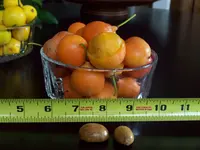
African mangosteen, Garcinia livingstonei, is a small to medium evergreen tree grown for its attractive foliage, fragrant flowers, and bright orange edible fruits. It naturally occurs in warm regions of southern and eastern Africa, often in woodland or savanna habitats.

The plant forms a dense, rounded crown with glossy leaves and a generally compact growth habit, which can suit larger containers or warm-climate gardens. It is moderately slow-growing and usually considered hardy only in frost-free or very mild climates, which influences how to care for African Mangosteen.

This species prefers consistent warmth, well-drained soil, and regular moisture, along with good light but protection from harsh, drying conditions, which makes it manageable for patient growers.

Main Plant Requirements

Care Difficulty

Moderate Care

Light Preference

Full Sun

Water Requirements

Moderate Water

Temperature Preference

Tropical / Frost Sensitive

Hardiness Zone

10–11

Soil Texture

Sandy, Loamy, Organic-rich

Soil pH

Acidic (5.5–6.5), Slightly acidic (6.5–7.0)

Soil Drainage

Moist but well-drained

Fertilization

Minimal (feed rarely)

Get Personalized Care Plan

Scan your plant to receive care tips personalized for your specific plant

Available on iOS and Android

How to Care for the African Mangosteen

This subtropical fruit tree prefers bright light with some protection from harsh midday sun.

  • Provide 6–8 hours of sun daily, with morning sun and light afternoon shade ideal for African Mangosteen in hot regions.
  • Young trees benefit from 30–50% filtered shade cloth in their first 1–2 years to prevent leaf scorch and trunk sunburn.
  • In cooler seasons, increase direct sun exposure where possible; sparse flowering and elongated, weak shoots indicate insufficient light.

This species prefers consistently moist but not waterlogged soil.

  • Water when the top 3–5 cm of soil feels dry, applying enough to moisten the root zone, then allow excess to drain away fully.
  • Use deep, infrequent watering rather than light splashes; leaf yellowing and soft, blackened roots signal overwatering in Garcinia livingstonei.
  • In cool or rainy seasons, extend intervals between waterings, while in hot, dry periods check soil more often for dryness and wilting leaves.

This subtropical tree grows best in warm, frost-free conditions.

  • Aim for 70–85°F (21–29°C) for active growth, with stable warmth supporting better flowering and fruit set.
  • Protect the plant below 40°F (4°C); foliage and young shoots are damaged near 32°F (0°C), and hard frost can kill small trees.
  • It tolerates brief heat up to 95–100°F (35–38°C) if soil moisture is maintained, but hot, dry winds can scorch leaves and stunt new growth.

This species prefers moderately humid air but usually adapts to typical household conditions.

  • Aim for 40–60% humidity to support steady leaf and shoot development.
  • It tolerates short periods of drier air, but extended humidity below 30% can slow growth and increase leaf edge browning.
  • Increase humidity with a nearby humidifier, grouped plants, or a pebble tray, and watch for curling, browning tips, or stalled growth as signs of humidity stress.

Garcinia livingstonei grows best in loose, slightly acidic, well-drained media that still retains some moisture.

  • Use a mix of 40% peat or coco coir, 40% pine bark fines, and 20% coarse perlite or sand for structure and drainage.
  • Aim for pH 5.5–6.5 so roots can access micronutrients efficiently and avoid nutrient lockout.
  • Ensure the soil feels springy rather than compacted; coarse particles keep air spaces around roots and reduce rot risk.
  • Avoid heavy clay, unamended garden soil, or mixes that stay waterlogged, as these promote root suffocation and fungal problems.

This species is suitable for container growing when the pot supports a deep, developing root system.

  • Choose a tall, heavy container to balance the woody canopy and reduce tipping in wind or on balconies.
  • Select thick-walled terracotta or fabric pots if extra evaporation is needed to prevent chronically wet media.
  • Elevate the container on feet or a stand so drainage holes remain clear and water exits quickly after each irrigation.

Garcinia livingstonei benefits from moderate, balanced feeding during its active growing season.

  • Use a balanced NPK granular or slow-release fertilizer, or well-rotted compost, for trees in the ground.
  • Feed lightly every 6–8 weeks in spring and summer, avoiding heavy applications that can cause weak, lush growth.
  • Apply at half the label strength for young or potted plants to limit root burn and salt buildup.
  • Reduce or stop feeding in fall and winter when growth slows, especially for African Mangosteen indoor care.

Pruning Garcinia livingstonei is mainly used to manage size, shape, and safety rather than to stimulate flowering.

  • Carry out structural pruning in late winter or very early spring before new growth starts.
  • Remove dead, diseased, crossing, or storm-damaged branches first, cutting back to healthy wood.
  • Thin crowded inner branches to improve light penetration and airflow through the canopy.
  • Use clean, sharp bypass pruners or a pruning saw and make smooth cuts just outside the branch collar.

Young Garcinia livingstonei trees adapt to transplanting if handled carefully and moved at the right time.

  • Plan transplanting or upsizing containers in late winter to early spring, before strong new growth begins.
  • Look for roots circling the pot, water running straight through, or slowed growth as signs a container plant needs more space.
  • Shift up to a container 1–2 in wider, or into a ground hole twice the width of the root ball, using well-drained soil.
  • Minimize root disturbance, water deeply after planting, and shade the tree lightly for 1–2 weeks to reduce transplant stress.

New Garcinia livingstonei plants are most often raised from seed, with vegetative methods used less frequently.

  • Collect fully ripe fruits, clean seeds, and sow them fresh in spring for best viability and germination speed.
  • Use a warm medium at 70–80°F, with free-draining soil and constant light moisture, not saturation.
  • Provide bright, indirect light and good air circulation to limit fungal problems while seedlings establish.
  • Semi-hardwood cuttings in warm weather may root under high humidity and bottom heat, but success rates vary.

This subtropical species has low frost tolerance and benefits from thoughtful winter care in cooler climates.

  • Avoid exposure to hard frost; damage often occurs when temperatures drop below about 28–30°F.
  • Mulch the root zone with 5–8 cm of organic material, keeping mulch a few cm away from the trunk.
  • For young trees, wrap the lower trunk and main scaffold branches with breathable frost cloth during cold snaps.
  • Move container plants into a bright, cool indoor or greenhouse space before nighttime temperatures approach freezing.

Care Tips

Early framework training

Select 3–5 strong scaffold branches in the first 2–3 years and lightly tip-prune competing shoots to build an open, vase-shaped canopy that improves light penetration and fruit quality.

Wind and stake management

In windy sites, use 2–3 low, flexible stakes and soft ties for young plants, adjusting or removing them annually so the trunk can strengthen without rubbing damage.

Mulch for root stability

Apply a 5–8 cm layer of coarse organic mulch from 10 cm away from the trunk out to the dripline to buffer soil temperature, reduce evaporation, and protect shallow feeder roots.

Seasonal fruit thinning

On heavily set branches, remove a portion of small, crowded fruits soon after fruit set so that remaining fruits size up better and branches are not overloaded or broken.

Preventive pest scouting

Inspect flushes of new growth and the undersides of leaves every 1–2 weeks during warm months, and if scale or mealybugs are found, spot-treat early with horticultural oil according to label directions as part of caring for African Mangosteen.

Common Pests and Diseases

Scale insects

This pest attaches to stems and leaf undersides, sucking sap and causing yellowing, leaf drop, and general decline. Symptoms include small, dome-shaped or flat brown bumps that do not move when touched.

Solution

Prune and discard heavily infested twigs, then wipe remaining scale with cotton pads dipped in 70% isopropyl alcohol or insecticidal soap. For outdoor trees or advanced cases, use a horticultural oil spray, ensuring full coverage of branches and leaf undersides while monitoring new growth for reinfestation as part of ongoing Garcinia livingstonei plant care.

Mealybugs

These insects cluster on young shoots, leaf nodes, and roots, feeding on sap and excreting sticky honeydew that can lead to sooty mold. Symptoms include white, cotton-like masses and distorted new growth.

Solution

Isolate the plant if in a container, then dab visible mealybugs with 70% isopropyl alcohol and wash foliage with a mild insecticidal soap solution. Repeat treatments every 7–10 days and inspect hidden areas such as leaf axils and around the root collar, removing heavily infested shoots if needed.

Fruit fly infestation

This pest targets ripening fruit, where females lay eggs that develop into larvae feeding inside the pulp. Symptoms include small puncture marks on the fruit skin, premature fruit drop, and internal fruit breakdown.

Solution

Collect and destroy infested or fallen fruit promptly to break the life cycle and reduce local populations. For outdoor trees, use baited traps and, if permitted locally, apply protein bait sprays around but not directly on the fruit, combining these measures with timely harvest of fruit as it colors.

Anthracnose

This disease is caused by fungi that infect leaves, twigs, flowers, and fruit, particularly in warm, humid conditions. Symptoms include dark, sunken lesions on leaves and fruit, leaf tip dieback, and premature fruit rot.

Solution

Remove and discard affected leaves, twigs, and fruit, and keep the area beneath the tree free of fallen debris to reduce fungal spores. Improve air circulation, avoid overhead watering, and, if the problem persists in humid climates, apply a registered copper-based fungicide according to label directions when new growth or flowering begins.

Leaf spot

This disease produces scattered circular to irregular spots on leaves that may be tan, brown, or dark with a yellow halo. Symptoms include gradual thinning of the canopy when many older leaves yellow and drop prematurely.

Solution

Prune to open the canopy for better light and airflow, and avoid wetting foliage late in the day to reduce leaf wetness duration. Collect and dispose of fallen leaves, and in recurrent cases use a preventive fungicidal spray labeled for tropical fruit trees at the start of the rainy or humid season, following all safety instructions.

Interesting Facts

Southern African native range

This evergreen fruit tree occurs naturally in warm, frost-free regions of southern Africa, especially Mozambique and surrounding areas, where it grows in dry woodland, on rocky slopes, and along forest margins.

Edible apricot-like fruit

The small orange to yellow fruits are eaten fresh or used in juices and preserves and are valued locally for their pleasantly tart, apricot-like flavor and high-quality pulp relative to many wild fruits.

Dioecious flowering habit

This species is usually dioecious, meaning individual plants are either male or female, so fruit production typically requires both sexes to be present for effective pollination.

Botan icon

Did you know?

Garcinia livingstonei has been used as a grafting rootstock for some cultivated mangosteen relatives, as it offers better tolerance to less-than-ideal soil and moisture conditions while still supporting good fruit quality in the scion.

FAQs about African Mangosteen

Container culture is possible if the pot is large, deep, and heavy enough to support the woody root system. Use a high-quality, well-drained mix and repot progressively. Root restriction will limit ultimate height and fruit yield.

Grow Healthy Plants with Botan Care

Keep your plants happy and healthy with plant identification, disease detection, and easy care guidance.

Botan plant care app — identify plants on mobile

Explore More Plants