violet churur Care (Iochroma cyaneum)

Also known as: violet tubeflower, Blue Cestrum, Purple Cestrum
violet churur

About violet churur

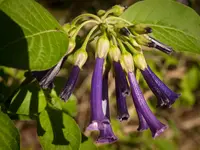
Violet churur (Iochroma cyaneum) is a woody shrub from the nightshade family, valued for its hanging, tubular purple flowers. It typically forms a bushy, medium-sized plant with soft green leaves and a slightly arching habit.

This species is native to cloud forests of the Andes in South America, where conditions are mild, moist, and bright but not harsh. In gardens and containers it is often grown as a decorative flowering shrub.

Its fast growth and long blooming season make it rewarding, but sensitivity to cold, drying winds, and poor drainage can complicate how to care for violet churur. It generally prefers bright light, regular moisture, and fertile, well-drained soil.

Main Plant Requirements

Care Difficulty

Moderate Care

Light Preference

Partial Sun

Water Requirements

Regular Water

Temperature Preference

Tropical / Frost Sensitive

Hardiness Zone

9–11

Soil Texture

Loamy, Sandy, Organic-rich

Soil pH

Acidic (5.5–6.5), Slightly acidic (6.5–7.0)

Soil Drainage

Moist but well-drained

Fertilization

Moderate (every 2–4 weeks)

Get Personalized Care Plan

Scan your plant to receive care tips personalized for your specific plant

Available on iOS and Android

How to Care for the violet churur

This shrub prefers bright, gentle sun to produce abundant flowers without leaf scorch.

  • Provide 4–6 hours of direct morning sun with light afternoon shade; strong late-day sun can scorch foliage, especially in hot, dry regions.
  • Tolerates partial shade, but violet churur in less than 3–4 hours of sun often becomes leggy with fewer blooms.
  • In hot summers, use dappled or filtered light during 11 am–3 pm; in cooler seasons, allow more direct sun to support flowering.

This plant prefers consistently moist but not waterlogged soil throughout the growing season.

  • Water when the top 3–5 cm of soil feels dry, applying a deep soak so moisture reaches the root zone, then let excess drain away fully.
  • During warm active growth, expect more frequent watering; in cooler months, reduce frequency while still preventing the root ball from completely drying out.
  • Yellowing, soft leaves and a sour soil smell suggest overwatering and poor drainage; dull, drooping leaves and dry, crumbly soil indicate underwatering for Iochroma cyaneum.

This species grows best in mild, frost-free conditions with moderate summer warmth.

  • Aim for 65–80°F (18–27°C) during active growth; flowering and shoot development are strongest within this range.
  • Protect from frost; growth is damaged near 30–32°F (-1–0°C) and stems may die back, so in cooler climates site it in a sheltered microclimate.
  • Tolerates brief heat up to about 90°F (32°C) if soil moisture is steady, but prolonged heat plus dry winds can cause leaf scorch and flower drop.

This species benefits from moderately moist air, especially in warm conditions.

  • Aim for 50–70% humidity to reduce leaf edge browning and flower drop.
  • It tolerates short periods of drier indoor air but may show curled, dull leaves when humidity stays low.
  • Increase humidity with a nearby pebble tray or grouped plants, not by misting flowers directly, to limit fungal issues.

Iochroma cyaneum prefers a loose, fertile, well-drained substrate that still holds some moisture.

  • Use a loamy mix with high organic matter, such as 2 parts peat-free compost, 1 part fine bark, and 1 part perlite or coarse sand.
  • Ensure rapid drainage so water flows through within seconds, preventing waterlogged, low-oxygen conditions that damage roots.
  • Keep pH slightly acidic to neutral, roughly 6.0–7.0, to support nutrient availability and steady growth.
  • Improve aeration by avoiding heavy clay, adding coarse particles, and breaking up any compacted layers before planting.

This shrub adapts well to container growing when given a stable, deep pot.

  • Select a heavy, wide-based container to counterbalance its tall, branching canopy in windy sites.
  • Choose a pot at least 30–40 cm deep to allow a broad, fibrous root system to anchor the plant securely.
  • Use thick-walled terracotta or similar porous material if outdoor summers are hot, as it moderates root-zone temperature and moisture.

Iochroma cyaneum benefits from steady but moderate nutrition to support flowering and leafy growth.

  • Use a balanced liquid fertilizer (such as 10-10-10 or 20-20-20) at half strength every 2–4 weeks during the main growing season.
  • Apply a thin layer of compost around the root zone in spring to improve soil structure and slow nutrient release.
  • For containers, a slow-release granular fertilizer in early spring can provide baseline feeding for 3–4 months.
  • Reduce feeding in late fall and winter to once every 6–8 weeks or stop entirely if growth is dormant; this also suits violet churur indoor care.

Thoughtful pruning keeps Iochroma cyaneum compact, healthy, and floriferous.

  • Carry out main pruning in late winter or very early spring before strong new growth begins.
  • Remove dead, diseased, or crossing stems first, then thin crowded interior branches to improve light and airflow.
  • Shorten long, leggy shoots by up to one-third to encourage bushier growth and more flowering spurs.
  • Use clean, sharp hand pruners and make angled cuts just above outward-facing buds to guide the plant’s shape.

Container-grown Iochroma cyaneum benefits from periodic repotting or transplanting to maintain healthy roots and vigorous top growth.

  • Check for roots circling the pot, emerging from drainage holes, or noticeably slowed growth as signs a larger container is needed.
  • Plan to move the plant to a pot 1–2 in wider every 1–2 years, ideally in early spring as active growth begins.
  • Gently loosen circling roots, trim damaged ones, and set the plant at the same soil level in fresh, well-drained mix to limit stress.
  • Water thoroughly after potting, then keep soil evenly moist and shaded from harsh sun for 3–7 days while the roots re-establish.

New plants of Iochroma cyaneum are most commonly produced from semi-ripe cuttings under warm, humid conditions.

  • Take 8–12 cm semi-ripe stem cuttings in late spring or summer, choosing non-flowering shoots with several leaf nodes.
  • Remove lower leaves, dip the cut end in rooting hormone, and insert into a well-drained mix such as perlite and peat or coco coir.
  • Maintain bottom warmth around 70–75°F, bright indirect light, and high humidity using a clear cover with some ventilation.
  • Seeds can also be sown in spring in a sterile, fine-textured mix kept lightly moist and warm for steady germination.

Cold sensitivity means Iochroma cyaneum usually needs some level of winter protection in cooler climates.

  • In regions colder than USDA zone 9, grow in containers and move plants indoors or into a frost-free greenhouse before nights drop near 32°F.
  • For in-ground plants in mild climates, apply a 5–8 cm mulch layer around the root zone in late fall, keeping it off the stems.
  • Where light frost occurs, cover the shrub with breathable fabric on the coldest nights to reduce damage to young shoots and foliage.

Care Tips

Sturdy structural support

Install a strong stake, obelisk, or trellis early and tie new shoots loosely with soft ties so the plant can hold the weight of its long, flower-laden branches without snapping in wind or heavy rain.

Encourage basal shoots

After flowering, lightly thin out one or two of the oldest, woodiest stems at the base to stimulate new shoots from the crown, which keeps the shrub dense, productive, and easier to shape.

Container root management

For container plants, slide the root ball out every 1–2 years in late winter, shave off 2–5 cm of outer roots and soil, and repot into fresh mix to prevent circling roots and maintain vigorous growth without constant upsizing.

Cold-season protection

In regions with light frosts, mulch the root zone with 5–8 cm of composted bark and wrap the lower stems with breathable horticultural fleece during cold snaps to reduce dieback and protect latent buds.

Targeted pest scouting

Check the undersides of leaves and tender shoot tips weekly during warm weather and rinse off aphids or whiteflies with a firm water spray at the first sign, which is often enough for effective control when growing violet churur in home gardens.

Common Pests and Diseases

Whitefly

This pest often colonizes the undersides of leaves on Iochroma shrubs, feeding on sap and excreting sticky honeydew that encourages sooty mold. Symptoms include leaf yellowing, reduced vigor, and small white insects that fly up when the plant is disturbed.

Solution

Control populations by regularly hosing down the undersides of leaves, then using yellow sticky traps to catch adults. For ongoing Iochroma cyaneum care, apply insecticidal soap or a light horticultural oil spray every 7–10 days, ensuring thorough coverage of leaf undersides and repeating until no new adults appear.

Spider mites

These insects thrive on Iochroma foliage during hot, dry conditions, causing fine stippling, bronzing, and premature leaf drop. Symptoms include very fine webbing between leaves and stems and a generally dusty, dull look to the plant.

Solution

Increase humidity around the plant and rinse foliage with a firm stream of water, focusing on leaf undersides to dislodge mites. Follow up with insecticidal soap or neem oil applied in the evening every 5–7 days for several cycles, and improve airflow to reduce reinfestation risk.

Powdery mildew

This disease appears as white, powdery patches on leaves, shoots, and flower stalks, which can distort new growth on Iochroma. Symptoms include dull, grayish foliage, reduced flowering, and leaves that yellow and drop prematurely.

Solution

Remove and discard heavily infected leaves, then improve spacing and airflow so foliage dries more quickly. Treat remaining foliage with a sulfur-based fungicide or potassium bicarbonate spray according to label directions, and avoid overhead watering, especially in the evening.

Botrytis blight

This disease affects flowers and young shoots, leading to soft, water-soaked areas covered with gray, fuzzy mold, especially in cool, damp weather. Symptoms include collapsing flower clusters, browning petals, and dieback of tender growth.

Solution

Promptly remove and discard all affected flowers and stems, and thin dense growth to improve air circulation. Keep foliage and flowers as dry as possible, water at soil level, and use a labeled fungicide for botrytis if wet, cool conditions persist and new lesions continue to form.

Aphids

These insects cluster on new shoots and flower stalks, sucking sap and distorting tender Iochroma growth. Symptoms include curled or twisted leaves, sticky honeydew on foliage, and the presence of ants tending the aphids.

Solution

Prune off heavily infested shoot tips and wash remaining colonies away with a strong stream of water. Follow with insecticidal soap or horticultural oil applied to all soft new growth every 5–7 days until no fresh colonies appear, and manage nearby ant activity to reduce reintroduction.

Interesting Facts

Specialist hummingbird flower

The long tubular, pendant flowers are specifically shaped for hummingbird pollination, matching the birds’ slender bills and tongues rather than typical insect visitors.

Night-scented trumpet blooms

Its violet, trumpet-shaped flowers release a stronger fragrance in the evening, which helps guide crepuscular and early-morning pollinators to the nectar.

Cloud-forest origin

This species is native to cool, moist Andean cloud forests of Ecuador and Peru, where it grows as a large shrub or small tree along forest edges and clearings.

Botan icon

Did you know?

Iochroma cyaneum belongs to the same plant family as tomato and potato (Solanaceae) and, like many relatives in this family, it produces alkaloids that make its leaves and unripe berries toxic if ingested.

FAQs about violet churur

Lack of flowers usually comes from insufficient light, too much nitrogen-rich fertilizer, or pruning at the wrong time, which removes flowering wood. Cool night temperatures and mild winter chill also help trigger strong blooming on this species.

Grow Healthy Plants with Botan Care

Keep your plants happy and healthy with plant identification, disease detection, and easy care guidance.


Botan plant care app — identify plants on mobile

Explore More Plants