Strobilanthes auriculatus Care

About Strobilanthes auriculatus

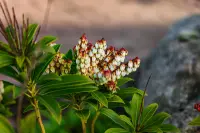
Strobilanthes auriculatus is a tropical ornamental shrub known for its dense foliage and seasonal flowers. It forms a compact, branching habit that suits warm, humid gardens and protected patios.

The leaves are typically medium to dark green, and the plant produces tubular flowers that attract pollinators in suitable climates. It is native to parts of South and Southeast Asia, where it grows in understory or semi-shaded habitats.

This species prefers bright, filtered light, evenly moist but well-drained soil, and protection from cold and strong wind. Once the basic conditions are stable, it is moderately easy to care for Strobilanthes auriculatus, though it can react poorly to drought or waterlogging.

Main Plant Requirements

Care Difficulty

Moderate Care

Light Preference

Partial Shade

Water Requirements

Regular Water

Temperature Preference

Tropical / Frost Sensitive

Hardiness Zone

10–11

Soil Texture

Loamy, Organic-rich

Soil pH

Acidic (5.5–6.5), Slightly acidic (6.5–7.0)

Soil Drainage

Moist but well-drained

Fertilization

Light (every 4–6 weeks)

Get Personalized Care Plan

Scan your plant to receive care tips personalized for your specific plant

Available on iOS and Android

How to Care for the Strobilanthes auriculatus

This shrub prefers bright, gentle light to keep foliage dense and flowering reliable.

  • Provide 3–5 hours of soft morning sun with light shade or filtered light the rest of the day to avoid leaf scorch.
  • In hot climates, protect from direct sun after 11 a.m.; intense afternoon sun can bleach leaves and cause crispy edges.
  • In partial shade (bright dappled light), Strobilanthes auriculatus grows well, but very deep shade reduces flowering and produces weak, stretched stems.

Moist but not waterlogged soil supports healthy roots and foliage.

  • Allow the top 2–4 cm of soil to dry before watering, then water slowly so moisture reaches the full root zone without pooling.
  • During warm active growth, expect more frequent watering; in cooler seasons, extend intervals while still preventing complete soil dryness.
  • Yellowing, soft leaves and a sour smell indicate overwatering or poor drainage; dull, drooping leaves and very dry soil signal underwatering.

Stable warmth is important for strong growth and flowering.

  • Aim for 65–80°F (18–27°C) during active growth for best foliage color and shoot development.
  • Protect the plant from temperatures below 45°F (7°C); light frost can damage tips, and hard frost may kill top growth or the whole shrub.
  • In hot periods above 90°F (32°C), increase shade and soil moisture while maintaining drainage to limit stress and leaf scorch, especially in containers.

This species prefers moderately high humidity to keep foliage lush and prevent leaf-edge damage.

  • Aim for 50–70% humidity; it tolerates brief dips lower but prolonged very dry air leads to crisping leaf tips and margins.
  • Watch for curling leaves, dull color, and brown edges as signs that humidity is too low around Strobilanthes auriculatus.
  • Increase humidity with a nearby humidifier, close grouping of plants, or a wide pebble tray that allows evaporation without the pot sitting in water.

This plant performs best in loose, airy, organic-rich soil that drains quickly yet retains some moisture.

  • Use a mix of roughly 50% peat- or coco-based potting substrate, 30% fine compost, and 20% perlite or pumice for structure and drainage.
  • Aim for slightly acidic to neutral pH around 6.0–7.0, avoiding very alkaline mixes that can limit nutrient availability.
  • Ensure the mix feels springy and crumbly; compacted or clay-heavy soil restricts roots and increases risk of root rot.
  • Improve aeration by adding extra perlite or fine bark chips if water sits on the surface for more than a few seconds after watering.

This species is well suited to container growing when root space and drainage are managed carefully.

  • Choose a stable, wider-than-deep pot to support the plant’s spreading habit and prevent tipping in wind or when top growth is dense.
  • Select terracotta or other porous materials if the plant sits outdoors in humid climates to reduce prolonged substrate wetness.
  • Ensure large, unobstructed drainage holes so heavy watering can flush salts quickly without leaving water trapped at the pot base.

This shrub benefits from light, consistent feeding during active growth but not from heavy fertilization.

  • Apply a balanced liquid fertilizer (around 10-10-10) at 1/2 strength every 4 weeks in spring and summer for Strobilanthes auriculatus.
  • Use a thin top-dressing of fine compost in early spring to support soil life and slow nutrient release.
  • Stop feeding in fall and winter when growth slows, especially in cooler indoor or outdoor conditions.
  • Water before and after feeding to avoid root burn and improve nutrient uptake.

Pruning helps maintain shape, encourage bushiness, and support flowering on this shrub.

  • Carry out main pruning in late winter or very early spring before strong new growth starts.
  • Remove dead, diseased, or damaged stems first, then thin weak or crossing shoots to open the center.
  • Shorten leggy stems by 1/3 to 1/2 to create a compact, rounded form and encourage new flowering shoots on Strobilanthes auriculatus.
  • Use sharp, clean hand pruners and make cuts just above a healthy outward-facing bud.

Container plants and young shrubs benefit from occasional repotting or careful transplanting to sustain healthy growth.

  • Look for roots circling the pot base, water running straight through, or slowed growth as signs it needs a larger container.
  • Plan repotting or transplanting in spring, every 2–3 years for potted plants, when temperatures are mild and growth is resuming.
  • Step up only 1–2 in pot sizes, using a free-draining, humus-rich mix; set the root ball at the same depth as before.
  • Gently loosen circling roots, water well after planting, and keep the plant shaded and evenly moist for 1–2 weeks to limit stress.

This species is commonly propagated from cuttings to maintain desired characteristics and vigor.

  • Take 8–10 cm semi-ripe stem cuttings in late spring or summer from non-flowering shoots of Strobilanthes auriculatus.
  • Remove lower leaves, optionally dip the cut base in rooting hormone, and insert into a moist, free-draining mix of perlite and peat or coco coir.
  • Maintain bright, indirect light, 70–75°F warmth, and high humidity using a clear cover with some ventilation.
  • For divisions, separate small clumps in spring, keeping several healthy shoots and roots per section, then plant immediately and water well.

This plant is frost-sensitive and needs protection in regions with cold winters.

  • In climates below about 40°F, grow Strobilanthes auriculatus in containers and move indoors before the first frost.
  • Provide a bright, cool indoor spot (50–60°F) with reduced watering so the soil stays just lightly moist.
  • Outdoors in mild climates, add a 5–8 cm mulch layer around the root zone to buffer temperature swings and conserve moisture.

Care Tips

Pinch For Bushiness

Pinch out the soft shoot tips every 3–4 weeks during active growth to encourage dense, compact branching and prevent the plant from becoming leggy and open at the center.

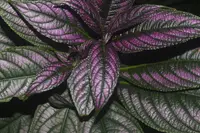
Rotate For Even Color

Turn the pot 90° every 1–2 weeks so all sides receive similar light, which helps maintain uniform purple foliage color and prevents one-sided leaning.

Refresh Old Stems

Every 2–3 years, remove 1–3 of the oldest, woodiest stems at the base in late winter to stimulate fresh shoots and keep the plant vigorous and floriferous.

Use Low Salinity Water

If tap water is hard or heavily chlorinated, alternate with rainwater or filtered water to reduce salt buildup that can dull leaf color and cause marginal burn on sensitive roots.

Gradual Light Transitions

When moving the plant between indoor and outdoor locations or between seasons, increase or decrease light levels over 7–10 days to avoid foliage scorch or sudden leaf drop when growing Strobilanthes auriculatus.

Common Pests and Diseases

Spider mites

This pest thrives on the thin, softly hairy leaves, especially in warm, dry indoor air, causing fine stippling and dull, faded foliage. Symptoms include tiny webbing on leaf undersides and along stems.

Solution

Rinse foliage thoroughly with lukewarm water, focusing on leaf undersides, then repeat every few days for 2–3 weeks. If needed, apply insecticidal soap or horticultural oil labeled for mites, and maintain higher humidity and regular leaf inspection as part of Strobilanthes auriculatus care instructions.

Mealybugs

These insects hide in leaf axils and along soft stems, appearing as white cottony clusters and causing leaf distortion and gradual decline. Symptoms include sticky honeydew and sooty mold on nearby surfaces.

Solution

Remove visible clusters with a cotton swab dipped in 70% isopropyl alcohol, then wash the plant with a mild insecticidal soap solution. Isolate the plant, repeat treatment weekly until no new insects appear, and avoid overfertilizing, which encourages soft, susceptible growth.

Leaf spot

This disease presents as small brown, purple, or tan spots on leaves that may merge into irregular patches, often starting on older foliage. Symptoms include yellowing around lesions and premature leaf drop in humid, crowded conditions.

Solution

Promptly remove and discard affected leaves and avoid wetting the foliage when watering. Improve air circulation, reduce overhead misting, and, if the problem spreads, apply a copper- or chlorothalonil-based fungicide according to label directions.

Powdery mildew

This disease appears as a white or gray powdery coating on upper leaf surfaces, causing curling, distortion, and reduced vigor under low light and stagnant air. Symptoms include slowed growth and dull, patchy foliage color.

Solution

Increase light and airflow around the plant and avoid overcrowding with other plants. Remove heavily affected leaves and treat remaining foliage with a sulfur-based fungicide or potassium bicarbonate product, repeating as directed until new growth appears clean.

Interesting Facts

Seasonal flowering waves

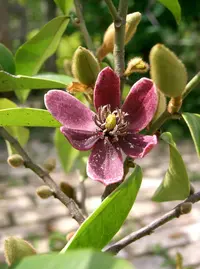
This species tends to flower in distinct seasonal flushes rather than continuously, producing dense clusters of tubular purple to violet blooms when conditions are favorable.

Auriculate leaf bases

Its name auriculatus refers to the small ear-like lobes at the base of the leaves, a leaf shape feature that helps distinguish it from other Strobilanthes species with similar coloration.

Shaded forest understory origin

The plant is naturally associated with warm, humid, partially shaded forest understories in parts of South and Southeast Asia, where it grows under taller vegetation and receives filtered light.

FAQs about Strobilanthes auriculatus

Yes, this species can work indoors if given bright, indirect light, consistent moisture, and good air circulation. Strobilanthes auriculatus indoor care also requires a well-draining potting mix and protection from cold drafts or sudden temperature swings.

Grow Healthy Plants with Botan Care

Keep your plants happy and healthy with plant identification, disease detection, and easy care guidance.

Botan plant care app — identify plants on mobile

Explore More Plants