Loquat Care (Rhaphiolepis bibas)

Also known as: Japanese medlar, Japanese plum, Chinese plum
Loquat

About Loquat

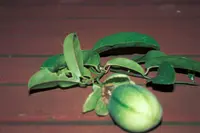
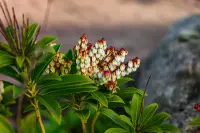
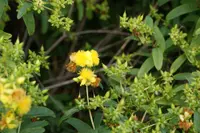
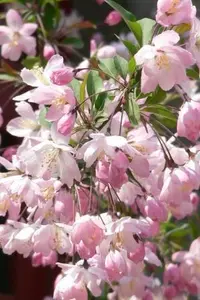
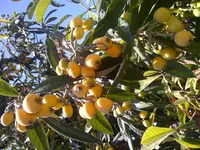
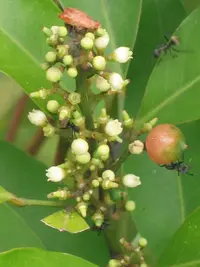
Loquat, Rhaphiolepis bibas, is an evergreen fruit tree or large shrub valued for its glossy leaves and clusters of fragrant white flowers. It forms a rounded crown and produces yellow to orange, pear-shaped fruits that hang in loose bunches.

This species is native to parts of China and neighboring regions but is now widely grown in warm-temperate and subtropical areas. It is generally robust and moderately easy to grow if given enough light, well-drained soil, and protection from hard frost.

Understanding how to care for Loquat mainly involves providing sun, avoiding waterlogged roots, and allowing enough space for its mature size.

Main Plant Requirements

Care Difficulty

Easy Care

Light Preference

Full Sun

Water Requirements

Moderate Water

Temperature Preference

Warm Climate

Hardiness Zone

8–11

Soil Texture

Sandy, Loamy, Organic-rich

Soil pH

Acidic (5.5–6.5), Slightly acidic (6.5–7.0)

Soil Drainage

Well-drained

Fertilization

Minimal (feed rarely)

Get Personalized Care Plan

Scan your plant to receive care tips personalized for your specific plant

Available on iOS and Android

How to Care for the Loquat

Rhaphiolepis bibas performs best in bright outdoor exposures with direct sun and some seasonal shade.

  • Provide 6–8 hours of direct sun daily, ideally with gentle morning sun and some protection from intense midafternoon summer sun in hotter regions.
  • Tolerates light or open shade for part of the day, but flowering and dense growth decline if it receives less than about 4 hours of direct sun.
  • In very hot summers, use filtered light from high trees or a light shade cloth to reduce leaf scorch, especially for young or newly transplanted shrubs.

Watering should support deep root development while preventing prolonged soggy soil around Rhaphiolepis bibas.

  • Allow the top 3–5 cm of soil to dry between waterings, then water slowly so moisture reaches 15–20 cm deep, encouraging deeper roots.
  • During the first growing season, check soil weekly; in established shrubs, rely on soil feel and leaf condition rather than a fixed schedule, especially in differing rainfall patterns.
  • Watch for yellowing, soft leaves and sour-smelling soil as overwatering signs, and for dull, curling, or browning leaf edges with very dry soil as underwatering signs; ensure sharp drainage.

This shrub prefers mild climates with cool winters and warm, not extreme, summers.

  • Optimal growth occurs around 65–80°F (18–27°C), where foliage stays compact and flowering is most reliable during the growing season.
  • Mature plants usually tolerate brief drops to about 15–20°F (-9 to -6°C), but young shrubs are more vulnerable and benefit from mulching and wind protection in cold snaps.
  • In hot areas with summer highs above 95°F (35°C), growth may slow; provide soil mulch and avoid reflected heat from walls or paving to reduce root and leaf stress.

This species is fairly tolerant of a wide humidity range and usually does not need special humidity management outdoors.

  • Performs well at 30–60% humidity, which covers most outdoor conditions in temperate regions.
  • Tolerates dry air once established, so caring for Loquat in containers rarely requires misting or humidifiers.
  • Watch for crispy leaf edges or tip browning as possible signs of prolonged very dry air combined with heat.

Rhaphiolepis bibas prefers lean, well-drained mineral soils that never stay waterlogged.

  • Use a sandy or loamy structure with moderate organic matter so water drains freely but roots still anchor firmly.
  • Aim for slightly acidic to neutral pH around 6.0–7.0 to support nutrient availability and root health.
  • For containers, mix roughly 50% coarse sand or grit with 30–40% peat-free compost and 10–20% fine bark or perlite to improve aeration.
  • Avoid heavy clay, peat-only mixes, or any substrate that compacts and stays wet, as this encourages root rot.

This shrub can adapt well to container growing when provided with a stable, well-drained setup.

  • Choose a wide, heavy container to resist wind rock, as the shrub’s evergreen canopy can act like a sail in exposed positions.
  • Select a pot deep enough to accommodate a moderately woody root system, leaving space for a 5–8 cm mulch layer on top.
  • Use thick-walled terracotta or concrete if extra moisture loss and root-zone cooling are desirable in hot climates.

This evergreen shrub benefits from modest feeding to support steady growth and flowering.

  • Use a balanced slow-release granular fertilizer (for example 10-10-10 or 12-12-12) or a thin layer of compost over the root zone in early spring.
  • Feed once in spring and again in mid-summer during active growth, avoiding late-season applications that stimulate tender growth.
  • Apply at half the label rate for young or container plants to reduce salt stress and root burn risk.
  • Avoid fertilizing in late fall and winter, as caring for Loquat during dormancy focuses on stable moisture and root health, not new growth.

Pruning Rhaphiolepis bibas is mainly used to maintain a compact shape and remove unsound wood.

  • Schedule main pruning right after flowering so the plant can set buds for next season.
  • Remove dead, diseased, crossing, or inward-growing branches to open the canopy and improve airflow.
  • Shorten overly long shoots to maintain desired height and width, keeping a natural, rounded outline.
  • Use clean, sharp bypass pruners and make angled cuts just above outward-facing buds or side branches.

This shrub is usually grown in the ground, so care focuses on thoughtful transplanting rather than frequent repotting.

  • Plan transplanting for late winter to early spring, before strong new growth, to reduce stress.
  • Move plants only every several years, when growth stalls, roots circle a container, or the shrub outgrows its space.
  • Dig a wide, shallow planting hole, disturb circling roots lightly, and set the root ball at the same soil level as before.
  • Water deeply after planting, then keep soil evenly moist and shaded at the base for 2–4 weeks to help roots re-establish.

New plants are most often raised from semi-hardwood cuttings, with seeds used mainly for larger batches.

  • Take semi-hardwood cuttings in late summer, 7–10 cm long, from healthy, non-flowering shoots.
  • Remove lower leaves, dip the cut end in rooting hormone, and insert into a sterile, free-draining mix such as 50% perlite and 50% peat-free compost.
  • Keep cuttings at 68–75°F in bright, indirect light with high humidity until roots form, usually in several weeks.
  • Sow fresh seeds in autumn in a gritty mix, keep just moist, and expect variable and slower germination than cuttings.

This shrub is moderately cold hardy but benefits from basic winter protection in colder regions.

  • Mature plants usually tolerate light frosts, but young or container-grown shrubs are more vulnerable.
  • Apply a 5–8 cm mulch layer around the root zone in late fall, keeping it slightly away from the stems.
  • In areas below about 15°F, wrap young plants with breathable frost cloth to limit leaf and stem damage.
  • Move containers into a sheltered, unheated but frost-free spot, such as a garage or enclosed porch, for winter.

Care Tips

Wind protection planning

Position young plants where buildings, fences, or taller shrubs break strong prevailing winds, since sustained wind can damage new shoots and reduce flower and fruit set.

Salinity management

If using coastal or slightly saline water, periodically leach the soil by deep watering with low-salinity water to flush accumulated salts away from the root zone and prevent leaf burn.

Basal suckers control

Inspect the base of the plant a few times per year and promptly remove any basal shoots or suckers with clean, sharp pruners to maintain a single strong framework and better airflow.

Flowering and fruit load balancing

On heavy flowering or fruiting seasons, thin overcrowded clusters by removing some flower or fruit trusses so remaining fruits develop larger and branches are not stressed or broken.

Mulch and trunk gap

Apply a 5–8 cm organic mulch layer over the root zone but keep a 5–10 cm gap around the main stems to reduce moisture against the bark and limit fungal issues when growing Loquat.

Common Pests and Diseases

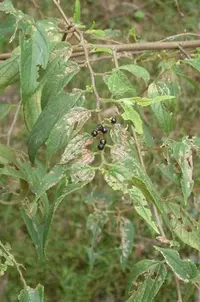
Entomosporium leaf spot

This disease causes numerous small red to purple spots on young leaves that can enlarge, merge, and lead to leaf yellowing and drop. Symptoms include heaviest damage on new growth during cool, wet weather.

Solution

Remove and discard heavily spotted leaves and fallen debris to reduce spores, then improve air circulation and avoid overhead watering so foliage dries quickly. In landscapes with recurring problems, time pruning and new growth flushes away from wet seasons and, if needed, use a labeled fungicide on new leaves during prolonged cool, rainy periods as part of broader Rhaphiolepis bibas plant care.

Sooty mold

This disease appears as a black, powdery to velvety coating on leaves and stems, usually growing on the sticky honeydew excreted by sap-sucking insects. Symptoms include reduced photosynthesis and a dull, dirty look to foliage.

Solution

Control the underlying honeydew-producing insects such as aphids or scale, then gently wash leaves with lukewarm water and a mild soap solution to remove the mold layer. Improve airflow and light penetration with light pruning so new clean foliage can develop normally.

Scale insects

These insects attach to stems and leaf undersides as small, rounded or oval bumps and suck plant sap, causing yellowing leaves, reduced vigor, and sticky honeydew that can lead to sooty mold. This pest often clusters along woody stems and at leaf joints.

Solution

Prune out and discard heavily infested stems, then wipe remaining colonies with cotton pads dipped in isopropyl alcohol or a mild insecticidal soap solution. For persistent infestations outdoors, use a horticultural oil spray during mild weather, coating stems and leaf undersides to smother the insects.

Aphids

These insects are small, soft-bodied, and often green or black, feeding on tender new growth and flower buds while producing sticky honeydew. Symptoms include curled or distorted leaves, sticky residue, and increased risk of sooty mold.

Solution

Spray affected shoots with a strong stream of water to dislodge colonies, then apply insecticidal soap or horticultural oil to young growth, covering leaf undersides. Encourage natural predators such as lady beetles in outdoor plantings and avoid high-nitrogen fertilization that promotes very soft, aphid-prone growth.

Fire blight

This disease, caused by the bacterium Erwinia amylovora, leads to sudden blackening and wilting of shoots, flowers, and leaves that often remain attached, giving a scorched appearance. Symptoms include shepherd’s-crook shoot tips and blackened midribs or veins on leaves.

Solution

Prune out infected shoots at least 20–30 cm below visible damage, sterilizing pruning tools between cuts with alcohol or a disinfectant solution, and dispose of removed material in the trash. Reduce stress by avoiding heavy nitrogen fertilization, limit overhead irrigation, and select resistant cultivars when planning new plantings to make caring for Loquat more manageable in areas where fire blight is common.

Interesting Facts

Early-spring bloomer

This species typically flowers from late winter to early spring, often before many other evergreen shrubs, providing an important early nectar source for pollinating insects in mild coastal climates.

High salt tolerance

It naturally occurs in coastal regions of East Asia and shows notable tolerance to salt-laden winds and saline soils, which is why it is frequently used in seaside plantings and coastal shelterbelts.

Distinctive fruit traits

Its fruits are small, yellow to orange pomes that are usually hard and astringent in the wild, and unlike the common loquat (Eriobotrya japonica), they are rarely grown or selected for human consumption.

Botan icon

Did you know?

Genetic and morphological studies have led some botanists to separate this species from Rhaphiolepis sensu stricto and place it in the closely related genus Eriobotrya, so it is sometimes referenced in the scientific literature under an alternative generic placement.

FAQs about Loquat

The fruits are edible and commonly eaten fresh or cooked into jams, jellies, and sauces. The skin and juicy flesh are used; however, the large seeds contain cyanogenic compounds and should not be eaten.

Grow Healthy Plants with Botan Care

Keep your plants happy and healthy with plant identification, disease detection, and easy care guidance.

Botan plant care app — identify plants on mobile

Explore More Plants