golden bellapple Care (Passiflora laurifolia)

golden bellapple

About golden bellapple

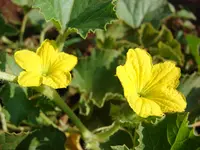
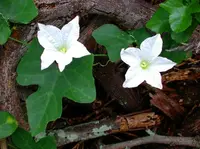
Golden bellapple, Passiflora laurifolia, is a tropical passionflower vine grown for its showy flowers and aromatic, edible fruits. It is a vigorous climber that needs a support, such as a trellis or fence, and can quickly cover structures in warm climates.

This species is native to northern South America and the Caribbean, where it thrives in humid, frost-free areas. Its fast growth and need for warmth and space make it less suitable for very small or cool homes.

Healthy plants prefer bright light, evenly moist but well-drained soil, and protection from cold winds. Understanding these basic needs is the foundation of how to care for golden bellapple in gardens or large containers.

Main Plant Requirements

Care Difficulty

Moderate Care

Light Preference

Full Sun

Water Requirements

Regular Water

Temperature Preference

Tropical / Frost Sensitive

Hardiness Zone

10–12

Soil Texture

Sandy, Loamy, Organic-rich

Soil pH

Acidic (5.5–6.5), Slightly acidic (6.5–7.0)

Soil Drainage

Moist but well-drained

Fertilization

Light (every 4–6 weeks)

Get Personalized Care Plan

Scan your plant to receive care tips personalized for your specific plant

Available on iOS and Android

How to Care for the golden bellapple

Passiflora laurifolia thrives in bright, warm conditions with consistent sun exposure.

  • Provide 6–8 hours of sun daily, with morning sun and light afternoon shade in hot climates to protect leaves from scorch.
  • Plant golden bellapple where it receives full sun to light partial shade; filtered light through a trellis or fence works well.
  • In summer, avoid harsh west-facing exposure in very hot areas; in cooler seasons, maximize direct sun to support flowering and fruiting.

This species prefers evenly moist but not waterlogged soil throughout the growing season.

  • Water when the top 3–5 cm of soil feels dry, soaking the root zone deeply, then allow excess water to drain fully.
  • Use well-draining soil; persistent wetness, yellowing leaves, and stem softening suggest overwatering, while wilting and dry, crisp leaves indicate underwatering.
  • During cool seasons or reduced growth, extend the interval between waterings, but never allow the root area to remain bone-dry for long periods.

This tropical vine performs best in consistently warm, frost-free conditions.

  • Aim for 70–85°F (21–29°C) for active growth; flowering and fruiting are strongest within this range.
  • Protect from cold; growth slows below 60°F (16°C) and plants can be damaged or killed near 32°F (0°C), especially during sudden frosts.
  • In hot climates, it tolerates brief peaks up to 95°F (35°C) if soil moisture is adequate and the roots are mulched to reduce heat stress.

This species benefits from moderately high humidity for steady growth and flowering.

  • Aim for 50–70% humidity, especially for young plants and container-grown golden bellapple.
  • In air below 40%, watch for leaf edge browning, curling, and stalled new growth as signs of humidity stress.
  • Increase humidity with grouped plants, a pebble tray under the pot, or a humidifier rather than misting leaves heavily.

This vine prefers loose, well-aerated, organic-rich soil that drains quickly but does not dry instantly.

  • Use a mix such as 40% loam, 30% compost, 20% coarse sand, and 10% perlite or pine bark to balance moisture and air spaces.
  • Keep drainage fast; water should pass through within seconds, and the pot should never sit in collected runoff.
  • Aim for slightly acidic to neutral pH, around 6.0–7.0, which supports nutrient availability for Passiflora laurifolia roots.
  • Improve heavy or compacted ground soil by incorporating coarse sand, fine bark, and compost while avoiding clay-rich or waterlogged sites.

This species is suitable for container growing if the pot supports its vigorous, climbing habit.

  • Choose a deep, wide container that allows strong root development and accommodates a trellis without becoming top-heavy.
  • Select a heavier material like ceramic or thick plastic outdoors to reduce tipping risk in wind as the vine gains height.
  • Elevate the pot slightly on blocks or feet so drainage water clears quickly and roots are not exposed to lingering moisture.

Passiflora laurifolia benefits from steady, moderate nutrition to support vigorous vining and fruiting.

  • Use a balanced liquid fertilizer (around 10-10-10 or 14-14-14) at 1/2 strength every 2–4 weeks during the warm growing season.
  • Alternatively, apply a slow-release balanced fertilizer or a thin layer of well-rotted compost in spring.
  • Rinse foliage if fertilizer splashes on leaves to reduce burn risk and salt buildup.
  • In winter or cool dormant periods, cut feeding to once during the season or pause entirely.

Pruning Passiflora laurifolia helps manage size, encourage branching, and improve flowering on healthy vines.

  • Carry out main pruning in late winter or early spring before vigorous new growth starts.
  • Remove dead, damaged, or crossing stems first, then thin overly crowded growth to open the canopy.
  • Shorten long, wandering shoots to maintain the vine within its trellis or support structure.
  • Use sharp, clean bypass pruners and make cuts just above a node to promote healthy regrowth.

Golden bellapple is a vigorous vine that may need periodic transplanting or repotting as its roots rapidly fill available space.

  • Check for roots circling the pot, emerging from drainage holes, or slowed growth as signs it needs a larger container or ground planting.
  • Transplant or repot in spring, choosing a pot 1–2 sizes larger or a well-drained, amended planting site outdoors.
  • Water thoroughly a day before moving, then handle the root ball gently, loosening only tight outer roots to limit shock.
  • After transplanting, keep soil evenly moist, shaded from harsh sun for several days, and avoid heavy feeding until new growth appears.

Passiflora laurifolia is commonly propagated from semi-ripe cuttings or fresh seeds under warm, humid conditions.

  • Take 10–15 cm semi-ripe stem cuttings in late spring or summer, each with 2–3 nodes, and remove lower leaves.
  • Dip the cut base in rooting hormone, then insert into a moist, free-draining mix and maintain 75–85°F with high humidity.
  • Provide bright, indirect light and gentle bottom heat if possible; rooting usually takes several weeks.
  • Sow fresh seeds in warm, sterile mix, lightly covered, and keep evenly moist; germination can be slow and uneven.

This tropical vine is frost-sensitive and needs thoughtful winter care in regions with temperatures below about 40°F.

  • In mild, frost-free climates, maintain normal care and monitor soil moisture, avoiding prolonged saturation in cool weather.
  • In cooler areas, grow in containers so plants can be moved indoors or into a greenhouse before nights drop below 45°F.
  • Indoors, place in bright light, reduce watering slightly, and avoid heavy feeding until warm weather returns.
  • For in-ground plants in marginal climates, mulch the root zone 5–8 cm deep to buffer short cool spells, though hard freezes may still kill top growth.

Care Tips

Train Climbing Vines

Install a strong trellis or wire system early and gently secure new shoots horizontally with soft ties to encourage dense flowering walls rather than a thin, tall vine.

Root Zone Mulching

Apply a 5–8 cm layer of organic mulch around but not against the stem to keep roots cool, reduce evaporation, and buffer the plant from short dry spells.

Frost and Wind Protection

In marginal climates, wrap the base with breathable frost cloth and use windbreaks or fencing to protect stems from cold, drying winds that can kill young growth.

Encourage Pollination

If natural pollinators are scarce, hand-pollinate by transferring pollen from one flower to another with a small, clean brush in the morning to improve fruit set when growing golden bellapple.

Vigorous Growth Control

Check regularly for suckers or unwanted shoots and remove them at ground level to prevent the plant from overrunning nearby structures or competing plants.

Common Pests and Diseases

Passion vine mite

This pest causes bronzing, yellow stippling, and a rough, corky texture on leaves and young stems, often leading to leaf drop and poor flowering. Symptoms include fine webbing on the undersides of leaves under heavy infestations.

Solution

Prune and dispose of heavily damaged shoots, then wash foliage thoroughly with a strong but gentle stream of water, focusing on leaf undersides. Maintain good air movement, avoid water stress, and use a targeted miticide or horticultural oil labeled for mites if washing and pruning do not control the problem.

Passion vine hopper

These insects suck sap from leaves and soft stems, causing yellowing, leaf curling, and general decline, and excrete honeydew that can lead to sooty mold. Nymphs often cluster along stems and leaf veins, while adults jump readily when disturbed.

Solution

Physically remove heavily infested shoots and crush or wash off clusters of nymphs with water. Encourage natural predators, limit excess nitrogen fertilization that encourages soft growth, and if needed apply insecticidal soap or a systemic insecticide labeled for sap‑sucking insects on edible vines, following all pre‑harvest intervals when growing golden bellapple.

Passionfruit woodiness virus

This disease causes severe leaf distortion, mosaic patterns, and hard, thickened, misshapen fruits with reduced pulp quality. Symptoms include stunting of vines and markedly reduced yields over time.

Solution

Remove and destroy infected vines promptly, including roots, to reduce virus sources, and replant only with certified virus‑free material. Control aphids and other sap‑sucking insects that spread the virus, disinfect pruning tools between plants, and avoid planting new vines near old, infected passionfruit plantings.

Brown spot (Alternaria)

This disease produces small brown leaf spots with darker margins that can enlarge, coalesce, and cause premature leaf drop, especially in warm, humid conditions. Symptoms include spotting on young stems and sometimes lesions on fruit rind.

Solution

Remove and discard infected leaves and plant debris from around the vine to lower spore levels, and avoid overhead irrigation that keeps foliage wet for long periods. Improve spacing and airflow along trellises, and use a copper‑based or other labeled fungicide preventively during extended humid or rainy periods if the disease recurs.

Fusarium wilt

This disease enters through the roots and blocks the water‑conducting tissue, leading to sudden wilting, yellowing, and dieback of one or more shoots even when soil is moist. Symptoms include brown discoloration in the inner stem tissue when split open lengthwise.

Solution

Remove and destroy severely affected vines and avoid replanting Passiflora in the same spot for several years, as the fungus persists in soil. Improve drainage, avoid overwatering and root injury, and use clean, disease‑free planting stock and sterilized potting mix for any container or nursery stages of Passiflora laurifolia care instructions.

Interesting Facts

Specialist bee pollinator

In its native range, this species is mainly pollinated by large bees of the genus Xylocopa, whose size and strength allow them to force open the flowers and contact the reproductive structures efficiently.

Edible aromatic fruit

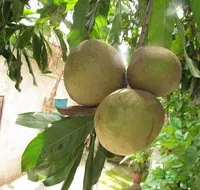
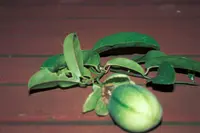
The yellow to orange berries, often called golden bellapple, are eaten fresh in parts of the Caribbean and northern South America and are valued for their sweet, aromatic pulp compared with some sharper-tasting passion fruits.

Host for Heliconius caterpillars

This species serves as a larval host plant for several longwing butterflies in the genus Heliconius, whose caterpillars feed on the leaves and sequester defensive chemicals from the vine.

Botan icon

Did you know?

Historical records from the Caribbean note that the fruits of this species were cultivated and traded locally well before widespread commercialization of other passion fruits, giving it a long-standing role as a traditional regional fruit vine.

FAQs about golden bellapple

Lack of flowers is often linked to insufficient maturity, poor nutrition, or weak light intensity. Ensure a climbing structure, allow vines to reach several meters, feed with balanced fertilizer, and avoid heavy pruning of young, flower-bearing shoots.

Grow Healthy Plants with Botan Care

Keep your plants happy and healthy with plant identification, disease detection, and easy care guidance.

Botan plant care app — identify plants on mobile

Explore More Plants