Post-bloom rest
After flowering, gradually reduce watering and allow the foliage to yellow naturally before trimming, which helps the bulbs store energy for the next flowering cycle.

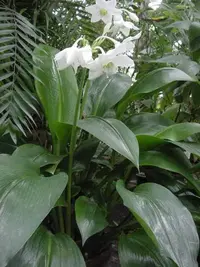
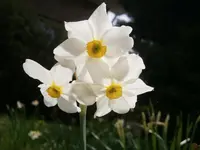
The Amazon lily, Urceolina × grandiflora, is a bulb-forming tropical plant valued for its elegant white, star-shaped flowers and glossy, broad green leaves. It typically forms a compact clump, sending up flower stalks above the foliage during its blooming period.
This species is native to the shaded, humid forests of the western Amazon region, where it grows under taller vegetation. Its preference for stable warmth, moderate indirect light, and evenly moist but well-drained soil makes it moderately easy to grow indoors if conditions are consistent.
Understanding how to care for Amazon Lily mainly involves providing gentle light, avoiding waterlogging, and keeping it away from drafts or very dry air.

Care Difficulty
Moderate Care

Light Preference
Partial Shade

Water Requirements
Regular Water

Temperature Preference
Tropical / Frost Sensitive

Hardiness Zone
10–11

Soil Texture
Loamy, Peaty, Organic-rich

Soil pH
Acidic (5.5–6.5), Slightly acidic (6.5–7.0)

Soil Drainage
Moist but well-drained

Fertilization
Light (every 4–6 weeks)
Scan your plant to receive care tips personalized for your specific plant
Available on iOS and Android
Urceolina × grandiflora thrives in bright, indirect light that mimics dappled forest shade.
This bulb prefers evenly moist but never saturated soil, with slight drying between waterings.
This species prefers warm, stable temperatures with protection from cold drafts and frost.
This species benefits from moderately humid air but adapts to typical home conditions if not kept too dry for long.
This bulb prefers loose, airy, moisture-retentive but fast-draining soil to prevent rot around the roots and bulb base.
This species is well suited to container growing when the pot supports stable, evenly moist but not waterlogged conditions.
This bulb responds well to light, consistent feeding during its active growth period.
Urceolina × grandiflora needs only light, maintenance pruning to stay tidy and healthy.
This bulb prefers to be slightly crowded, so repotting is infrequent but sometimes necessary.
Propagation of this hybrid is typically done by division of bulbs rather than from seed.
This species is frost tender and needs careful winter management in most outdoor climates.

Plant Health Check
Not sure what's wrong with your plant? Check your plant's health inside the app.
This plant is a natural hybrid between Andean Urceolina species, historically placed in the genus Eucharis, and is not found as a wild, stable species in nature. It likely arose in cultivation from closely related Amazon lily parents native to the montane forests of Colombia and Ecuador.
In its region of origin, this species comes from mid-elevation cloud forests with cool nights, bright but filtered light, and high humidity. That background explains why it flowers best in bright shade and moderate indoor temperatures rather than hot, exposed conditions.
The flowers are strongly scented, white, and star-shaped, carried on tall scapes above the foliage. Each inflorescence can bear several long-lasting blooms with a characteristic greenish central cup formed by the fused stamens, a trait used by botanists to distinguish it from similar bulbs.

Historical records show that plants now called Urceolina × grandiflora were already circulating in European glasshouse collections under names such as Eucharis grandiflora by the mid-19th century, making this hybrid one of the longest-cultivated Amazon lilies in ornamental horticulture.
Lack of flowering usually comes from insufficient rest, low light, or crowded bulbs. Provide a cool, slightly drier rest period after flowering, bright indirect light, and divide congested clumps to restore bloom production.
Keep your plants happy and healthy with plant identification, disease detection, and easy care guidance.