Deep root establishment
In the first 1–2 growing seasons, water slowly but deeply during dry spells to encourage a deep taproot, then reduce supplemental water once plants are fully established and self-sufficient.

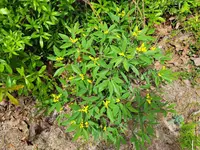
Gopherweed, Baptisia lanceolata, is a perennial legume native to sandy pinelands and open scrub habitats in the southeastern United States. It forms a compact clump with narrow, lance-shaped leaves and upright flowering stems.
The plant produces subtle yellow to greenish flower spikes, followed by small seed pods that add structure later in the season. Its deep root system allows good drought tolerance once established.
This species prefers full sun, well-drained sandy or loamy soils, and benefits from minimal disturbance. These traits make it a low-maintenance choice if you want to learn how to care for gopherweed in naturalistic or dry gardens.

Care Difficulty
Easy Care

Light Preference
Full Sun

Water Requirements
Low Water

Temperature Preference
Cold Hardy

Hardiness Zone
5–9

Soil Texture
Sandy, Loamy

Soil pH
Slightly acidic (6.5–7.0), Neutral (7.0)

Soil Drainage
Well-drained

Fertilization
Minimal (feed rarely)
Scan your plant to receive care tips personalized for your specific plant
Available on iOS and Android
Baptisia lanceolata prefers strong outdoor light to build sturdy stems and abundant blooms.
This deep-rooted perennial prefers infrequent, thorough watering once established.
This prairie-adapted perennial handles a wide temperature range once mature.
Humidity is rarely a concern for this drought-adapted perennial.
This species prefers lean, well-drained soil and does not need nutrient-rich conditions.
This deep-rooted perennial is only moderately suitable for containers and needs careful pot selection.
Baptisia lanceolata is a low-maintenance native legume that usually needs minimal fertilizer in average garden soil.
Pruning Baptisia lanceolata is mainly done to maintain shape and remove dead material rather than to control size.
Deep taproots make this species slow to adjust, so transplanting Baptisia lanceolata requires planning and gentle handling.
Propagation of Baptisia lanceolata is possible but slower than many perennials due to its deep taproot and seed dormancy.
This species is cold hardy in much of the US and usually needs little winter care once established in the ground.

Plant Health Check
Not sure what's wrong with your plant? Check your plant's health inside the app.
This species is naturally restricted to deep, well-drained sandy soils of the southeastern US Coastal Plain, especially in Florida and Georgia, where it is adapted to hot, open, xeric sandhill habitats.
Unlike many other Baptisia species with broader leaflets, it has notably narrow, lance-shaped leaflets that help reduce water loss in its dry, exposed native sites.
As a legume, it hosts root nodule bacteria that fix atmospheric nitrogen, and in its native range it often flowers and sets growth early in the warm season, contributing nitrogen to nutrient-poor sandy soils.
Lack of flowers usually comes from too much shade, immature plants, or excessive nitrogen fertiliser. This species often needs 2–3 years to establish before reliable flowering. Avoid frequent disturbance of the deep root system and heavy pruning.
Keep your plants happy and healthy with plant identification, disease detection, and easy care guidance.