farewell to spring Care (Clarkia amoena)

Also known as: Farewell-To-Spring, Godetia, Satin Flower
farewell to spring

About farewell to spring

Farewell to spring (Clarkia amoena) is a cool-season annual wildflower native to coastal western North America, especially California and Oregon. It is often grown in cottage-style and naturalistic gardens.

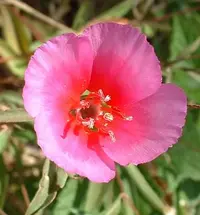
Plants form upright, branching stems with narrow leaves and silky, cup-shaped flowers in shades of pink, rose, lavender, and white. Many forms have attractive markings or bicolored petals.

This species prefers sunny, mild conditions and does best in well-drained soil with moderate moisture. It dislikes high heat and humidity, which can shorten its flowering season.

Clarkia amoena is generally easy from seed where summers are not extreme. Understanding how to care for farewell to spring mainly involves matching its preference for cool, bright, dry-summer conditions.

Main Plant Requirements

Care Difficulty

Moderate Care

Light Preference

Full Sun

Water Requirements

Moderate Water

Temperature Preference

Cool Climate

Hardiness Zone

2–11

Soil Texture

Sandy, Loamy, Organic-rich

Soil pH

Acidic (5.5–6.5), Slightly acidic (6.5–7.0)

Soil Drainage

Well-drained

Fertilization

Minimal (feed rarely)

Get Personalized Care Plan

Scan your plant to receive care tips personalized for your specific plant

Available on iOS and Android

How to Care for the farewell to spring

Clarkia amoena prefers bright conditions that balance strong light with protection from harsh extremes.

  • Provide 6–8 hours of sun daily, ideally with morning sun and light afternoon shade, especially in hotter regions.
  • Allow light partial shade (3–4 hours direct sun) in summer; flowering of farewell to spring may reduce if shade is too dense.
  • Avoid intense, unfiltered afternoon sun that can scorch leaves and wash out flowers; in low light, plants stretch, flop, and produce fewer blooms.

Clarkia amoena needs steady moisture in well-drained soil that never stays soggy.

  • Water when the top 3–5 cm of soil feels dry; soak the root zone, then let excess drain away to prevent root rot.
  • In cool spring conditions, watering is less frequent; increase checks during hot, dry spells and windy weather that speed surface drying.
  • Wilting with dry soil, crisp leaf edges, and poor bud opening signal underwatering, while yellowing lower leaves and soft stems suggest overwatering.

This cool-season annual thrives in mild temperatures and struggles with both hard frost and extreme heat.

  • Aim for active growth in 55–70°F (13–21°C); flowering is strongest in stable, cool to mildly warm conditions.
  • Plants tolerate brief dips to 28–30°F (-2 to -1°C) once established but young seedlings are more sensitive to frost and may need protection.
  • Above 85°F (29°C), blooms may fade quickly and plants can decline, so provide afternoon shade and consistent soil moisture during hot spells.

Clarkia amoena prefers relatively dry, airy conditions and usually does not need special humidity control outdoors.

  • Target 30–50% humidity, which matches typical outdoor and indoor air in many regions.
  • The plant tolerates dry air well; humidity stress is rare unless combined with heat and drought.
  • If leaves crisp at the tips in very hot, dry spells, group pots together or place near a shallow water tray to slightly raise local humidity.

Clarkia amoena grows best in light, well-aerated soil that drains quickly yet retains modest moisture.

  • Use a sandy or loamy mix with 20–30% coarse sand or perlite to keep pores open and prevent compaction.
  • Aim for slightly acidic to neutral pH around 6.0–7.0 for balanced nutrient availability.
  • In containers, combine regular potting mix with perlite and a small amount of compost to improve structure without becoming heavy.
  • Avoid dense clay, waterlogged sites, or peat-heavy mixes that stay wet, which encourages root rot and weak, lanky growth.

This species is suitable for container growing, especially for adding light, airy color to patios and balconies.

  • Choose a pot at least 20–25 cm deep to support its taproot and prevent plants from toppling in wind.
  • Use a wider container rather than overcrowding many plants in a narrow pot to reduce competition for root space.
  • Select a heavier material like ceramic if containers sit in exposed areas so tall flowering stems remain stable in gusts.

This annual usually flowers well in average garden soil, so use fertilizer sparingly when growing farewell to spring.

  • Apply a light dressing of compost or a balanced 10-10-10 granular fertilizer at planting, mixed into the top 5–8 cm of soil.
  • During active growth, use a half-strength balanced liquid feed every 4–6 weeks if soil is poor or plants look pale.
  • Avoid high-nitrogen products, which promote leafy growth over flowers and can cause weak, floppy stems.
  • Stop feeding in late summer as flowering declines; no fertilizer is needed in winter or after plants die back.

Pruning helps keep Clarkia amoena tidy and can extend the flowering period.

  • Deadhead spent blooms promptly by snipping flower stalks back to a leaf node to encourage new buds.
  • In mid-season, lightly shear leggy stems by 5–10 cm to improve shape and stimulate bushier growth.
  • Remove any dead, diseased, or storm-damaged stems with clean, sharp scissors or hand pruners.
  • At season’s end, cut plants to ground level once flowering is finished, or pull entire plants where grown as annuals.

This annual is more often transplanted into garden beds than kept long term in containers.

  • Sow seeds in small pots or cell trays, then transplant when seedlings have 2–3 true leaves and roots lightly hold the soil.
  • Move seedlings outdoors in spring after frost risk passes, handling the root ball gently to limit disturbance.
  • Space plants 15–25 cm apart in well-drained soil so roots can expand without crowding or frequent repotting.
  • For container-grown plants, shift only once into a slightly larger pot when roots circle the edge, watering well after transplanting.

Propagation of this species is most practical from seed rather than from cuttings or division.

  • Sow fresh seeds of Clarkia amoena in late winter to early spring under cover, or directly outdoors after frost risk has passed.
  • Use a well-drained seed mix, press seeds on the surface, and keep lightly moist; many seeds germinate better with light exposure.
  • Maintain temperatures around 60–68°F for reliable germination, providing bright indirect light and good air circulation.
  • Thin or prick out seedlings once large enough to handle, avoiding damage to the delicate taproot by lifting with a dibber or label.

This cool-season annual does not need dedicated winter care once its life cycle is complete.

  • In mild climates, autumn-sown plants may overwinter as seedlings, tolerating light frosts but failing in prolonged hard freezes.
  • Apply a thin mulch around fall seedlings in climates with occasional frost to buffer rapid temperature swings.
  • Container plants in colder areas can be placed in a sheltered, unheated porch or cold frame to reduce freeze-thaw stress.

Care Tips

Staggered Succession Sowing

Sow small batches 2–3 weeks apart in early spring to keep flowering continuous and avoid having all plants age and decline at the same time.

Pinch for Bushier Growth

When seedlings reach 8–10 cm tall, pinch out just the soft tip above a leaf node to encourage branching and produce more flowering spikes per plant.

Discreet Stem Support

In windy or exposed sites, insert slender bamboo canes or wire hoops around young plants before they reach 20–25 cm, then loosely tie stems to prevent lodging without spoiling the natural look.

Targeted Deadheading Strategy

Regularly remove spent blooms on most plants to extend flowering, but leave a few of the best plants un-deadheaded toward late season to set seed for natural reseeding and future stands.

Low-Stress Transplant Technique

If moving seedlings, transplant only very young plants with 2–4 true leaves, disturb the root ball as little as possible, and water them in promptly to reduce transplant shock when growing farewell to spring.

Common Pests and Diseases

Aphids

These insects cluster on tender stems and flower buds, sucking sap and causing curling, distortion, and sticky honeydew that can attract sooty mold.

Solution

Spray plants with a strong stream of water to dislodge colonies, then treat remaining infestations with insecticidal soap or a light horticultural oil, making sure to coat the undersides of leaves and young shoots. Remove heavily infested shoot tips and encourage natural predators like lady beetles by avoiding broad-spectrum insecticides in the area.

Leaf miners

This pest creates winding, pale tunnels inside the leaves that can reduce photosynthesis and weaken the plant when damage is extensive.

Solution

Pinch off and discard affected leaves as soon as serpentine trails appear to remove larvae inside the tissue. For repeated problems, use yellow sticky traps to monitor adult flies and apply a neem oil spray to young foliage to reduce new feeding without harming beneficial insects as much as systemic products.

Botrytis blight

This disease causes brown, water-soaked spots on petals, fuzzy gray mold on flowers and stems, and general collapse of soft tissue in cool, damp weather.

Solution

Remove and discard all affected flowers, stems, and nearby plant debris, and avoid overhead watering so foliage dries quickly. Improve spacing and airflow around plants, and in persistent conditions use a labeled fungicide for ornamental annuals, rotating products if the problem recurs.

Downy mildew

Symptoms include pale yellow to light green angular patches on upper leaf surfaces with a grayish or purplish fuzz beneath, leading to leaf drop in prolonged wet conditions.

Solution

Water at soil level early in the day and thin crowded stands so leaves dry faster, especially during cool, humid spells. Remove and destroy affected leaves, avoid working among wet plants, and in severe outbreaks apply a downy mildew fungicide labeled for bedding plants according to package directions.

Powdery mildew

This disease appears as white, powdery patches on leaves and stems, often starting on lower foliage, and can cause leaf distortion and reduced flowering.

Solution

Increase air circulation by avoiding overcrowding, water at the base to keep foliage dry, and promptly remove heavily infected leaves. Apply a preventive fungicidal spray such as potassium bicarbonate, sulfur, or a horticultural oil at the first sign of infection, repeating as directed to protect new growth during periods favorable to powdery mildew development.

Interesting Facts

Coastal California native

This species is naturally found along the Pacific coast of California and into southwestern Oregon, where it grows in open, often sandy or rocky sites that dry out in summer.

Late-spring bloomer

In its native climate, it germinates with cool-season rains and then produces its main flush of flowers in late spring to early summer, often fading as the dry summer period advances.

Color-shifting petals

The flowers typically show a gradient of color on each petal, from deeper pink or rose toward paler or almost white centers, with this pattern helping guide pollinators toward the nectar and pollen.

Botan icon

Did you know?

Clarkia amoena is one of the classic model species in pollination biology research, used in scientific studies examining how flower color patterns, petal markings, and blooming time influence visits by native bees and other pollinators in western North American ecosystems.

FAQs about farewell to spring

This annual usually blooms from late spring into mid-summer, depending on climate and sowing time. In cool conditions, flowering can last 4–6 weeks, but heat or drought shortens the display and speeds up seed formation.

Grow Healthy Plants with Botan Care

Keep your plants happy and healthy with plant identification, disease detection, and easy care guidance.

Botan plant care app — identify plants on mobile

Explore More Plants