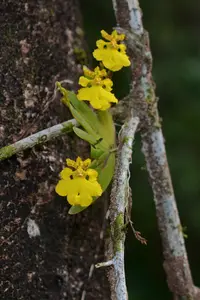
bearded coelogyne Care (Coelogyne flaccida)

Also known as: loose coelogyne
bearded coelogyne

About bearded coelogyne

Coelogyne flaccida is an epiphytic orchid that typically grows on trees or rocks, forming clumps of ovoid pseudobulbs with arching, narrow leaves. It produces cascading sprays of creamy white, often fragrant flowers that give the plant a soft, graceful appearance.

This species is native to the Himalayan region and parts of Southeast Asia, where it experiences cool to mild temperatures and high humidity. Its need for stable moisture, good air movement, and gentle, filtered light makes it moderately challenging for beginners, but quite manageable once conditions are understood.

Those who learn how to care for Coelogyne flaccida usually find it rewarding, especially when it is mounted or grown in a very free-draining orchid mix.

Main Plant Requirements

Care Difficulty

Moderate Care

Light Preference

Bright Indirect Light

Water Requirements

Regular Water

Temperature Preference

Tropical / Frost Sensitive

Hardiness Zone

Unknown

Soil Texture

Organic-rich, Peaty, Loamy

Soil pH

Acidic (5.5–6.5)

Soil Drainage

Moist but well-drained

Fertilization

Moderate (every 2–4 weeks)

Get Personalized Care Plan

Scan your plant to receive care tips personalized for your specific plant

Available on iOS and Android

How to Care for the bearded coelogyne

This orchid prefers bright, gentle light similar to bright forest shade.

  • Provide 4–6 hours of bright, filtered light daily, such as dappled shade under taller plants or under 30–50% shade cloth.
  • Allow soft morning sun but protect from strong midday and afternoon sun, which can scorch leaves and cause yellowing or brown patches.
  • In winter, move Coelogyne flaccida to a slightly brighter position, watching that leaves stay medium green rather than very dark or pale.

This species prefers evenly moist conditions during active growth without staying saturated.

  • Water when the top 2–3 cm of the mix feels just barely dry, ensuring water flows freely through a well-draining, bark-based medium.
  • Reduce watering in cooler months or rest periods, allowing the mix to dry a little deeper while preventing complete, prolonged dryness around the pseudobulbs.
  • Watch for wrinkling pseudobulbs or limp leaves as signs of underwatering, and yellow, soft roots or a sour smell as signs of overwatering.

This orchid does best in cool to intermediate temperatures with mild seasonal variation.

  • Aim for 60–75°F (16–24°C) during active growth, with a slight night drop of about 5–10°F (3–5°C) to support flowering.
  • Protect from temperatures below 45°F (7°C), as prolonged cold and any frost can damage leaves and pseudobulbs.
  • In hot weather above 85°F (29°C), increase shade, air movement, and humidity to limit heat stress and leaf scorch while maintaining moderate light.

This orchid prefers moderately high, stable humidity to maintain healthy pseudobulbs and flowers.

  • Aim for 50–70% humidity; prolonged levels below 40% cause shriveling pseudobulbs and crisp leaf tips.
  • It tolerates short dry-air periods, but extended exposure near heating or AC vents increases leaf spotting and bud blast.
  • Increase humidity with grouped plants, a water-filled pebble tray under the pot, or a small fan plus humidifier for gentle, moist airflow.

Coelogyne flaccida grows best in a loose, airy orchid medium that dries slightly between waterings.

  • Use a mix of medium bark, coarse perlite, and a little sphagnum moss to create a chunky, organic-rich structure.
  • Ensure very rapid drainage; water must flow through in seconds, not pool around the roots or pseudobulbs.
  • Target a slightly acidic pH around 5.5–6.5, which suits most orchid-grade bark-based mixes.
  • Avoid dense, peat-heavy or garden soil mixes that compact, reduce aeration, and promote root rot in the rhizome zone.

This species is well suited to container growing when the pot supports its creeping rhizomes and drainage needs.

  • Choose a squat, wide pot so the rhizome can advance horizontally without crowding the developing pseudobulbs.
  • Select a pot material that matches your climate; terracotta dries faster in humid areas, while plastic retains moisture longer in dry homes.
  • Use a potting angle that keeps the oldest pseudobulbs near one side of the pot, leaving forward space for new growths to develop securely.

Feeding supports steady growth and blooming in Coelogyne flaccida grown in pots.

  • Use a balanced orchid fertilizer (for example 20-20-20) diluted to 1/4–1/2 strength in water.
  • Apply every 2–3 weeks during active growth in spring and summer, on already-moist medium.
  • Reduce feeding to monthly at very weak strength in fall and stop in true winter rest.
  • Flush the pot with plain water about once a month to limit salt buildup.

Light pruning keeps Coelogyne flaccida tidy and reduces disease risk.

  • Best time is after flowering finishes, when new growths are visible but still small.
  • Remove spent flower spikes, yellow or dead leaves, and any damaged pseudobulbs with clean scissors or pruners.
  • Thin crowded, overlapping growths during division to improve air movement and light penetration.
  • Always disinfect tools before and between cuts to limit spread of fungal or bacterial problems.

Repotting maintains a healthy root system and fresh medium for this sympodial orchid.

  • Repot every 2–3 years or when roots circle the pot, growth slows, or medium breaks down and stays soggy.
  • Best timing is just after flowering, as new roots start, to help Coelogyne flaccida establish quickly.
  • Gently remove old medium, trim dead roots only, and place the rhizome on fresh, airy orchid mix in a slightly larger pot.
  • Keep the plant shaded and slightly on the dry side for 7–10 days after repotting to limit root stress and rot.

Division is the standard method for multiplying this species for most home growers.

  • Divide mature clumps in late winter to early spring as new growths and roots begin.
  • Lift the plant, gently remove old medium, and separate the rhizome into sections with at least 3–4 healthy pseudobulbs each.
  • Dust cut surfaces with a fungicidal powder or ground cinnamon to reduce infection risk.
  • Pot divisions in small containers with fresh, airy orchid mix and maintain high humidity and bright, indirect light until established.

Cool to intermediate winter conditions suit this orchid, but it is not frost hardy outdoors in most climates.

  • Keep plants above 45–50°F; freezing temperatures can damage pseudobulbs and roots.
  • For outdoor containers, move plants indoors to a bright, cool room before night temperatures drop near 45°F.
  • Allow a slight drying between waterings and stop high-nitrogen feeding to support a mild rest period.
  • Ensure good air movement and avoid cold drafts around foliage to reduce fungal issues.

Care Tips

Cool-night management

If indoor nights stay above 65°F, move the plant to a cooler window, porch, or ventilated stairwell for 4–6 weeks in late summer to provide 55–60°F nights that help set strong flower spikes.

Pseudobulb spacing

When repotting, position the oldest pseudobulbs against the back of a wide, shallow pot and leave at least 5–7 cm of empty space in front of the newest growths so the creeping rhizome has room to run without needing another repot too soon.

Support for arching spikes

As inflorescences emerge, place a low hoop or horizontal wire just above the pot rim to guide the arching flower spikes outward, preventing them from kinking against the pot edge or media surface.

High-airflow placement

Set the plant where it receives constant gentle air movement from an oscillating fan or nearby open vent to reduce fungal spotting on leaves and to keep the fine roots healthier in moist media.

Post-bloom clean-up

After flowering, remove spent spikes close to the pseudobulb and trim only dead, papery sheaths, which improves air movement around the new eyes and makes monitoring for scale or mites easier when caring for Coelogyne flaccida.

Common Pests and Diseases

Scale insects

This pest feeds on sap, often hiding along pseudobulbs and leaf bases, causing yellowing, shriveling, and weak flowering. Symptoms include sticky honeydew and sooty mold on leaves and flower spikes.

Solution

Isolate the plant, then wipe pseudobulbs and leaves with cotton pads dipped in isopropyl alcohol to remove adults and nymphs, repeating weekly until no new scales appear. Improve air movement around the plant and, for heavy infestations, use a systemic insecticide labeled for orchids at the lowest effective dose, following product directions carefully.

Spider mites

These insects prefer the thinner leaves of this orchid in warm, dry conditions and cause stippling, dull foliage, and fine webbing along leaf undersides and tips. Symptoms include leaves turning bronze or grayish and dropping prematurely if the infestation is severe.

Solution

Increase humidity and rinse foliage under a gentle, lukewarm shower, focusing on leaf undersides, then let the plant dry in good airflow. For persistent mites, apply a horticultural oil or insecticidal soap labeled for orchids every 5–7 days for several cycles, keeping the plant shaded while products are on the leaves.

Bacterial brown spot

This disease produces soft, water-soaked lesions on leaves that quickly turn brown to black, often starting at the leaf tip or along a mechanical injury. Symptoms include a foul smell and rapid tissue collapse in warm, stagnant conditions.

Solution

Remove and discard affected leaf sections with a sterile blade, cutting well into healthy tissue, then keep water off leaves and improve air circulation around the plant. Disinfect cutting tools between cuts and, if new spots continue to appear, use a copper-based bactericide labeled for orchids, applied in cool, shaded conditions to avoid leaf burn.

Leaf tip dieback

This disorder appears as progressive browning and drying of leaf tips, often linked to accumulated mineral salts, irregular watering, or low humidity around the thin leaves and pseudobulbs. Symptoms include crisp brown tips that may slowly extend down the leaf over time.

Solution

Trim off the dead tip with clean scissors, leaving a narrow margin of healthy tissue, and flush the pot thoroughly with low-mineral water to wash out accumulated salts. Adjust fertilizing to a dilute orchid-specific formula applied less frequently, and maintain more stable humidity around 50–70% with good airflow to reduce further dieback while growing Coelogyne flaccida.

Interesting Facts

Fragrant spring bloomer

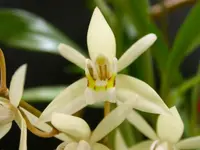
This species produces arching sprays of soft cream to pale yellow flowers in late winter to spring, each with a strong sweet-spicy fragrance that is noticeable even at a distance in still air.

Lip with nectar guides

The three-lobed lip has distinct brown to chestnut markings that act as visual guides for pollinators, directing visiting insects toward the reproductive structures and any available floral rewards.

Cool-growing Himalayan epiphyte

In nature it often grows as an epiphyte or lithophyte in mid- to high-elevation Himalayan forests, where cool nights, bright filtered light, and high humidity shape its seasonal growth and flowering pattern.

Botan icon

Did you know?

Historical herbarium records and early orchid literature show that this species was among the earlier Himalayan orchids to be introduced to European cultivation in the 19th century, helping breeders and collectors better understand cool-growing Asian epiphytic orchids.

FAQs about bearded coelogyne

Lack of flowering usually results from insufficient light, too-warm winter nights, or no slight dry rest after growth. Provide bright but filtered light, cooler nights around winter, and a mild reduction in watering to trigger spikes.

Grow Healthy Plants with Botan Care

Keep your plants happy and healthy with plant identification, disease detection, and easy care guidance.

Botan plant care app — identify plants on mobile

Explore More Plants