Erycina pusilla Care

Erycina pusilla

About Erycina pusilla

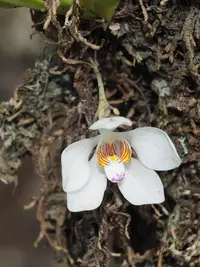
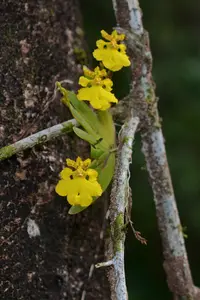
Erycina pusilla is a miniature epiphytic orchid that naturally grows on trees in warm, humid forests of Central and South America. It forms tiny, flattened pseudobulbs and fine roots that cling to bark rather than soil.

The plant produces delicate, starry yellow flowers that can appear in generous clusters compared with its very small size. Its compact growth habit makes it popular for terrariums, orchid mounts, and limited spaces.

This species prefers bright, filtered light, consistent humidity, and good air movement, which together make how to care for Erycina pusilla somewhat different from typical houseplants. With stable conditions and regular attention, it is considered manageable for patient beginners and intermediate growers.

Main Plant Requirements

Care Difficulty

Hard Care

Light Preference

Bright Indirect Light

Water Requirements

Keep Soil Moist

Temperature Preference

Tropical / Frost Sensitive

Hardiness Zone

12–13

Soil Texture

Sandy, Peaty, Organic-rich

Soil pH

Acidic (5.5–6.5)

Soil Drainage

Moist but well-drained

Fertilization

Light (every 4–6 weeks)

Get Personalized Care Plan

Scan your plant to receive care tips personalized for your specific plant

Available on iOS and Android

How to Care for the Erycina pusilla

This miniature epiphytic orchid prefers bright, gentle light that mimics a high-canopy forest edge.

  • Provide bright, filtered light or dappled shade for 8–12 hours a day, such as behind a sheer curtain or under 30–50% shade cloth.
  • Allow soft morning sun but protect from direct midday or afternoon sun, which can scorch leaves and pseudobulbs of Erycina pusilla.
  • In winter, move closer to the brightest window or supplement with grow lights to maintain day length and prevent weak, elongated growth.

This orchid needs consistently lightly moist roots with excellent drainage and high air movement.

  • Water when roots or medium turn from green to silvery and feel barely damp, rather than on a fixed schedule, usually every few days in warm conditions.
  • Use a very free-draining orchid mix or mounted setup; soak thoroughly, then allow excess water to drain completely to avoid root rot and collapsed pseudobulbs.
  • Reduce watering frequency in cooler months while still preventing the medium from drying rock hard; wrinkling pseudobulbs indicate underwatering, mushy roots indicate overwatering.

This warm-growing orchid prefers stable, mild to warm temperatures without extremes.

  • Aim for 70–80°F (21–27°C) by day and 60–68°F (16–20°C) at night for steady growth and flowering.
  • Avoid temperatures below 55°F (13°C); brief drops to 50°F (10°C) may be tolerated but repeated chills slow growth and invite disease.
  • Protect from hot, stagnant air above 90°F (32°C) by increasing air movement and humidity, and never expose the plant to frost or cold drafts.

This miniature epiphytic orchid needs consistently humid air to stay healthy indoors.

  • Aim for 60–80% humidity, as typical heated homes are often too dry for Erycina pusilla over time.
  • Crisping root tips, shriveled pseudobulbs, and buds that dry before opening indicate humidity stress.
  • Use a small humidifier, grouped plants, or a water-filled pebble tray near the plant rather than misting leaves directly.

This species grows best in a very airy, fast-draining orchid substrate rather than regular potting soil.

  • Use a fine to medium orchid mix with 50–70% pine bark or similar chunky material, plus some sphagnum moss to retain light moisture.
  • Ensure the mix drains freely within seconds of watering while still feeling slightly springy and loose around the roots.
  • A slightly acidic to neutral reaction around pH 5.5–7 suits Erycina pusilla, so avoid strongly limed or alkaline blends.
  • Improve aeration by adding extra bark or coarse perlite and avoid any dense, peat-heavy or garden soil that compacts around roots.

This orchid is very suitable for container growing, especially in small pots or mounted setups.

  • Choose a small, shallow pot that just fits the root mass to prevent waterlogged mix lingering around fine roots.
  • Use slotted or net-style orchid pots so air can reach the roots and excess water can escape quickly after watering.
  • If using terracotta, monitor moisture more closely, as the porous walls dry the mix faster than plastic and may require slightly more frequent watering.

This miniature epiphytic orchid benefits from light, precise feeding during active growth.

  • Use a balanced orchid fertilizer (roughly 20-20-20) diluted to 1/4–1/2 strength in low-mineral water.
  • Feed Erycina pusilla every 2–3 weeks in spring and summer when producing leaves and spikes.
  • Switch to monthly or no feeding in fall and winter, depending on growth rate and light levels.
  • Avoid slow-release granules in bark or mounts; they can burn roots and accumulate salts.

This orchid needs only minimal pruning focused on hygiene after flowering.

  • Trim finished flower spikes at the base once they yellow and dry, using clean, sharp scissors.
  • Remove dead, shriveled pseudobulbs and dry sheaths to improve air movement and reduce rot risk.
  • Leave firm green pseudobulbs intact, as they store water and nutrients that support future flowering.
  • Disinfect tools with alcohol before use to limit transmission of fungal and bacterial diseases.

This compact orchid prefers to stay slightly tight in its pot or on its mount and dislikes frequent disturbance.

  • Plan to repot or remount every 2–3 years, or when roots crowd, medium breaks down, or growth slows.
  • Choose late winter to early spring, just as new root tips appear, to reduce stress and encourage fast reestablishment.
  • Gently tease roots free, remove decomposed bark, and trim only dead, mushy roots with sterile scissors.
  • Secure the plant firmly in fresh fine bark or on a mount, then maintain slightly higher humidity until roots anchor.

Propagation of this orchid is usually done by careful division rather than seed at home.

  • Divide mature clumps only when they have several healthy pseudobulbs and active roots.
  • Carry out division in late winter or early spring as new roots start, to support recovery.
  • Make divisions with at least 3–4 pseudobulbs each, using sterile cutting tools to avoid infection.
  • Pot or mount divisions in fine, airy orchid media and keep humidity 60–80% with bright, indirect light for rooting.

This warm-growing orchid is frost sensitive and requires indoor conditions in cool climates.

  • Maintain indoor temperatures around 65–80°F in winter, avoiding drops below 55°F.
  • Grow Erycina pusilla away from cold drafts and single-pane windows where radiant chill occurs.
  • Increase light with a bright east or south window or supplemental grow lights to compensate for short days.
  • Lower watering slightly but keep humidity moderate, ensuring the medium dries just lightly between waterings.

Care Tips

Mounting strategy

Use a small cork slab or hardwood mount wrapped with long-fiber sphagnum over the roots to mimic this orchid’s natural epiphytic habit and keep the root zone airy while still holding short-term moisture.

Fine-scale watering

Instead of soaking the whole mount daily, use a narrow-spout bottle or syringe to target only the moss and roots, which reduces water on leaves and flowers and lowers the risk of rot.

Daily air check

Run a small fan on low nearby for gentle air movement that dries the plant within 2–3 hours after watering, and adjust fan distance seasonally so it never desiccates the fine roots.

Bloom spike support

When a spike emerges, secure it loosely with a soft wire or orchid clip to a small stick or the mount itself, preventing breakage of the thin inflorescence while still allowing natural arching.

Compact nutrient delivery

Use a very dilute orchid fertilizer in a fine mist over the moss and exposed roots only during active growth, then flush with plain water after every 3–4 feedings to prevent salt buildup that can damage this miniature orchid.

Common Pests and Diseases

Spider mites

This pest thrives on the thin, leathery leaves of this miniature orchid in warm, dry indoor air, causing stippling and fine webbing on foliage and pseudobulbs.

Solution

Increase humidity to 60–70%, rinse foliage and pseudobulbs thoroughly under lukewarm water, then treat both leaf surfaces with a neem oil or insecticidal soap spray every 5–7 days for 3–4 cycles while improving air circulation around the plant.

Scale insects

These insects attach along leaf bases, flower spikes, and pseudobulbs, sucking sap and leaving sticky honeydew that can lead to sooty mold growth.

Solution

Manually remove visible insects with a cotton swab dipped in isopropyl alcohol, then use a systemic insecticide labeled for orchids or repeated insecticidal soap treatments, checking hidden spots at the leaf sheaths and around the rhizome junctions.

Mealybugs

This pest hides in tight leaf axils, behind dried sheaths, and on roots in the potting mix, causing yellowing, distortion, and weakened growth in this compact epiphytic orchid.

Solution

Isolate the plant, flush the root zone and leaves with lukewarm water, remove dried sheaths, then spot-treat with alcohol and follow up with 2–3 insecticidal soap or neem oil applications at 7–10 day intervals while monitoring neighboring orchids as part of Erycina pusilla care instructions.

Bacterial brown spot

This disease produces water-soaked, translucent patches on the thin leaves that quickly turn brown and soft, often starting where water sits on the foliage or in leaf axils.

Solution

Remove all affected tissue with a sterile blade, keep foliage dry, increase airflow, and apply a bactericide labeled for orchids; avoid overhead watering and never leave water standing in the crown or between leaves.

Fungal leaf spot

Symptoms include small, dark, often circular lesions on leaves that can merge into larger patches under cool, stagnant, or overly humid conditions.

Solution

Trim off spotted areas with sterile tools, improve ventilation around the plant, reduce prolonged leaf wetness, and apply a broad-spectrum fungicide suitable for orchids, repeating according to label directions until new growth emerges clean.

Interesting Facts

Tiny twig epiphyte

This orchid is naturally epiphytic and often grows on very thin twigs and small branches in lowland tropical forests, forming miniature clumps rather than large mats or curtains.

Pseudobulbs with storage

It develops small, flattened pseudobulbs that store water and nutrients, an adaptation that helps it survive periodic drying in its canopy habitat.

Miniature yet floriferous

Although the plant body is very small, it can produce relatively large, showy yellow flowers in proportion to its size, sometimes several from a compact clump under stable warm conditions.

Botan icon

Did you know?

This species has been widely used in orchid breeding programs to introduce compact size and twig-epiphytic traits into hybrid lines, making it valuable for creating miniature orchid hybrids suitable for limited indoor space.

FAQs about Erycina pusilla

Lack of blooms usually comes from insufficient light, too little fertilizer, or no temperature drop between day and night. Allow a slight night cooldown, provide regular but dilute feeding, and avoid disturbing roots during spike formation.

Grow Healthy Plants with Botan Care

Keep your plants happy and healthy with plant identification, disease detection, and easy care guidance.

Botan plant care app — identify plants on mobile

Explore More Plants