Weevil microseris Care (Microseris troximoides)

Weevil microseris

About Weevil microseris

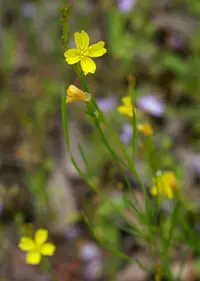
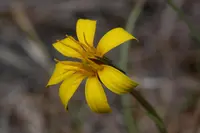
Weevil microseris (Microseris troximoides) is a small herbaceous perennial from western North America, often found in open grasslands and dry, rocky slopes. It forms low rosettes of narrow leaves and sends up slender flowering stems with small, dandelion-like yellow heads.

This species is adapted to seasonal dryness and generally has a modest, compact growth habit. It suits naturalistic plantings, native meadows, and wildlife-friendly gardens where competition from taller plants is limited.

Gardeners who care for Weevil microseris should know it prefers well-drained, lean soils and dislikes prolonged wet conditions. It is usually not demanding if planted in suitable light and soil, but can be short-lived where summers are very wet or shade is heavy.

Main Plant Requirements

Care Difficulty

Moderate Care

Light Preference

Full Sun

Water Requirements

Moderate Water

Temperature Preference

Cool Climate

Hardiness Zone

6–9

Soil Texture

Sandy, Loamy, Rocky

Soil pH

Slightly acidic (6.5–7.0), Neutral (7.0)

Soil Drainage

Well-drained

Fertilization

Minimal (feed rarely)

Get Personalized Care Plan

Scan your plant to receive care tips personalized for your specific plant

Available on iOS and Android

How to Care for the Weevil microseris

This coastal native prefers bright, open conditions with cool roots and good air movement.

  • Provide 6–8 hours of direct sun in spring and early summer; light afternoon shade is helpful in hotter inland sites.
  • Tolerates partial shade (3–4 hours sun) but flowering and compact growth decline if shade exceeds half the day, especially for Weevil microseris.
  • In very hot summers, protect from intense sun between 1–4 p.m. to reduce leaf scorch and soil drying, while avoiding deep, all-day shade.

This species prefers moist but fast-draining soil and does poorly in standing water.

  • Water when the top 3–5 cm of soil feels dry, then soak thoroughly so moisture reaches the root zone, allowing excess to drain away.
  • During cool seasons, reduce frequency and rely on rainfall where possible; increase checks in hot, windy weather as soil dries faster for Microseris troximoides.
  • Watch for overwatering signs such as limp, yellowing lower leaves and a sour soil smell; underwatered plants show dull, drooping foliage that recovers after deep watering.

This plant is adapted to mild, maritime climates with cool to warm growing seasons.

  • Best active growth occurs around 55–70°F (13–21°C), with healthy performance in typical coastal spring and fall conditions.
  • Tolerates light frost down to about 25°F (-4°C) when established, but repeated hard freezes below this can damage crowns and reduce survival.
  • Handles dry summer heat up to about 85–90°F (29–32°C) if soil is not waterlogged; prolonged hotter periods increase stress and may shorten the flowering period.

Microseris troximoides handles dry air well, so humidity usually needs no special adjustment.

Microseris troximoides prefers lean, well-drained, mineral soils that do not stay wet after rain or watering.

  • Use a sandy or gritty loam with low to moderate organic matter to mimic its native conditions.
  • Aim for slightly acidic to neutral pH, roughly 6.0–7.5, avoiding strongly acidic or alkaline mixes.
  • Create drainage by blending about 50–70% coarse sand or fine grit with the remaining volume as loam and light compost.
  • Avoid heavy clay, waterlogged spots, or peat-heavy potting mixes that hold moisture around the roots.

This species can grow in containers if the pot is set up to drain rapidly and stay relatively lean.

  • Choose a deep pot to accommodate the taproot, giving at least 20–25 cm of soil depth for root development.
  • Use a heavy or weighted container if placed outdoors so wind does not tip over the tall flowering stems of Weevil microseris.
  • Elevate the pot on feet or bricks so drainage holes stay clear and water does not pool under the container base.

This native-like perennial generally needs minimal feeding, as Microseris troximoides is adapted to low-nutrient soils.

  • If growth is weak in poor soil, apply a light top-dressing of compost in early spring.
  • Use a low-dose balanced NPK fertilizer at 1/4–1/2 strength during active growth if needed.
  • Feed no more than 1–2 times per growing season to avoid lush, floppy growth.
  • Stop fertilizing in late summer so plants can harden off before dormancy.

Pruning needs for Microseris troximoides are light and mainly focused on tidying the plant.

  • In late spring to early summer, deadhead spent flower stalks to encourage a neater appearance and possible rebloom.
  • Remove dead, diseased, or damaged foliage at any time using clean, sharp scissors or hand pruners.
  • Thin crowded leaves lightly to improve air movement, but avoid cutting the rosette center.
  • Allow some seed heads to mature if natural reseeding or seed collection is desired.

This species is usually grown in the ground, so focus on careful transplanting rather than frequent repotting.

  • Transplant young plants in early spring or early fall, when temperatures are mild and soil is workable.
  • Choose a well-drained site and disturb the taproot as little as possible to reduce transplant shock.
  • Look for signs like slow growth or roots circling a nursery pot as cues to move into the ground.
  • Water thoroughly after transplanting, then keep soil lightly moist until new growth shows establishment.

Most Microseris troximoides plants are propagated from seed rather than by division or cuttings.

  • Collect ripe seed heads in late spring or early summer once they start to dry and fluff.
  • Sow fresh seeds in fall or early spring outdoors, as natural cold exposure aids germination.
  • Use a well-drained, sandy mix and keep it just lightly moist, not wet.
  • Label sowing containers and allow several weeks to months for uneven germination.

This species is generally cold hardy in its suitable climate range and needs little deliberate winter care.

  • In colder regions, apply a light mulch layer around the root zone after the ground cools, not touching the crown.
  • Leave dormant foliage in place until late winter to add extra insulation and habitat value.
  • For container plants in cold zones, move pots to a sheltered, unheated but frost-moderated spot.

Care Tips

Controlled self-seeding

If you want a small colony rather than a spreading patch, let only the strongest 2–3 plants per square foot set seed and deadhead the rest before the seed heads fluff and disperse.

Deep root accommodation

Prepare a loose, stone-free soil layer at least 20–25 cm deep before sowing so the taproot can develop straight, which improves drought tolerance and reduces lodging in wind.

Targeted spring thinning

When seedlings reach 3–5 cm tall, thin crowded patches to 10–15 cm spacing to reduce competition, improve air movement, and lower the risk of foliar disease.

Low-input weed control

Use a very light, coarse gravel or grit mulch around plants to suppress small weeds while keeping the crown dry and preventing rot at the base.

Seed head monitoring

Check seed heads every few days as they mature and collect them just as they start to fluff, which lets you save viable seed for future sowings while still controlling spread when growing Weevil microseris.

Common Pests and Diseases

Aphids

These insects cluster on tender stems, undersides of leaves, and flower stalks, sucking sap and causing curling or distortion of foliage and buds. Symptoms include sticky honeydew that can lead to sooty mold on foliage or nearby plants.

Solution

Rinse plants with a firm stream of water to dislodge colonies, focusing on the undersides of leaves and young stems. For persistent infestations, spot-treat with insecticidal soap or horticultural oil in the early morning, repeating every 5–7 days until new growth appears clean, which is a key part of Microseris troximoides plant care in garden settings.

Seedling damping-off

This disease affects emerging seedlings, causing stems to pinch, collapse, and rot at soil level. Symptoms include sudden seedling death in overly cool, wet seed trays or flats.

Solution

Use clean containers, fresh sterile seed-starting mix, and avoid reusing contaminated soil. Water from the bottom or lightly from above so the surface does not stay saturated, thin seedlings for better airflow, and discard any affected plugs or trays to prevent spread.

Powdery mildew

This disease appears as white or gray powdery patches on leaves and flower stalks, often under dry conditions with poor air movement. Symptoms include reduced vigor and premature yellowing or browning of foliage.

Solution

Improve spacing and airflow around plants and avoid overhead watering late in the day. Remove heavily infected leaves and, if needed, apply a sulfur or potassium bicarbonate fungicide labeled for ornamental composites, treating early when the first patches appear.

Leaf spot

This disease causes small brown to dark spots on leaves that may expand and merge, leading to partial defoliation under prolonged wet conditions. Symptoms include irregular spotting mainly on older foliage close to the soil surface.

Solution

Remove and discard affected leaves and spent plant debris to reduce the source of infection. Water at soil level, avoid prolonged leaf wetness, and if conditions remain wet, use a copper-based fungicide on young leaves as a preventive measure according to label directions.

Cutworms

These pests are nocturnal caterpillars that chew through young stems at or just below soil level, often cutting down newly planted rosettes or seedlings. Symptoms include plants found wilted or severed near the base, with the culprit hiding in the top 2–3 cm of soil nearby.

Solution

Place cardboard collars around young plants, pressed 2–3 cm into the soil, to protect stems. At planting time, hand-pick cutworms from the soil in the evening and, in problem areas, apply a coarse band of diatomaceous earth or a labeled biological control such as Bacillus thuringiensis (Bt) around the planting row.

Interesting Facts

Seasonal rosette strategy

This species forms a low rosette of leaves in the cool, moist season, then sends up slender flowering stalks before summer drought, a growth pattern typical of Pacific Northwest prairie forbs adapted to pronounced wet–dry cycles.

Specialist prairie associate

Microseris troximoides is closely tied to remnant prairies and open grasslands of the Pacific Northwest and is often used as a reference species in restoration projects that aim to reconstruct native forb diversity and pollinator resources.

Distinctive seed structure

Its fruits carry a crownlike pappus of slender scales rather than the fluffy hairs seen in many other aster family members, giving the seed heads a more bristly, compact appearance than typical dandelion-like relatives.

Botan icon

Did you know?

Microseris troximoides has been documented as a spring nectar and pollen source for a suite of native solitary bees in Pacific Northwest prairie ecosystems, making it a valuable component in conservation plantings designed to support early-season pollinators.

FAQs about Weevil microseris

This species behaves as a short-lived perennial or biennial in mild climates, forming a rosette and flowering in its second year. In harsher or drier sites, it may act more like a self-seeding annual.

Grow Healthy Plants with Botan Care

Keep your plants happy and healthy with plant identification, disease detection, and easy care guidance.

Botan plant care app — identify plants on mobile

Explore More Plants