Aechmea bracteata Care

Aechmea bracteata

About Aechmea bracteata

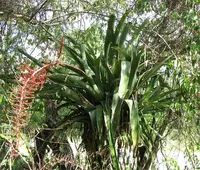
Aechmea bracteata is a terrestrial and epiphytic bromeliad, valued for its stiff, arching rosette of spiny leaves and tall, long-lasting red flower spikes. The plant often forms clumps over time, creating a bold architectural shape rather than a soft, leafy look.

In nature it grows in tropical forests and dry woodlands of Mexico and Central America, often attached to trees where it collects water in its central tank. It is considered moderately easy to grow when its need for bright light, warm temperatures, and a free-draining medium is met.

Understanding how to care for Aechmea bracteata mainly involves balancing good light with protection from harsh midday sun and avoiding constantly wet, airless soil around the roots.

Main Plant Requirements

Care Difficulty

Moderate Care

Light Preference

Partial Shade

Water Requirements

Moderate Water

Temperature Preference

Tropical / Frost Sensitive

Hardiness Zone

10–12

Soil Texture

Sandy, Loamy, Organic-rich

Soil pH

Acidic (5.5–6.5), Slightly acidic (6.5–7.0)

Soil Drainage

Well-drained

Fertilization

Light (every 4–6 weeks)

Get Personalized Care Plan

Scan your plant to receive care tips personalized for your specific plant

Available on iOS and Android

How to Care for the Aechmea bracteata

This bromeliad prefers bright, filtered light similar to dappled tropical understory conditions.

  • Provide 4–6 hours of bright, indirect light daily; gentle morning sun is acceptable, but protect from strong midday and afternoon sun to prevent leaf scorch.
  • Grow Aechmea bracteata in partial shade outdoors, such as under light tree canopy, or behind a sheer curtain indoors to mimic filtered forest light.
  • In winter, move plants slightly closer to windows or brighter spots, watching for pale, stretched leaves (too little light) or brown, crispy patches (too much sun).

Watering should keep the central cup hydrated while avoiding stagnant, soggy roots.

  • Keep the leaf tank (central cup) 1/2–3/4 full with fresh water and flush it every 1–2 weeks to reduce mineral and algae buildup.
  • Let the top 2–3 cm of any potting mix dry before watering the roots; use a very free-draining mix to prevent root rot and sour smells from overwatering.
  • In cooler months or low light, reduce root watering and cup refills slightly; curling, stiff leaves indicate underwatering, while limp, browning bases suggest excess moisture.

Stable warm conditions are important for healthy growth and flowering.

  • Aim for 65–80°F (18–27°C) for active growth, with slight nighttime drops; this range supports steady metabolism and flowering potential.
  • Protect the plant from temperatures below 50°F (10°C); brief dips to 45°F (7°C) may be tolerated, but frost quickly damages foliage and can kill the growing point.
  • In hot spells above 90°F (32°C), increase air movement and shade, and avoid placing the plant near heat-reflective surfaces that can overheat the leaves.

This bromeliad prefers moderate to high humidity but usually manages in typical home conditions.

  • Aim for 50–70% humidity to support healthy foliage and longer-lasting bracts.
  • Tolerates short periods of dry air, but leaf tips may brown and curl under prolonged low humidity.
  • Increase humidity with a nearby humidifier or pebble tray, avoiding misting into the central cup to reduce rot risk.

This species prefers a loose, fast-draining, organic-rich medium similar to an epiphytic bromeliad mix.

  • Use a mix of 40% fine orchid bark, 30% peat or coco coir, and 30% perlite or coarse sand for structure and drainage.
  • Aim for slightly acidic to neutral pH around 5.5–7.0, which supports nutrient availability without stressing roots.
  • Ensure the mix feels springy and airy; large bark pieces and perlite pockets keep oxygen around the root base and leaf rosette.
  • Avoid dense potting soil, clay-heavy garden soil, or mixes that stay wet for more than 2–3 days to prevent root and crown rot in Aechmea bracteata.

This species is well suited to container growing, both indoors and outdoors in warm climates.

  • Choose a squat, wide container to counterbalance the tall flower spike and prevent tipping in wind or when the pot is bumped.
  • Select a pot material that matches your climate; terracotta dries faster in humid regions, while glazed pots retain moisture longer in arid zones.
  • Always provide drainage holes and empty outer cachepots or saucers within 10–15 minutes so water does not sit around the base of the rosette.

This bromeliad benefits from modest feeding to support foliage and long-lasting bracts.

  • Use a balanced, water-soluble fertilizer around 10-10-10 or 20-20-20 at 1/4–1/2 strength, applied to the tank and roots, not into the leaf rosette center.
  • Feed every 4–6 weeks in spring and summer while Aechmea bracteata is actively growing.
  • Reduce to 1 light feeding in fall and skip fertilizer in winter dormancy for indoor plants.
  • Avoid high-nitrogen lawn or garden fertilizers, which can cause soft, weak growth and salt buildup in containers.

Pruning focuses on hygiene and managing older rosettes rather than shaping the plant.

  • Best timing is after flowering, when the main rosette begins to decline and pups are present.
  • Remove spent flower stalks at the base with clean, sharp pruners to keep the plant tidy and reduce rot risk.
  • Cut away dead, damaged, or collapsing leaves, leaving healthy pups and firm foliage untouched.
  • Once the mother rosette dies, remove it carefully to give offsets more light and space for stronger growth.

Container-grown plants are repotted mainly to refresh mix and give offsets room, not to upsize frequently.

  • Repot every 2–3 years or when roots circle the pot, mix breaks down, or many pups crowd the container.
  • Best season is late spring to early summer, when temperatures are stable and growth is active.
  • Use a small pot just big enough for the root ball and pups, with a very well-drained bromeliad or orchid-style mix.
  • Water lightly after repotting Aechmea bracteata, keep in bright indirect light, and avoid heavy feeding for 2–3 weeks to limit stress.

Propagation relies mainly on offsets (pups) produced around the base of the mother rosette.

  • Separate pups in late spring or early summer when they reach about 1/3–1/2 the height of the mother plant.
  • Use a clean, sharp knife to cut pups with a small portion of stem and roots attached.
  • Plant offsets in a very free-draining bromeliad mix, then keep in bright, filtered light and slightly moist conditions.
  • Seed propagation is possible but slow; provide warmth around 70–80°F, high humidity, and sterile media for better germination.

This species is frost sensitive and needs protection in regions with cold winters.

  • Keep temperatures above 50°F; brief dips to about 40°F may be tolerated but can mark foliage.
  • Move container plants indoors or into a greenhouse before the first expected frost, giving bright, indirect light.
  • For outdoor beds in mild climates, use a loose, dry mulch around the root zone to moderate soil temperature.
  • Reduce watering in winter, keeping the tank only lightly filled and allowing the potting mix to dry slightly between waterings to prevent rot.

Care Tips

Tank water management

Empty and refill the central cup with fresh, low-mineral water every 5–7 days to prevent bacterial buildup and mosquito larvae, instead of just topping it up.

Offset harvest timing

Wait until pups reach about 1/3–1/2 the height of the mother before detaching, then cut with a clean, sharp knife at the base and dust the cut with sulfur or cinnamon to reduce rot risk.

Stabilizing heavy rosettes

For large, top-heavy plants, use a wide, shallow pot and dress the surface with coarse bark or decorative stones to add weight and keep the rosette from tipping.

Outdoor acclimation routine

If moving the plant outdoors in warm seasons, increase light exposure gradually over 10–14 days and shield it from direct midday sun to avoid leaf scorch on previously indoor foliage.

Flower spike maintenance

After the inflorescence has completely faded and turned dull, cut the flower stalk close to the base without damaging emerging pups so the plant can redirect energy into new offsets when caring for Aechmea bracteata.

Common Pests and Diseases

Scale insects

These insects feed on the sap of leaves and the central rosette, often appearing as small brown or tan bumps that may cause yellowing or weakening of the plant. This pest is common on bromeliads grown in warm, sheltered indoor or patio conditions.

Solution

Remove visible insects with a cotton swab dipped in isopropyl alcohol and rinse the foliage and rosette with a firm stream of lukewarm water. For heavier infestations, apply a horticultural soap or light horticultural oil labeled for bromeliads, repeating every 7–10 days while also improving air movement and avoiding excess nitrogen fertilizer.

Mealybugs

These insects appear as white, cottony clusters in leaf axils, at the base of leaves, and sometimes around the inflorescence, where they suck sap and excrete sticky honeydew. Symptoms include distorted new growth and sooty mold developing on the honeydew.

Solution

Isolate the plant, then dab visible mealybugs with a cotton swab dipped in isopropyl alcohol and rinse the plant thoroughly, including the leaf bases. Persistent populations can be managed with repeated applications of insecticidal soap or a low-rate horticultural oil, ensuring the solution reaches into leaf axils while keeping the plant out of direct hot sun during treatment.

Guzmania rust

This disease is a rust fungus reported on bromeliads that causes yellow to brown spotting and sometimes rusty spore pustules on leaves, reducing the ornamental value of the foliage. Symptoms include localized lesions that may coalesce in humid, stagnant conditions.

Solution

Promptly remove and discard affected leaves, then increase spacing and airflow around the plant to keep foliage drier. Avoid overhead watering, keep water in the central cup rather than on the leaves, and if the problem persists, use a fungicide labeled for ornamental bromeliads according to label directions while discarding severely affected plants.

Bacterial leaf spot

This disease causes water-soaked, translucent lesions on leaves that can turn brown and spread along the blades, often starting where water stands on foliage or in crowded rosettes. Symptoms include soft or slimy areas with possible yellow halos in warm, humid conditions.

Solution

Trim out affected tissue with sterile tools, discarding all infected material, and avoid splashing water onto leaves or from one plant to another. Improve ventilation, keep the rosette water fresh by flushing it regularly, and keep the foliage dry at night; in collections with recurring issues, discard badly affected plants to protect nearby bromeliads.

Central cup rot

This disease involves breakdown of the central water-holding cup, where stagnant, dirty water and organic debris allow fungi and bacteria to rot the core, causing foul odor, collapse of inner leaves, and eventual death of the rosette. Symptoms include browning at the base of young leaves and mushy tissue deep in the cup.

Solution

Empty the central cup, flush it several times with clean, lukewarm water, and remove any soft, rotted tissue with sterile tools, discarding severely affected plants if the core is destroyed. As a preventive measure when growing Aechmea bracteata, keep only fresh water in the cup, flush it every 1–2 weeks, avoid overfertilizing into the tank, and maintain good air circulation around the foliage.

Interesting Facts

Tank-forming tree epiphyte

This species naturally grows high on tree trunks and branches in tropical dry forests, forming a water-holding rosette that traps rain, leaf litter, and small invertebrates in its central tank.

Dry-forest bromeliad specialist

Unlike many bromeliads from rainforests, it is adapted to seasonally dry lowland habitats from Mexico to Central America, tolerating strong light and periods of limited rainfall.

Wildlife microhabitat creator

Its leaf tank provides habitat and breeding sites for frogs, insects, and other small organisms, making it an important micro-ecosystem component in neotropical dry forests.

Botan icon

Did you know?

In parts of its native range, the dense, long-lasting inflorescences of this species are used in traditional religious and folk decorations, valued for their bright red bracts that remain ornamental for several months even under harsh, dry-season conditions.

FAQs about Aechmea bracteata

This species usually flowers only once when mature, then slowly declines while pups develop. Lack of bloom is often due to immaturity, insufficient light, or temperature stress. Stable warmth, bright indirect light, and patience usually resolve it.

Grow Healthy Plants with Botan Care

Keep your plants happy and healthy with plant identification, disease detection, and easy care guidance.

Botan plant care app — identify plants on mobile

Explore More Plants