Blue latan palm Care (Latania loddigesii)

Blue latan palm

About Blue latan palm

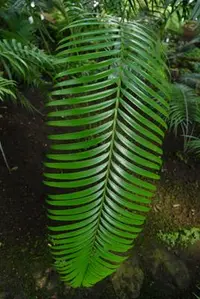
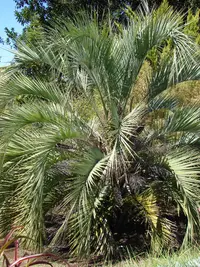
Blue latan palm (Latania loddigesii) is a slow-growing, single-trunk palm valued for its striking blue-gray, fan-shaped leaves. It eventually forms a stout, textured trunk topped with a symmetrical crown, giving it a strong architectural look in landscapes.

This species is native to Mauritius, where it grows in dry, coastal habitats, so it adapts best to warm, bright, and relatively dry conditions. It prefers sun, well-drained soil, and low to moderate watering, which makes it drought-tolerant once established.

Growth is slow and it can be demanding in cooler or humid climates, so planning how to care for Blue latan palm before planting is important for long-term success.


Main Plant Requirements

Care Difficulty

Moderate Care

Light Preference

Full Sun

Water Requirements

Moderate Water

Temperature Preference

Tropical / Frost Sensitive

Hardiness Zone

11–12

Soil Texture

Sandy, Loamy

Soil pH

Slightly acidic (6.5–7.0), Neutral (7.0)

Soil Drainage

Well-drained

Fertilization

Minimal (feed rarely)

Get Personalized Care Plan

Scan your plant to receive care tips personalized for your specific plant

Available on iOS and Android

How to Care for the Blue latan palm

This palm prefers strong light and benefits from full sun in most warm climates.

  • Provide 6–8 hours of direct sun daily once established; young plants adapt best to full sun if introduced gradually over several weeks.
  • Allow light partial shade in very hot inland areas, with morning sun and light afternoon shade to reduce leaf scorch on Blue latan palm fronds.
  • In winter or cloudy seasons, prioritize the brightest, least obstructed exposure; sparse, stretched leaves indicate insufficient light and a need for more sun.

This species prefers deep, infrequent watering and well-drained soil.

  • Water when the top 4–6 cm of soil feels dry, applying a slow, deep soak so moisture reaches the root zone rather than frequent shallow watering.
  • Ensure sharply draining soil or a sloped site; prolonged puddling, sour odor, or soft, collapsing roots indicate overwatering and poor drainage.
  • In hot summer spells, increase frequency slightly, while in cooler seasons reduce watering; folding, dry, and crisp older leaves usually signal underwatering.

This palm thrives in warm, frost-free climates with stable temperatures.

  • Aim for 70–90°F (21–32°C) for active growth; consistent warmth supports strong trunk and leaf development.
  • Tolerates brief dips to about 30–32°F (-1–0°C) but foliage can be damaged; protect from frost with coverings or by planting in a sheltered microclimate.
  • Handles heat up to 100–105°F (38–41°C) if soil moisture is adequate; in extreme heat, mulch the root zone to moderate temperature swings and reduce stress.

This palm prefers moderately dry air but handles a range of humidity if other conditions are right.

  • Aim for 40–60% humidity; avoid persistently above 70% to reduce rot risk.
  • Tolerates typical dry indoor air, but prolonged air below 30% may cause brown leaflet tips and edges.
  • Increase humidity locally with a nearby pebble tray or grouped plants rather than misting, which can encourage leaf spotting.

Latania loddigesii needs sharply drained, mineral-based soil that stays airy around the roots.

  • Use a sandy or gritty loam with 30–50% coarse sand, pumice, or perlite to prevent waterlogging.
  • In containers, mix equal parts cactus mix, coarse sand, and fine bark for structure and aeration.
  • Keep pH slightly acidic to neutral, around 6.0–7.2, avoiding strongly acidic or saline conditions.
  • Avoid heavy clay, peat-heavy mixes, or compacted ground where water pools after rain, as these promote root rot.

This species can be grown in large containers when young and managed carefully.

  • Choose a deep, heavy pot to anchor the tall, wind-sensitive crown and prevent tipping in exposed spots.
  • Select thick-walled clay or concrete containers to moderate temperature swings around the root zone outdoors.
  • Raise the pot on feet so drainage holes stay clear and excess water can leave quickly after heavy watering or rain.

Latania loddigesii benefits from light but consistent feeding during the warm growing season.

  • Apply a balanced slow-release palm fertilizer or balanced NPK granules 1–2 times per growing season in spring and midsummer.
  • Use compost or well-rotted manure as a thin top-dressing, keeping it away from the trunk base of the Blue latan palm.
  • During winter or cool dormant periods, reduce feeding to once or not at all, depending on growth.
  • Avoid strong, undiluted products; if using liquid feed, apply at 1/2–1/4 label strength to prevent root burn.

Latania loddigesii needs minimal pruning, mainly to maintain health and safety around the plant.

  • Carry out light pruning in late winter or early spring, before strong new growth starts.
  • Remove only dead, brown, or badly damaged fronds, cutting close to the trunk without injuring living tissue.
  • Avoid removing green fronds, since this reduces the palm’s energy reserves and slows growth.
  • Use clean, sharp loppers or a pruning saw, disinfecting blades between plants to limit disease spread.

This palm is usually grown in the ground, so focus on careful transplanting rather than frequent repotting.

  • Consider transplanting when growth slows, roots circle the container, or the plant becomes unstable in its pot.
  • Transplant in late spring or early summer, when soil is warm and the palm can re-establish quickly.
  • Expect container-grown plants to need a larger pot or ground planting every 3–5 years, using a free-draining, sandy mix.
  • Minimize root stress by watering thoroughly before and after moving, keeping the root ball intact, and shading the palm for 1–2 weeks.

Latania loddigesii is propagated almost entirely from seed and is considered slow and specialist to raise.

  • Use fully ripe seeds and sow in late spring to early summer for warm, stable conditions.
  • Provide a sterile, very free-draining mix and maintain 75–85°F with high humidity for germination.
  • Soak seeds for 24 hours in lukewarm water, then sow just below the surface and keep evenly moist, not wet.
  • Allow for long, uneven germination times; young seedlings need bright light, shelter from strong sun, and careful watering.

This palm is frost-sensitive and needs meaningful winter protection in most cooler climates.

  • Avoid exposure below about 30°F; plant in a warm, sheltered microclimate in marginal regions.
  • Apply a 5–8 cm layer of dry mulch around the root zone, keeping it a few cm away from the trunk.
  • For young or small plants, wrap the crown and trunk loosely with breathable frost cloth during freezes.
  • Move container-grown specimens indoors or into a bright, frost-free greenhouse before temperatures drop near freezing.

Care Tips

Wind-hardening seedlings

If starting from seed, expose young plants to progressively stronger outdoor wind over 2–3 weeks by moving them from sheltered to more open spots, which encourages a thicker trunk and sturdier leaf petioles before permanent planting.

Root-zone protection

In marginal climates, apply a 5–8 cm layer of coarse organic mulch around but not touching the trunk base to buffer soil temperature swings, reduce evaporation, and protect the shallow feeder roots from mechanical damage.

Trunk base management

Keep the trunk base free of turfgrass and groundcovers in a clear circle at least 60–90 cm wide to improve air movement, reduce rot risk, and prevent lawn equipment from wounding the stem.

Leaf removal timing

Remove only completely brown, dead leaves and perform this work at the end of the cool-dry season to limit stress and reduce the number of fresh pruning wounds during peak pest activity when growing Blue latan palm.

Salt and spray planning

In coastal sites, position plants where prevailing winds carry salty spray past the side, not directly into the crown, and install a low windbreak or companion shrubs on the windward side to reduce leaf burn and mechanical damage.

Common Pests and Diseases

Red palm mite

This pest feeds on the underside of fronds, causing yellow stippling, bronzing, and eventual leaf drying, especially in hot, dry, coastal climates. Fine webbing may be visible along the leaf veins.

Solution

Rinse fronds thoroughly with a strong stream of water, focusing on leaf undersides, and repeat weekly to knock down populations. If needed, apply a horticultural oil or insecticidal soap labeled for mites in the early morning, and increase humidity and airflow around the palm to discourage reinfestation.

Palm scale

These insects attach along leaf veins and petioles, sucking sap and causing yellowing, reduced vigor, and sticky honeydew that can lead to sooty mold. Heavy infestations can slow growth and distort younger fronds.

Solution

Wipe or gently scrub infested areas with a cloth or soft brush dipped in a mild soapy water solution to remove adult scales. For persistent problems, use horticultural oil applications at label rates, targeting crawler stages, and monitor new growth regularly as part of Latania loddigesii plant care.

Mealybugs

These insects cluster in leaf bases, along the rachis, and around the crown, leaving white cottony masses and sticky honeydew. Symptoms include distorted new growth and general decline when infestations are heavy.

Solution

Remove visible colonies with a cotton swab dipped in isopropyl alcohol and rinse the plant thoroughly with water to dislodge hidden insects. In more serious cases, apply insecticidal soap or horticultural oil to all leaf surfaces and crown crevices, repeating at 7–10 day intervals until no new mealybugs appear.

Fusarium leaf spot

This disease causes small, elongated, reddish-brown to gray leaf spots that may merge into larger blotches, especially on older fronds in warm, humid conditions. Symptoms include premature leaf yellowing and a patchy, spotted appearance.

Solution

Prune and discard affected fronds, cutting well into healthy tissue and disinfecting pruning tools between cuts to limit spread. Improve air circulation, avoid overhead watering, keep leaf surfaces dry when possible, and, in severe or persistent cases, consult a local extension service or arborist about an appropriate fungicide labeled for Fusarium on palms.

Ganoderma butt rot

This disease attacks the lower trunk and root collar, causing progressive decline, wilting, and eventual death; bracket-like conks (fruiting bodies) may appear at the trunk base. Symptoms include thinning canopy and fronds that fail to green up after new emergence.

Solution

There is no effective curative treatment once infection is established, so early removal and destruction of severely affected palms is recommended to reduce local inoculum. Avoid trunk injuries, maintain proper soil drainage, and do not replant susceptible palms in the same exact spot where an infected palm was removed.

Interesting Facts

Distinctive blue foliage

This species is notable for its stiff fan-shaped leaves covered in a blue-gray waxy coating, which helps reflect intense sunlight and reduce water loss in its exposed coastal habitat on Mauritius and nearby islands.

Endemic Mascarene palm

The species is naturally restricted to the Mascarene Islands in the southwest Indian Ocean, where it evolved on rocky, dry slopes facing salt-laden trade winds and intense sun.

Endangered in the wild

Wild populations have declined due to habitat loss, invasive plants, and past overuse, and the species is now considered threatened, making ex situ cultivation an important conservation backup for Latania loddigesii care.

Botan icon

Did you know?

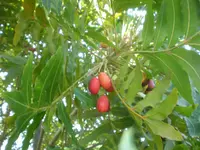
This palm bears large, bright orange to reddish ovoid fruits with a thick, fibrous husk, and their heavy seeds were once dispersed mainly by giant tortoises that are now extinct in its native Mascarene range.

FAQs about Blue latan palm

Growth is slow to moderate. Young plants may add about 15–30 cm of trunk height per year in warm climates. Container plants usually grow more slowly due to restricted root space and slightly cooler, drier conditions.

Grow Healthy Plants with Botan Care

Keep your plants happy and healthy with plant identification, disease detection, and easy care guidance.

Botan plant care app — identify plants on mobile

Explore More Plants