Early trellis training
Install a sturdy trellis or horizontal wires when the plant is still young, and loosely tie new stems with soft ties so the heavy, woody vine develops a stable framework that will support large blooms later.

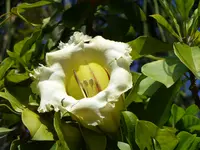
Showy chalicevine (Solandra grandiflora) is a vigorous evergreen woody climber known for its large, trumpet-shaped yellow flowers with purple-brown markings. It can cover walls, pergolas, or large supports, forming a dense mass of leathery, glossy leaves.
This species is native to tropical regions of Mexico and Central America, thriving in warm, frost-free climates. Its fast growth and size make it better suited to outdoor spaces or large conservatories rather than small homes.
The plant prefers bright light, moderate moisture, and well-drained soil. Understanding how to care for showy chalicevine is important, since it grows quickly and needs space, support, and regular pruning to remain manageable and healthy.

Care Difficulty
Moderate Care

Light Preference
Full Sun

Water Requirements
Moderate Water

Temperature Preference
Tropical / Frost Sensitive

Hardiness Zone
10–11

Soil Texture
Sandy, Loamy, Organic-rich

Soil pH
Slightly acidic (6.5–7.0), Neutral (7.0)

Soil Drainage
Well-drained

Fertilization
Light (every 4–6 weeks)
Scan your plant to receive care tips personalized for your specific plant
Available on iOS and Android
This vine thrives in bright, warm conditions with strong but not scorching sun.
This vigorous climber prefers consistently moist but not saturated soil.
This tropical vine favors warm, frost-free conditions year-round.
This vine handles a fairly wide humidity range but benefits from moderately moist air.
Solandra grandiflora prefers a loose, well-aerated mix that drains quickly yet holds some moisture.
This vigorous climber can be grown in large containers if given strong support and careful moisture control.
Solandra grandiflora responds well to moderate feeding during active growth in spring and summer.
Solandra grandiflora benefits from controlled pruning to manage size and encourage flowering on strong shoots.
This vigorous climber is usually grown in the ground, so focus on careful transplanting or upsizing large containers.
Solandra grandiflora is most often propagated from semi-ripe cuttings taken in warm seasons.
This tropical vine is frost-sensitive and needs protection wherever winter temperatures drop near or below freezing.

Plant Health Check
Not sure what's wrong with your plant? Check your plant's health inside the app.
This species opens its large, chalice-shaped flowers mainly at night and releases a strong, sweet scent that attracts nocturnal pollinators such as moths and bats in its native Central American range.
The flowers start creamy white with purple-brown veins that darken as the bloom ages, providing visual cues that help pollinators distinguish fresh, nectar-rich flowers from older ones.
As a member of the nightshade family, this vine contains tropane alkaloids throughout its tissues, making it toxic if ingested by humans or pets.

The mature flowers can reach around 15–20 cm across and are among the largest of any climbing ornamental in the Solanaceae, which is one reason horticulturists value growing showy chalicevine in tropical and subtropical gardens.
All parts are highly toxic if eaten, especially the leaves and flowers, due to tropane alkaloids that affect the nervous system. Ingestion may cause hallucinations, irregular heartbeat, or worse. Keep away from children, pets, and livestock.
Keep your plants happy and healthy with plant identification, disease detection, and easy care guidance.