Bomarea salsilla Care

Bomarea salsilla

About Bomarea salsilla

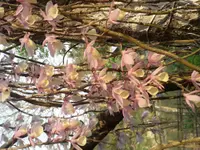
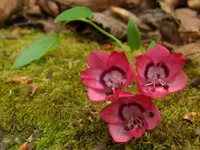
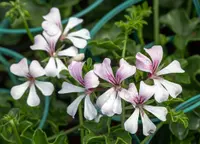
Bomarea salsilla is a twining, tuberous perennial vine in the Alstroemeriaceae family, related to the florist alstroemeria. It produces clusters of tubular, pink to reddish flowers with speckled interiors, often blooming in loose hanging trusses above slender, climbing stems. Native to Chile and nearby areas of South America, it typically grows in cool, coastal or montane habitats with good air movement. The plant can be somewhat demanding, as it dislikes heat, needs consistent moisture without waterlogging, and benefits from free-draining, humus-rich soil. Understanding how to care for Bomarea salsilla starts with providing cool conditions, support for climbing stems, and protection from extreme temperatures.

Main Plant Requirements

Care Difficulty

Hard Care

Light Preference

Partial Shade

Water Requirements

Keep Soil Moist

Temperature Preference

Tropical / Frost Sensitive

Hardiness Zone

9–11

Soil Texture

Loamy, Organic-rich

Soil pH

Acidic (5.5–6.5), Slightly acidic (6.5–7.0)

Soil Drainage

Moist but well-drained

Fertilization

Light (every 4–6 weeks)

Get Personalized Care Plan

Scan your plant to receive care tips personalized for your specific plant

Available on iOS and Android

How to Care for the Bomarea salsilla

This twining climber prefers bright, gentle light similar to an open woodland edge.

  • Provide 4–6 hours of morning sun with light afternoon shade; east or light north exposure suits Bomarea salsilla in warm regions.
  • Allow dappled or filtered light under taller shrubs or trees; strong, direct midday sun can scorch leaves and fade flowers.
  • In hotter summers, increase shade from about 12–4 pm; in cooler seasons, give more direct morning sun to support flowering.

This species prefers steadily moist but not saturated soil during active growth.

  • Water when the top 3–5 cm of soil feels dry, aiming for evenly moist conditions from spring through early fall without puddling.
  • Use free-draining soil on a slope or raised area so excess water runs off; soggy, airless soil leads to root rot and yellowing foliage.
  • Reduce watering in late fall and winter when growth slows; slight leaf droop and dry upper soil indicate thirst, while limp, yellowing stems signal excess moisture.

This climber grows best in mild, frost-free conditions with moderate seasonal variation.

  • Aim for 60–75°F (16–24°C) during active growth; short peaks to 80–85°F (27–29°C) are tolerated if soil moisture and shade are adequate.
  • Protect from frost; growth is stressed below 40°F (4°C) and tubers may be damaged near or below 32°F (0°C) without mulch or lifting.
  • In cooler climates, treat it as a tender perennial: allow warmer 65–75°F (18–24°C) summers for flowering, then keep dormant tubers above 40°F (4°C) in winter.

This climbing species prefers moderate to high humidity for best foliage and flowering.

  • Aim for 50–70% humidity, especially during active growth and flowering.
  • Tolerates short spells of drier air, but leaves may curl, brown at the tips, or buds may drop under prolonged low humidity.
  • Increase humidity with grouped plants, a pebble tray under the pot, or a nearby humidifier rather than misting foliage directly.

Bomarea salsilla performs best in loose, moisture-retentive but free-draining soil.

  • Use a rich, loamy mix made from roughly 50% peat-free compost, 25% fine bark, and 25% perlite or coarse sand.
  • Aim for slightly acidic to neutral pH around 6.0–7.0 to support nutrient uptake and root health.
  • Ensure the mix drains freely yet stays evenly moist; waterlogged, compacted, or heavy clay soil promotes root rot.
  • Improve aeration by adding extra perlite or bark if the mix feels dense or stays wet for more than 2–3 days.

This species adapts well to container growing when the pot supports its vining habit and root needs.

  • Choose a deep, relatively narrow container that allows tuberous roots to extend downward without excessive lateral space that stays wet.
  • Select a heavier pot material such as ceramic or clay to anchor climbing stems and reduce the risk of tipping in windy conditions.
  • Attach a trellis or obelisk directly in the container so stems can climb vertically without pulling or destabilizing the pot.

This twining climber benefits from moderate feeding during its active season to support flowering and tuber health.

  • Use a balanced NPK liquid fertilizer at half strength every 3–4 weeks in spring and summer on moist soil.
  • Alternatively, apply a light layer of compost or a low-dose slow-release fertilizer at the start of the growing season.
  • Stop feeding Bomarea salsilla in late summer or early fall to allow natural dormancy and prevent weak, soft growth.

Thoughtful pruning keeps this vigorous vine manageable and maintains good flowering performance.

  • Carry out main pruning in late winter or very early spring before strong new growth begins.
  • Remove dead, damaged, or congested stems first, then thin crowded shoots to improve light and air flow.
  • Shorten excessively long vines to control size and encourage branching with more flowering sites.
  • Use clean, sharp hand pruners and make angled cuts just above a healthy node on Bomarea salsilla.

This tuberous climber prefers minimal disturbance, so transplanting should be planned carefully and done infrequently.

  • Look for roots circling the pot, water running straight through, or declining vigor as signs it needs a larger container or ground position.
  • Transplant in late winter or early spring while the plant is just emerging or still mostly dormant.
  • Move only every 2–3 years, choosing a container 2–5 cm wider or a well-drained outdoor site with a support structure.
  • Handle tubers gently, keep the original soil mass intact, water lightly after moving, and shade for a few days to limit transplant shock in Bomarea salsilla.

New plants are most reliably produced from division of tubers, with seed used mainly for patient growers.

  • Divide clumps in late winter or early spring, ensuring each section has at least 1–2 healthy buds and some roots attached.
  • Replant divisions into free-draining, humus-rich soil, keep evenly moist, and provide gentle support as new shoots appear.
  • Sow fresh seed in spring in a warm (65–75°F), bright, sheltered spot; germination may be slow and irregular.
  • Maintain steady moisture, good air circulation, and avoid direct, harsh sun while young plants establish.

Cold sensitivity means this species needs thoughtful winter handling in most temperate climates.

  • In regions below about 25°F, grow in containers so plants can be moved to a cool, frost-free space for winter.
  • After foliage dies back, cut stems to near soil level and keep tubers just slightly moist, not wet.
  • In mild climates, apply a 5–10 cm mulch over the root zone to insulate tubers of Bomarea salsilla from temperature swings.

Care Tips

Vertical support setup

Install a sturdy trellis, wire mesh, or netting 1.5–2 m high before new shoots emerge in spring so young vines can be gently tied and guided as they elongate, preventing tangling and stem breakage.

Cool-root mulching

Apply a 3–5 cm layer of fine bark or leaf mold around the root zone (not touching the stems) to keep the tubers cool, buffer moisture, and reduce weed competition during the growing season.

Seasonal lifting strategy

In regions with hard frosts below 25°F, lift the tuberous roots after foliage dies back, dry them for 1–2 days in a shaded, airy place, then store in slightly moist peat or coco coir at 40–50°F until replanting.

Bud protection netting

Use soft insect mesh or floating row cover over developing flower trusses in exposed gardens to reduce damage from chewing insects and strong wind without blocking all light.

Gentle vine inspection

Inspect vines every 1–2 weeks by slowly rotating and separating stems on the support, which helps detect early pests, mechanical damage, or rot and makes caring for Bomarea salsilla more precise and preventive rather than reactive.

Common Pests and Diseases

Spider mites

This pest often colonizes the undersides of the vining foliage, especially in warm, dry, sheltered sites, causing fine webbing and tiny pale speckles on the leaves. Symptoms include gradual yellowing, leaf drop, and overall decline in vigor if infestations are not controlled.

Solution

Rinse stems and leaf undersides thoroughly with a firm stream of water and increase ambient humidity, then apply insecticidal soap or a horticultural oil, repeating every 5–7 days until no new damage appears. In outdoor plantings, reducing heat buildup, avoiding water stress, and encouraging natural predators such as lady beetles can help keep populations low.

Alstroemeria virus complex

This disease group, which includes several alstroemeria-infecting viruses, can cause mottling, streaks, or line patterns on the leaves and distorted flowering shoots. Symptoms include plants that stay alive but gradually weaken, with reduced flowering and uneven growth along the twining stems.

Solution

Remove and destroy any symptomatic plants promptly, disinfect cutting tools between plants, and avoid taking divisions or cuttings from questionable stock. Use only certified clean planting material, control sap-feeding insects such as aphids that spread viruses, and avoid handling healthy plants immediately after working on suspect ones.

Botrytis blight

This disease thrives on dense, climbing foliage in cool, humid conditions, leading to soft brown lesions on leaves, stems, and flowers that may develop a gray, fuzzy mold. Symptoms include wilting tips on vining shoots, spotting on petals, and dieback from infected areas.

Solution

Remove and discard all affected tissue, improve air circulation around the twining stems, and avoid overhead watering that wets the foliage in the evening. In persistent cases, apply a suitable fungicide labeled for ornamental vines at the first sign of spotting, and keep plant debris off the soil surface to reduce spore buildup.

Aphids

This pest clusters on tender shoot tips, young leaves, and flower stems, sucking sap and causing curling, distortion, and sticky honeydew that can attract sooty mold. Symptoms include stunted vine growth and deformed new foliage and buds, especially on actively elongating stems.

Solution

Wash colonies off the plant with a strong but controlled stream of water, then treat remaining insects with insecticidal soap or a light horticultural oil, ensuring coverage of shoot tips and leaf undersides. Managing surrounding weeds and soft, nitrogen-rich growth, plus encouraging beneficial insects such as lacewings, helps keep populations in check when growing Bomarea salsilla outdoors.

Interesting Facts

Twining lily relative

This species is a twining, climbing member of the Alstroemeriaceae, closely related to the florist alstroemeria but naturally adapted to scramble through shrubs and low trees in its native Chilean habitats.

Bicolored tubular flowers

It produces narrow, tubular flowers that are typically reddish to pink on the outside with yellowish interiors, a color combination that is characteristic for attracting hummingbird pollinators in its native range.

Tuberous survival strategy

The plant forms underground tubers that store starch and water, allowing it to resprout after seasonal stress such as drought or cold and contributing to its persistence in temperate South American climates.

Botan icon

Did you know?

In parts of central Chile, this species can be found co-occurring with sclerophyll shrubs and small trees, using them as living supports, which creates vertical flowering displays that are important nectar resources for native hummingbirds during its blooming season.

FAQs about Bomarea salsilla

This species is a twining climber that wraps around nearby supports rather than spreading along the ground. In gardens it is best grown on trellises, fences, or shrubs to keep stems supported and flowers visible.

Grow Healthy Plants with Botan Care

Keep your plants happy and healthy with plant identification, disease detection, and easy care guidance.

Botan plant care app — identify plants on mobile

Explore More Plants