Wax Plant Care (Hoya carnosa 'Variegata')

Also known as: Indian Rope, Hoya, Hindu Rope, Porcelain Flower

About Wax Plant

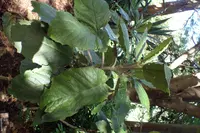
Wax plant, Hoya carnosa 'Variegata', is a vining tropical houseplant known for its thick, waxy leaves edged with creamy white or pink. It often trails or climbs when given support.

In nature it grows as an epiphyte, living on trees in warm Asian forests, which explains its preference for airy soil and good drainage. The plant is relatively slow-growing but long-lived.

Clusters of star-shaped, fragrant flowers may appear on mature plants when light and general conditions are stable. Many growers find it forgiving, and learning how to care for Wax Plant is straightforward once its basic needs are understood.

Main Plant Requirements

Care Difficulty

Easy Care

Light Preference

Bright Indirect Light

Water Requirements

Low Water

Temperature Preference

Tropical / Frost Sensitive

Hardiness Zone

11–12

Soil Texture

Sandy, Loamy, Organic-rich

Soil pH

Acidic (5.5–6.5), Slightly acidic (6.5–7.0)

Soil Drainage

Well-drained

Fertilization

Light (every 4–6 weeks)

Get Personalized Care Plan

Scan your plant to receive care tips personalized for your specific plant

Available on iOS and Android

How to Care for the Wax Plant

This variegated hoya prefers bright, indirect light to maintain strong growth and clear leaf variegation.

  • Provide 6–8 hours of bright, filtered light daily, such as near an east or bright north window, or under a sheer curtain in stronger exposures.
  • Allow gentle early morning sun but shield from harsh midday and afternoon sun, which can scorch leaves and fade variegation on Wax Plant.
  • In winter, move the plant closer to bright windows or supplement with grow lights to compensate for shorter days and weaker natural light.

This species prefers thorough but infrequent watering that lets the roots breathe between soakings.

  • Water only when the top 3–5 cm of soil feels dry, then soak until excess drains out; avoid letting the pot sit in collected water.
  • In spring and summer, drying between waterings is faster; in fall and winter, extend the interval and check soil moisture instead of following a fixed schedule.
  • Watch for yellow, soft leaves and a sour smell as signs of overwatering, while thin, wrinkling leaves on Hoya carnosa 'Variegata' indicate it is staying dry too long.

This plant favors warm, stable conditions and does poorly in cold or drafty spots.

  • Aim for 65–80°F (18–27°C) for steady growth; short exposure to 60°F (16°C) is tolerated but can slow new leaves and flowers.
  • Protect from temperatures below 50°F (10°C); prolonged exposure near this level can damage roots and foliage, and frost will kill exposed tissue.
  • In hot weather above 85°F (29°C), increase airflow and shade from intense sun to reduce heat stress and leaf scorch, especially in south- or west-facing locations.

This species prefers moderate to slightly elevated humidity but adapts to many home conditions.

  • Aim for 40–60% humidity for steady growth and reliable blooming.
  • Tolerates typical dry indoor air, but very low humidity can cause leaf edges to crisp and new leaves to deform.
  • Increase humidity with a nearby humidifier, grouped plants, or a pebble tray, rather than misting leaves directly.

This plant favors a loose, airy, fast-draining mix that mimics an epiphytic growing habitat.

  • Use a mix of roughly 1 part all-purpose potting mix, 1 part fine orchid bark, and 1 part perlite or pumice to keep roots well aerated.
  • Aim for slightly acidic to neutral pH around 6.0–7.0, avoiding heavy lime additions that push pH too high.
  • Ensure the mix drains freely and never stays waterlogged, since consistently wet conditions promote root rot and fungal issues.
  • For Hoya carnosa 'Variegata', avoid dense, peat-heavy or clay-rich substrates and add extra bark or chunky perlite if water lingers longer than 2–3 days.

This species is very suitable for container growing and adapts well to long-term pot culture.

  • Choose a container only 2–4 cm wider than the root ball to prevent excess unused mix from staying wet and souring.
  • Use a stable, heavier pot or cachepot if training vines on a trellis, as the plant becomes top-heavy over time.
  • Select slightly porous materials like unglazed clay when slower drying helps balance a dense mix, but switch to glazed pots if the mix dries too rapidly in bright positions.

Hoya carnosa 'Variegata' benefits from light, consistent feeding during the active growing season.

  • Use a balanced liquid fertilizer (around 10-10-10 or 20-20-20) diluted to 1/4–1/2 strength for Wax Plant indoor care.
  • Feed every 4–6 weeks in spring and summer when growth is active.
  • Stop or reduce feeding to 1 light application all winter if growth is very slow.
  • Avoid heavy, salt-rich fertilizers; flush the pot with clear water a few times per year.

Hoya carnosa 'Variegata' needs only modest pruning to manage size and encourage branching.

  • Best time is late winter to early spring before strong new growth starts.
  • Remove dead, yellowing, or damaged leaves and any tangled or overcrowded vines.
  • Use clean, sharp scissors or pruners to cut just above a node to shape the plant.
  • Do not remove old flower spurs, since new blooms often form on the same structures.

This plant prefers slightly tight roots, so repotting Hoya carnosa 'Variegata' is infrequent but sometimes necessary.

  • Repot every 2–3 years or when roots circle the pot, push out of drainage holes, or growth slows without another cause.
  • Choose late spring as the main repotting time, when temperatures are stable and growth is starting.
  • Move only 1 pot size up and use a fast-draining mix to limit waterlogging and root stress.
  • Handle the root ball gently, loosen only the outer roots, water lightly after repotting, and keep in bright, indirect light for 1–2 weeks.

Hoya carnosa 'Variegata' is commonly propagated from stem cuttings taken during the warm growing season.

  • Take 8–12 cm stem cuttings in late spring or summer with at least 2–3 nodes and healthy variegated leaves.
  • Root in water or in a very airy medium such as perlite and bark, kept slightly moist but not wet.
  • Maintain bright, indirect light, 70–80°F temperatures, and high humidity to support root formation.
  • Plant rooted cuttings into small pots, keep the mix barely moist, and increase light gradually as they establish.

Hoya carnosa 'Variegata' is not frost hardy and needs sheltered winter conditions in most climates.

  • Move container plants indoors before temperatures drop near 50°F, choosing a bright, draft-free spot.
  • Keep room temperatures ideally 60–75°F and avoid cold windowsills at night.
  • Allow the potting mix to dry more between waterings in winter, as growth slows.
  • In very dry heated homes, provide moderate humidity with a tray of water and pebbles under, not touching, the pot.

Care Tips

Support Vining Stems

Provide a thin trellis, hoop, or mesh panel and gently clip or tie vines with soft plant ties so the stems can climb and develop stronger growth points and flower spurs over time.

Encourage Flowering Rest

After flowering, keep the plant in bright light and slightly on the dry side for several weeks and avoid cutting off spent flower spurs, as blooms often return on the same structures in future seasons.

Selective Root Pruning

If the plant becomes rootbound and growth stalls but you want to keep it in the same pot, lightly trim away 10–15% of the outer root mass with clean tools and refresh the potting mix around the edges to stimulate new feeder roots.

Prevent Mealybug Hotspots

Inspect leaf axils, stem joints, and the undersides of older leaves every few weeks, and if any white cottony clusters appear, isolate the plant and spot-treat early with cotton swabs dipped in isopropyl alcohol before populations build up.

Seasonal Light Adjustment

Rotate the pot a quarter turn every 2–3 weeks and move it a little closer to the window in late autumn and winter so variegation stays defined and new growth does not stretch excessively when growing Wax Plant in lower seasonal light.

Common Pests and Diseases

Mealybugs

This pest appears as white, cottony clumps in leaf joints, on stems, and sometimes on roots, often causing sticky honeydew and sooty mold. Symptoms include slowed growth, leaf yellowing, and distorted new shoots.

Solution

Remove visible insects with a cotton swab dipped in 70% isopropyl alcohol and gently wipe leaf undersides, petioles, and stems, then rinse the plant with lukewarm water. Isolate the plant, repeat alcohol swabbing weekly until no new mealybugs appear, and use a light horticultural oil or insecticidal soap on all plant surfaces, including the pot rim and trellis points.

Spider mites

These insects thrive on hoya vines in warm, dry indoor air, causing fine webbing in leaf axils and stippled, dull leaves. Symptoms include tiny yellow or pale specks on foliage and general leaf loss if infestations are heavy.

Solution

Shower the plant thoroughly with lukewarm water, focusing on leaf undersides, then use insecticidal soap or a light horticultural oil, repeating every 7–10 days for several cycles. Raise humidity to 40–60%, keep the plant out of hot, direct blasts from heaters, and inspect regularly with a magnifying glass to catch new mites early.

Soft scale

This pest forms small, dome-shaped brown or tan bumps on stems and leaf veins that excrete sticky honeydew. Symptoms include tacky leaves, sooty mold growth on surfaces, and general plant weakening over time.

Solution

Scrape or gently pry off individual scale insects with a fingernail or cotton swab dipped in 70% isopropyl alcohol, then wipe stems and leaf midribs to remove residues. Follow with a thorough application of horticultural oil, ensuring good coverage on stems and older woody sections, and repeat treatments every 2–3 weeks until no new scale is seen.

Sooty mold

This disease is a black, powdery or velvety coating that grows on the sugary honeydew left by pests like mealybugs or scale. Symptoms include dull, blackened leaves that look dirty but remain intact when wiped.

Solution

First control the underlying honeydew-producing pests, then gently wipe affected leaves with a soft, damp cloth and mild soapy water, followed by a clear water rinse. Improve air movement around the plant and avoid crowding vines so leaves dry faster after watering, which helps prevent the fungus from re-establishing.

Botrytis blight

This disease causes soft, water-soaked spots on hoya leaves and flowers that turn tan or brown and may develop gray fuzzy mold in cool, humid, stagnant air. Symptoms include premature flower drop, damaged peduncles, and localized leaf collapse near crowded or poorly ventilated areas of the plant.

Solution

Remove and discard all affected leaves, flowers, and peduncles, then space vines so air can move freely and avoid wetting foliage late in the day. Water the soil only when the top 2–3 cm are dry, keep humidity moderate rather than saturated, and if needed apply a labeled fungicide for ornamental houseplants, focusing on previously affected zones.

Interesting Facts

Stable chimeric variegation

Its creamy-white and pink marbling is due to a chimeric mutation, where genetically different tissues grow side by side, which is why variegation patterns stay relatively stable on each vine but can differ from vine to vine on the same plant.

Color-shifting new growth

New leaves often emerge pink because of temporary pigments called anthocyanins, which can help protect developing tissues from light before they mature and fade to cream and green.

Scented starry umbels

Mature plants produce clusters of waxy, white-and-pink star-shaped flowers that secrete nectar and a strong evening fragrance, a trait inherited from the wild-type Hoya carnosa but especially prized in this variegated form for its ornamental contrast.

Botan icon

Did you know?

This cultivar has been in cultivation since at least the mid-20th century and became a classic pass-along houseplant, with many long-lived specimens documented at several decades old in private collections, showing how durable a single clone can be when propagated and shared over time.

FAQs about Wax Plant

Lack of blooms often comes from insufficient light, overfertilizing with high-nitrogen products, or pruning off older spurs where flowers form. Keeping it slightly rootbound and avoiding frequent repotting also helps encourage flower production.

Grow Healthy Plants with Botan Care

Keep your plants happy and healthy with plant identification, disease detection, and easy care guidance.

Botan plant care app — identify plants on mobile

Explore More Plants